 Jessica Johnson
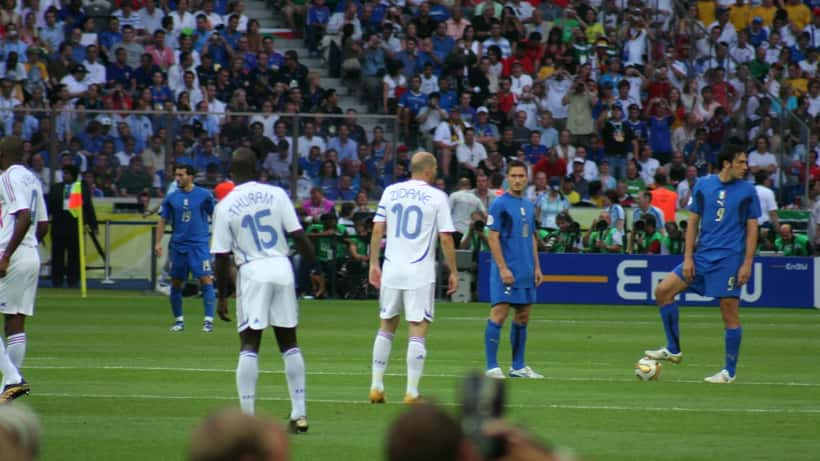
France and Italy square off in Paris today for a UEFA Nations League League A clash that has American soccer fans glued to their screens — and their sportsbooks. As of October 2026, online sports betting is legal in 38 states, and European football matches have become one of the fastest-growing categories on platforms like DraftKings, FanDuel, and BetMGM. But while the action is live and the money is real, the legal safety net for bettors is riddled with gaps that most people only discover when it is too late.
A High-Stakes Nations League Showdown
France currently sits atop Group A in the 2026 UEFA Nations League, while Italy holds second place with a record of three wins, one draw, and one loss. Tonight's match at the Stade de France in Saint-Denis represents a critical six-pointer: a French win secures their lead, while an Italian victory could upend the standings entirely. It is exactly the kind of high-voltage, high-uncertainty fixture that generates massive betting volume in the United States.
According to the American Gaming Association, American bettors have wagered over $120 billion legally since PASPA was overturned in 2018, with European football now accounting for a growing share of that total. But the regulatory framework protecting those bettors has not kept pace with the explosive growth — a reality that is increasingly showing up in courtrooms across the country.
How a Sports Betting Contract Actually Works — and Where It Breaks Down
Most Americans assume that placing a winning bet is a binding contract that entitles them to the stated payout. Legally, that assumption is correct — but only as far as the platform's Terms of Service allow it to be. And those Terms of Service are written entirely by the platform.
Every major US sportsbook reserves the right to void, suspend, or withhold payment on any wager it deems to have involved "technical errors," "irregular betting patterns," or outcomes that fell "outside normal market parameters." These phrases are intentionally broad. They are not defined in any regulatory statute. They are defined by the company.
This asymmetry has generated a wave of litigation in 2026. The most prominent example: an Iowa resident filed suit against DraftKings after the platform refused to pay out $14.2 million in winnings from a PGA Tour event, claiming the match ended under irregular circumstances. DraftKings refunded the original stake but kept the profit, arguing their Terms of Service granted them that discretion. The case moved to federal court, with trial scheduled for September 28, 2026 — and it is not the only one. In a separate incident, DraftKings voided a $150,000 seven-leg parlay the day after the games concluded, again citing post-hoc errors discovered after the fact.
The pattern is clear: when the payout is large enough to sting the house, platforms have shown a willingness to invoke broadly written contract clauses that bettors never fully understood when they clicked "Accept."
When Your France-Italy Bet Becomes a Legal Problem
Imagine this scenario — and it is closer to real-world precedent than it might seem. You place a $600 bet on Italy to win tonight at odds of +170, giving you a potential return of $1,620. Italy wins the match, you try to withdraw your winnings, and the platform's automated system flags your account for "unusual activity." Your withdrawal is frozen. Customer service sends a templated email citing terms related to "suspicious wagering patterns." Your account is suspended pending review.
What recourse do you have?
First, the state gambling commission. If you placed your bet through a licensed operator in your state, that commission has jurisdiction over licensing disputes. You can file a formal complaint, and the operator is legally obligated to respond within a defined timeframe — typically 30 days. In New Jersey, for example, the Division of Gaming Enforcement can compel a licensed platform to produce all records related to your account and the specific wager.
Second, the binding arbitration clause. Nearly every major sportsbook requires disputes to go through private arbitration rather than civil court. This is not unlawful, but it means you will be arguing your case before an arbitrator — not a jury — and often under rules the platform helped design. Knowing this in advance matters. An attorney specializing in gaming law can assess whether the arbitration clause in your specific state is enforceable as written, since several states have passed laws restricting mandatory arbitration in consumer contracts.
Third, chargebacks. If you funded your account via credit card, a chargeback with your card issuer is technically available, but platforms specifically ban this in their Terms of Service and will often terminate your account permanently if you pursue one. It remains an option — but one with consequences.
The window where a lawyer adds the most value is before any of these escalation paths closes. A gaming attorney can send a demand letter that often resolves disputes at the customer service tier, because the platform knows that a formal state complaint or arbitration filing creates compliance costs far exceeding the disputed amount.
What the Regulatory Landscape Looks Like Right Now
The National Conference of State Legislatures notes that as of 2026, nearly two-thirds of US states have legalized some form of sports betting, but the patchwork of consumer protection rules varies enormously. New Jersey and Michigan offer relatively robust bettor complaint processes. Texas, where sports betting remains illegal as of May 2026, leaves residents entirely outside the licensed market. California bettors using offshore platforms have no state-level recourse at all.
This inconsistency means that your geographic location at the time you placed the bet — not the location of the platform — largely determines what legal tools you have access to. That nuance matters enormously when a dispute arises after a major European match like tonight's France-Italy fixture, where the event itself is thousands of miles away and the platform may be licensed in a state different from your own.
The emerging conflict between traditional licensed sportsbooks and new federally regulated prediction markets (platforms like Kalshi, which the New Jersey Attorney General asked the US Supreme Court to examine in 2026) is expected to create further complexity. If prediction market operators are allowed to offer sports wagers without complying with state gambling laws, the consumer protections that currently exist — however limited — could be further diluted.
What to Do Before You Bet — and After
If you are planning to place a wager on tonight's France-Italy Nations League match, or on any major European football fixture, there are concrete steps you can take to protect yourself.
Before you bet: Screenshot your bet confirmation, the exact odds displayed, and the platform's Terms of Service as they appear on the day you wagered. Platforms update their terms regularly, and in a dispute you will need to demonstrate which version was in effect when you accepted them. A timestamp-verified screenshot is admissible evidence.
If a dispute arises: Do not accept the first templated refusal. Submit a formal written dispute through the platform's official complaints channel and request a case reference number. Most state gaming commissions require you to exhaust internal remedies before a complaint is admissible — but "exhausting internal remedies" does not mean accepting the outcome. It means documenting that you tried.
If the internal process fails: Consult a gaming or consumer protection attorney before filing with your state commission or triggering arbitration. The sequence of escalation matters. Filing in the wrong order can waive rights in subsequent proceedings.
France and Italy will settle their Nations League dispute on the pitch tonight. If your financial dispute with a sportsbook is less clean-cut, you do not have to navigate it alone — an expert consultation can clarify exactly what your state's regulations entitle you to, and what it would take to enforce that. For related expert analysis of how World Cup 2026 staging in the US created new consumer-protection questions for traveling fans, see France World Cup 2026: Heat Safety Warning for US Fans.
YMYL Disclaimer: This article is for informational purposes only and does not constitute legal advice. For advice specific to your situation, consult a licensed attorney in your state.
