 Evan Cole
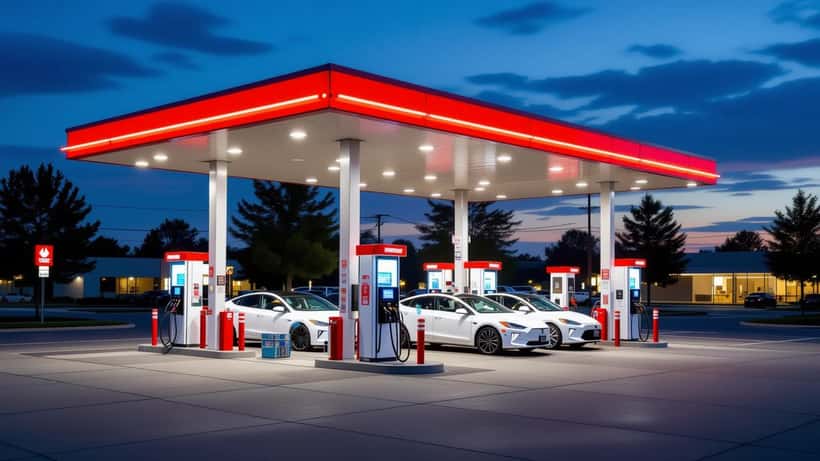
In 2026, the American roadside is undergoing a quiet but consequential makeover. Filling stations that have dispensed gasoline for decades are now racing to install electric-vehicle chargers before new federal deadlines and state-level mandates take full effect. The shift is not simply a matter of swapping nozzles for plugs; it is reshaping zoning, electrical infrastructure, financing, and the very business model of neighborhood fuel retailers. For station owners, landlords, and investors, the difference between a profitable retrofit and a stranded asset often comes down to expert guidance at the earliest planning stage.
The policy tailwinds are unmistakable. The National Electric Vehicle Infrastructure program, combined with revised EPA guidance and several state zero-emission vehicle rules, is pushing charging accessibility well beyond interstate corridors and into suburban and rural markets. Treasury and Department of Transportation guidance issued in early 2026 clarified that stations receiving public support must meet Buy America content requirements, maintain 97 percent uptime, and offer standardized payment systems. Those rules sound technical, but they carry real consequences for small operators who may lack in-house compliance teams.
Even when funding is secured, the queue for utility interconnection is becoming a hidden bottleneck. In many parts of the country, transformer lead times have stretched to six months or longer, and distribution planners are prioritizing projects with complete engineering packages. Station owners who engage a qualified electrical engineer early can submit interconnection requests before competitors crowd the queue, potentially shaving months off the project timeline. That head start can be the difference between opening before the summer travel season and missing a full year of charger revenue.
Why filling stations? Convenience and location. Drivers already associate these sites with quick stops, and many properties already have the high-capacity utility service, canopy coverage, and curb cuts needed for fast charging. A 2026 survey by a leading fuel-retail trade group found that more than 40 percent of independent station owners are now considering at least one DC fast charger within the next two years. For most, it will be the largest capital project they have undertaken since the original construction of the site.
The engineering challenge is substantial. A single 150 kW DC fast charger can draw as much power as a small neighborhood, and multiple units often require service upgrades, transformer replacements, and careful load management. Older underground tanks and piping may need environmental review before new electrical trenches are dug. Fire codes and Americans with Disabilities Act access rules add further constraints. Owners who treat charger installation as a simple equipment purchase frequently discover unexpected costs and delays.
This is where specialized consultation becomes valuable. Electrical engineers with utility interconnection experience can model demand charges and time-of-use rates to right-size the installation. Environmental consultants can verify that tank integrity testing and soil sampling will satisfy state regulators before ground is broken. Business-strategy advisors can project utilization under different pricing models and help negotiate revenue-sharing agreements with charging-network operators. In a capital-intensive retrofit, paying for the right advice upfront typically costs far less than redesigning halfway through construction.
Financing is also evolving. Beyond traditional bank loans, station owners in 2026 can tap federal tax credits, state energy-office rebates, utility make-ready programs, and private charging-network deployment funds. Each source has its own stack of documentation, prevailing-wage clauses, and equity provisions. An expert who understands how these layers interact can accelerate approval and avoid clawback risk. Several regional lenders have begun offering retrofit-specific equipment financing, but they generally require a technical feasibility study prepared by a licensed professional.
Workforce readiness is another variable. Installing and maintaining high-power chargers requires technicians trained beyond traditional automotive fuel-system certification. Forward-looking station operators are partnering with vocational programs and manufacturer training centers to build in-house capability. A consultant who specializes in workforce transition can audit existing staff skills, design training pathways, and help owners decide which maintenance tasks to keep internal and which to contract out.
Customer experience is another dimension that is easy to underestimate. Modern EV drivers expect plug-and-charge payment, real-time availability apps, and safe, well-lit stalls. A station that adds chargers but keeps outdated restrooms, confusing signage, or unreliable maintenance is unlikely to earn repeat visits. Retail consultants who understand the convergence of fuel, convenience-store traffic, and charging dwell time can redesign the forecourt so that coffee, snacks, and services capture revenue during a 20- to 30-minute charging session.
Risk management should not be overlooked. New chargers introduce cyber exposure, public-liability questions, and equipment-warranty complexity. Insurance carriers are still calibrating coverage for EV charging on sites that also store petroleum products. Station owners should review policies with brokers who understand both fuel and emerging-energy assets. In some jurisdictions, local fire marshals are issuing new inspection checklists that differ from earlier interpretations, so staying in close contact with code officials is essential.
Looking ahead, the filling station of 2026 is best understood as a transition hub rather than a single-purpose fuel depot. The most successful operators will blend liquid fuels, electric charging, and eventually hydrogen or other alternative fuels under one canopy. Getting there requires coordination across trades, regulators, and technology vendors. Independent owners who try to manage every specialty themselves risk budget overruns and missed deadlines, while those who assemble a trusted advisory team can move quickly and capture early-mover advantages in their markets.
For consumers, the expansion means more reliable charging options and shorter range anxiety. For the expert-consultation marketplace, it represents a clear, growing demand signal: the people who kept America fueled for a century now need trusted advisors to power the next one.
