 Jessica Johnson
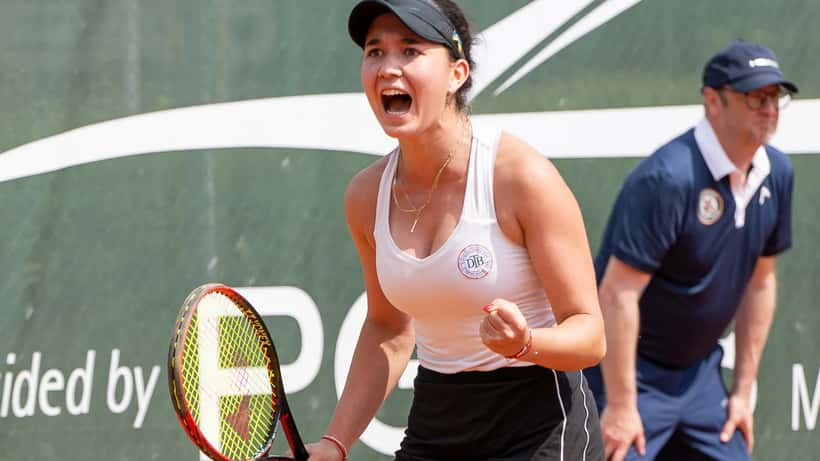
On September 3, 2026, while Eva Lys prepared to face Mirra Andreeva in the second round at Flushing Meadows, a different kind of match was quietly making headlines in sports-business circles: her decision to part ways with Asics in favor of Lacoste, cementing one of the most-discussed apparel sponsorship deals of the WTA season. For the 23-year-old German, currently ranked world No. 39 and Germany's highest-ranked active player, the move followed a breakthrough 2025 campaign that carried her from No. 130 at the season's start to the edge of the top 40 — and culminated in a fourth-round run at the Australian Open, where she defeated three ranked opponents before losing to Iga Swiatek. But the deal raises a question that applies to thousands of emerging professional athletes every year: what are the legal landmines buried in a sponsorship contract, and how do you avoid them before the ink dries?
How the Lacoste Deal Reflects a Broader Market Shift
Asics built much of its racquet-sport portfolio around high-performing mid-tier players — reliable, consistent, relatively affordable to sponsor. Losing Lys, who is now a fixture in the WTA's top 50 and a legitimate threat at Grand Slams, signals that premium lifestyle brands are moving their recruitment timelines earlier. Lacoste's bet is on upside rather than proven legacy, with the deal reportedly structured around a multi-year term and performance bonuses tied to ranking milestones.
That structure — base fee plus escalating bonuses — is standard practice at the upper levels of professional sport. What is far less standard is the negotiating leverage an emerging player actually brings to the table, and the legal protections she either secures or silently forfeits. Brands like Lacoste have legal teams whose job is to maximize commercial flexibility for the brand. The question every athlete should ask before signing is: who at that table is doing the same for me?
Why Tennis Players Are the Most Legally Exposed in Professional Sport
Professional tennis occupies a unique legal gray zone that most fans — and many emerging players — do not fully appreciate. Unlike NFL, NBA, or Major League Baseball athletes, who negotiate under collective bargaining agreements backed by certified player unions, WTA and ATP players are classified as independent contractors. There is no union. There is no standard minimum contract. There is no universal template for what an endorsement deal must include or exclude.
The Professional Tennis Players Association (PTPA), founded in 2020 by Vasek Pospisil and Novak Djokovic, has pushed back against this model — filing an antitrust action in 2025 challenging how the sport distributes its $1.8 billion in annual prize money and commercial revenue — but its influence on individual sponsorship negotiations remains limited. A 22-year-old player who just cracked the WTA top 50 typically sits across the table from a legal team retained by a global fashion house, often with only a manager or agent representing her interests — and managers have a financial incentive to close deals, not always to litigate every clause on her behalf.
Add to this the Federal Trade Commission's Endorsement Guides, which require athletes to disclose any "material connection" — including paid sponsorships — when promoting a brand publicly, including on social media. A single undisclosed Instagram post can expose both athlete and brand to FTC enforcement action. Most standard endorsement agreements transfer this compliance risk entirely to the athlete via an indemnification clause buried in the boilerplate.
Five Contract Clauses That Can Make or Break the Deal
Sports law attorneys who work with emerging players consistently identify the same pressure points in standard endorsement agreements:
One-sided termination rights. Brands typically retain the right to exit the agreement "for cause" or "for convenience" with as little as 30 days' notice. The athlete often cannot do the same. If a brand drops a player following a ranking decline or an off-court controversy — regardless of fault — she may receive only the current quarter's payment and find herself contractually restricted from signing with a competitor for the remainder of the original term.
Open-ended image rights scope. Endorsement contracts routinely grant brands unlimited, perpetual, worldwide rights to the athlete's name, image, and likeness across all media. An emerging player who fails to negotiate a post-termination sunset period — typically 12 to 24 months — may find her photo appearing in retail campaigns years after the relationship has ended, with no right to demand removal.
Performance triggers and clawbacks. Bonus structures are attractive on paper. But if a contract allows the brand to reduce base fees whenever the athlete drops below a ranking threshold, a single injury season can erase most of the contract's commercial value — and trigger repayment obligations the player never anticipated.
Exclusivity breadth. Most apparel deals include category exclusivity. What looks like a "footwear-only" exclusivity clause can silently expand to cover all athletic apparel if the drafting is broad. A player who signs with Brand A for shoes may be inadvertently prohibited from wearing Brand B's training apparel on practice courts.
Indemnification scope. Many contracts require the athlete to indemnify the brand against any reputational damage caused by her public statements, social media activity, or legal disputes. Broad indemnification language can expose a player to significant financial liability for events outside her control.
A Concrete Case: What Happens When the Brand Walks Away
Consider this scenario, drawn from a recurring pattern in athlete representation disputes. A US-based WTA player, ranked No. 48, signs a three-year apparel deal worth $120,000 per year. The contract includes a unilateral termination clause allowing the brand to exit with 90 days' notice, with no payment obligation beyond the current quarter. Eight months into Year 1, she suffers a wrist injury and her ranking falls to No. 86 over five months. The brand exercises its termination right.
Under the contract's plain language, she receives $30,000 for the current quarter — and nothing more. Had she successfully negotiated a guaranteed minimum of 12 months' total fees regardless of termination, she would have been entitled to $120,000, the full first-year value. The difference: $90,000 in foregone income, roughly equivalent to the prize money from three WTA 250-level quarterfinal appearances.
The problem compounds post-termination. The contract's image-rights grant contained no sunset clause. Eighteen months after the brand walked away, its European retail partner still displays her licensed image in outlet stores across three countries. She has no contractual mechanism to demand its removal. The brand did not renew. It does not need to.
If she had negotiated a 12-month post-termination image-rights sunset — a standard ask that many brands will accept — the exposure would have ended automatically. The lesson: each clause left unaddressed in the drafting phase becomes a liability the player carries for the life of the agreement and potentially beyond it.
What Eva Lys's Lacoste Deal Signals for Every Athlete at a Crossroads
Lys's new Lacoste arrangement is, by every observable metric, a commercial step forward. But the reported structure — multi-year, milestone-based bonuses, premium lifestyle positioning — is exactly the type of agreement that demands line-by-line legal review. Whether Lys benefits from dedicated sports legal counsel is not publicly known. What is certain is that Lacoste's legal team does.
For every Eva Lys commanding a Grand Slam second round at Flushing Meadows, there are hundreds of emerging athletes — club-level professionals finishing their university careers, WTA challengers negotiating their first brand conversations, NCAA seniors entering the open circuit — who will sign the first contract placed in front of them because they are grateful for the attention and afraid to push back. That instinct is human. The legal exposure it creates is real.
Three Steps Before You Sign
Any athlete entering an endorsement negotiation should take three concrete steps, regardless of the deal's headline value:
Get an attorney, not just a manager. A manager has a financial incentive to close the deal. A licensed attorney has a professional obligation to protect your interests. These are not the same role.
Negotiate three non-negotiables as a floor: a mutual termination clause or a guaranteed annual payment floor; a defined post-termination image-rights sunset of no more than 18 months; and explicit FTC compliance responsibility shared between athlete and brand.
Consult before the conversation starts. Early legal review typically costs between $500 and $2,000 for an emerging player's first endorsement contract. Recovering from a badly structured deal — in foregone income, restricted market access, and litigation — costs multiples of that.
This article is for informational purposes only and does not constitute legal advice. Consult a licensed attorney for guidance specific to your situation.
