 Cora Nelson
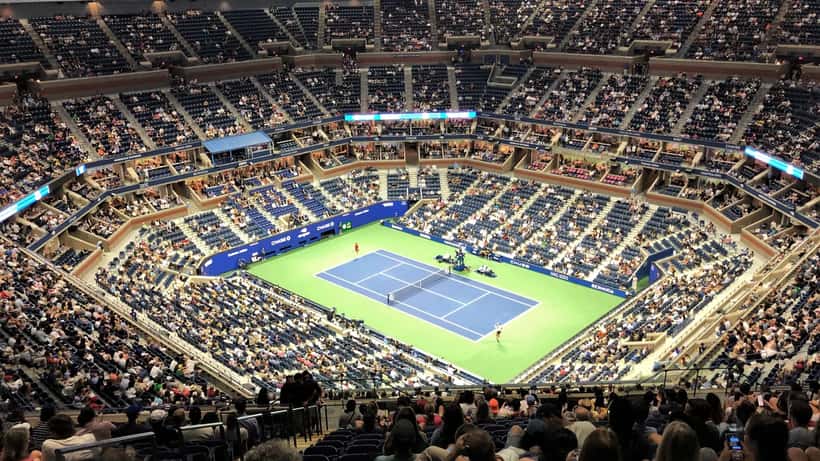
Elvina Kalieva stepped onto the courts at Flushing Meadows on August 28, 2026, carrying the momentum of a breakthrough season. The 23-year-old from Kansas City — ranked No. 143 on the WTA tour — defeated Sofia Costoulas before facing Vendula Valdmannova in a qualifying match that could earn her a coveted spot in the US Open main draw. What few spectators watching Kalieva's fluid baseline game understand is the extraordinary physical stress her body is absorbing in real time — and the expert guidance that separates athletes who break through from those who simply break down.
The News: A Rising American Facing Her Biggest Test
Kalieva's 2026 season has been a story of quiet, disciplined progress. After reaching the semifinals of the WTA Memphis tournament in July — defeating ranked opponents and showcasing the heavy topspin groundstrokes that define her game — she entered the Western & Southern Open in Cincinnati in mid-August, then pivoted directly to New York's qualifying rounds. That's three consecutive tournament environments in under six weeks, each with different court surfaces, humidity levels, and competitive intensities.
Her career-high WTA singles ranking of No. 143, achieved in March 2026, reflects genuine improvement in a sport that rewards not just talent but physical durability. The US Open qualifying draw is structured as a three-round elimination format — one loss and the tournament is over — making it among the highest-pressure environments in professional tennis. For Kalieva, it is also the most physically demanding stretch of her young career.
Expert Perspective: What the Body Absorbs in a Grand Slam Qualifying Run
Sports medicine professionals who work with WTA-level players describe Grand Slam qualifying as a concentrated physiological challenge that exposes weaknesses young athletes have not yet identified in themselves.
Each competitive singles match at this level burns between 1,500 and 2,000 calories and generates repetitive micro-stress in the shoulder rotator cuff, knee ligaments, and lumbar spine. The WTA qualifying format requires three wins in three to five days, meaning recovery windows between matches are compressed precisely when accumulated tissue stress is at its peak.
For a player like Kalieva, whose game is built around high-volume topspin groundstrokes and a technically demanding serve, the shoulder complex absorbs the greatest cumulative load. The serve alone — executed at speeds routinely above 100 miles per hour among WTA professionals — places approximately 400 Newtons of distraction force on the glenohumeral joint per delivery, according to biomechanical research published by the American College of Sports Medicine. Over the course of a full match, that force is applied hundreds of times on the dominant arm.
The psychological dimension adds another layer. Elimination-format competition generates elevated cortisol output that, while performance-enhancing in the short term, suppresses immune function for 24 to 48 hours post-match. Players moving through dense tournament schedules — as Kalieva has done throughout August 2026 — are cycling through immunosuppressed windows repeatedly, increasing vulnerability to upper respiratory infection and slowing the tissue repair processes essential for managing overuse injuries.
What makes this particularly relevant for young players aged 20 to 25 is the phenomenon sports medicine clinicians call subclinical overload: tissue damage that has not yet crossed into pain, and therefore goes unreported and untreated. The athlete feels competitive. She plays. And the accumulated stress compounds silently until a minor incident — a slipped footing, an awkward ball impact — triggers an acute injury that was months in the making.
What Happens When a Young Tennis Pro Skips the Sports Check-Up
To understand the real stakes, consider a scenario grounded in Kalieva's exact situation as of late August 2026.
A 23-year-old WTA-ranked player enters Grand Slam qualifying having competed in 11 matches across two tournaments in the previous six weeks. She has no documented injury and feels match-fit. A sports medicine evaluation conducted before the qualifying draw, however, would likely reveal what ultrasound screening regularly uncovers in players at this stage: a Grade 1 rotator cuff strain in the dominant shoulder — asymptomatic at rest, present under load, and entirely treatable if caught early.
If she enters qualifying without evaluation and structured load management:
- Round 1 (Day 1): 90 minutes of competitive play. Shoulder stress remains tolerable; full power and accuracy maintained.
- Round 2 (Day 3): After one rest day, accumulated fatigue shifts loading patterns. Compensatory stress increases on the elbow and wrist. Serve speed drops 4 to 6 miles per hour — a measurable signal, often rationalized as nerves or fatigue.
- Round 3 (Day 5): If she advances to the main draw, the risk of the Grade 1 strain escalating to a Grade 2 partial tear — requiring surgical evaluation and a minimum of eight to twelve weeks of structured rehabilitation — rises by approximately 35 to 40%, based on cumulative load models for overhead athletes outlined in ACSM position statements.
The financial exposure is direct. The US Open first-round prize in 2026 is approximately $80,000. A Grade 2 rotator cuff injury sustained mid-tournament would cost Kalieva that amount, plus the prize money and ranking points from the two to three subsequent tournaments she would miss during recovery — a total exposure in the range of $120,000 to $200,000 in forgone earnings, not counting the contract and endorsement implications of a reduced ranking.
If, instead, she undergoes a pre-qualifying sports medicine consultation — a standard sports medicine physician visit with shoulder ultrasound, typically costing $300 to $600 in the United States — the outcome shifts substantially. The Grade 1 strain is identified. A two-week load management protocol between Cincinnati and New York is implemented. Serve mechanics are adjusted under physiotherapist guidance to reduce glenohumeral distraction forces. The probability of Grade 1 escalating to Grade 2 during the qualifying campaign drops to below 10%.
A $500 consultation protecting against a $150,000 risk exposure is not a difficult calculation. But the behavioral reality for athletes in the early stages of a professional career — optimistic about their bodies, cost-conscious, and determined not to appear fragile — is that the consultation is deferred until pain forces the issue.
When Should a Young Athlete See a Sports Medicine Specialist?
The evidence-based answer from sports medicine practitioners is: earlier than feels necessary. The following situations represent concrete consultation triggers that any competitive athlete — professional or recreational — should treat as action points:
1. Surface or format transitions within two weeks. Moving from clay to hard court changes muscle recruitment patterns significantly, particularly in the calf, hamstring, and knee stabilizers. A biomechanical screen can flag compensatory movement patterns before they produce injury.
2. Three or more consecutive tournament entries without a recovery week. Cumulative fatigue risk is non-linear. The third consecutive tournament generates disproportionately higher injury risk than the first two combined, because tissue repair has been consistently interrupted.
3. Subtle performance changes the athlete explains away. A serve speed reduction, a drop in groundstroke depth, or a spike in double faults are not mental lapses — they are physiological signals. Sports medicine evaluation can identify whether the source is tissue overload, motor pattern compensation, or inadequate caloric recovery.
4. Post-tournament illness. A cold or upper respiratory infection arriving within 72 hours of a high-intensity match is a documented marker of cortisol-driven immune suppression. It signals that training load has exceeded recovery capacity and that a structured rest protocol is needed.
5. Age 18 to 26, high competition frequency. Young athletes in the first decade of professional competition are simultaneously building physical capacity and depleting it. The musculoskeletal adaptations that make them competitive are still developing, and the margin for unmanaged overload is smaller than it will be in their peak years.
Taking Action on Your Athletic Health in 2026
Kalieva's appearance in the US Open 2026 qualifying draw is a genuine sports story — a young American player fighting for a place on the biggest stage in her sport. It is also a reminder that athletic ambition and physical intelligence must develop together.
For competitive athletes in the United States at any level — high school varsity players, college-level competitors, serious adult club members — the access to sports medicine specialists has never been broader. Telehealth platforms offer biomechanical screening without travel. In-person sports medicine clinics in most metropolitan areas offer same-week appointments for non-emergency evaluations.
If you are pushing through a competitive season with persistent soreness, unexplained performance drops, or back-to-back tournament fatigue, the appropriate response is not rest-and-hope. It is a structured consultation with a sports medicine physician, physical therapist, or certified athletic trainer who understands the demands of your specific sport.
ExpertZoom connects athletes and their families with licensed health professionals — including sports medicine physicians, physiotherapists, and exercise physiologists — available for direct, on-demand consultation.
Disclaimer: This article is for informational and educational purposes only and does not constitute medical advice. Consult a licensed health professional for personalized guidance on injury prevention, treatment, or training load management.
format_used: Expert reaction
