 William Reed
New Yorkers waking up on Saturday, July 18, 2026 will find more than puddles on the sidewalk. Rain moving across the five boroughs into early Sunday is expected to fall as "dirty rain" — precipitation that drags smoke and soot out of the sky and deposits a gritty gray film on cars, windows and outdoor furniture. The cause is a thick plume of Canadian wildfire smoke that has prompted a National Weather Service Air Quality Alert, in what forecasters describe as the region's worst smoke event since June 2023.
For the roughly two million vehicles parked outdoors across New York City, that film is not just ugly. Left to bake on the paint, the acidic, particle-laden residue can etch a car's clear coat within days. Here is what is happening, why it threatens your vehicle, and the steps a professional detailer would take before the sun comes out.
What "dirty rain" actually is
Dirty rain, sometimes called muddy rain, forms when falling raindrops collide with smoke, ash and fine particulate matter suspended high in the atmosphere. Instead of washing the air clean, the rain acts like a sponge, pulling those particles down to street level. The result is a diluted, mildly acidic slurry that dries into visible spots and a dull, chalky haze.
The particles matter. Wildfire smoke is loaded with PM2.5 — fine soot smaller than a fraction of a human hair — along with trace combustion chemicals. When this mixes with moisture, it behaves much like classic acid rain, which forms when sulfur dioxide and nitrogen oxides bond with water vapor. Both leave behind a residue that keeps working on a painted surface long after the rain stops.
Why your car's paint is at risk
A modern car finish is built in layers: colored basecoat sealed under a transparent clear coat that provides the gloss and the first line of defense. Dirty rain attacks that clear coat. As the water evaporates, it concentrates the acidic particles into hardened spots. Those spots slowly etch microscopic pits into the clear coat, which show up as water marks, a milky dullness and rough patches you can feel with a fingertip.
The danger multiplies in July heat. A dark hood sitting in direct sun can climb past 140°F, and heat accelerates the chemical reaction between the residue and the paint. In practice, that means the same spots that would wipe off easily on Saturday morning can become permanently baked in by Sunday afternoon. Windshields, chrome trim and unsealed alloy wheels are vulnerable too.
The 5 steps a detailer would take now
Auto detailers who handle post-storm cleanups follow a consistent playbook. None of it requires special equipment.
1. Do not wipe it dry. Dragging a dry cloth across gritty soot is like sanding your own paint — the particles act as an abrasive and leave swirl marks. Resist the urge to "just give it a quick wipe."
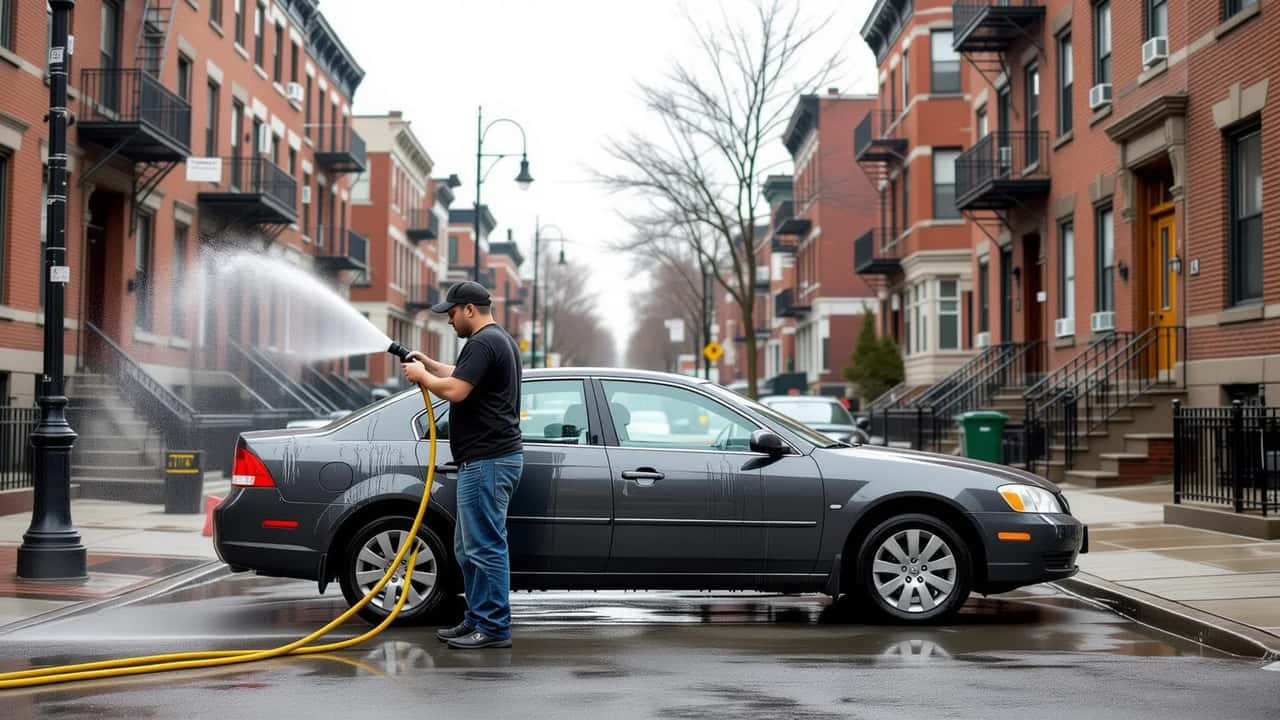
2. Rinse before you wash. Flood the panels with a hose or a bucket of clean water first to float the loose grit away. Only then use a dedicated car shampoo and a soft microfiber wash mitt, working top to bottom and rinsing the mitt often.
3. Treat stubborn spots gently. For dried marks that survive a normal wash, a 1:1 mix of white vinegar and distilled water sprayed on the spot, left for a moment, then wiped with a clean microfiber cloth will neutralize the acidity. Rinse immediately afterward.
4. Dry right away. Letting the car air-dry re-deposits minerals and can leave fresh spots. Use a clean microfiber drying towel and get the water off while the paint is cool, ideally in shade.
5. Add a protective layer. Once clean, a coat of quality wax or a paint sealant gives the clear coat a sacrificial barrier for the next event. Owners planning to keep a car long term increasingly opt for a professional ceramic coating, which bonds to the paint and makes contaminants far easier to rinse off.
If your car is already showing a dull haze or you can feel rough texture after washing, that is a sign the clear coat may be etched. At that stage a machine polish by a professional is usually needed to safely remove the damaged top layer — a job worth pricing before it worsens.
When to call an expert
A weekend wash handles surface soot, but two situations call for professional help. The first is visible etching or water spotting that will not buff out by hand; a detailing specialist can assess whether polishing or paint correction is the safe fix. The second is insurance-adjacent damage — if wildfire fallout has pitted the finish across an entire vehicle, a body shop or mechanic can document the condition, which matters if you later file a claim or sell the car.
Talking to a qualified mechanic or detailer before you reach for aggressive products can save the finish. Many DIY "acid rain removers" are too harsh for daily use and can strip wax or dull the clear coat if misapplied. An expert consultation costs far less than a full respray.
Protect yourself, not just the paint
The same smoke fouling your car is a health concern. Fine particulate matter can irritate the lungs, eyes and throat, and it is riskier for children, older adults and anyone with asthma or heart conditions. Check the current Air Quality Index for your neighborhood on the EPA's official AirNow.gov before spending time outside, keep windows closed when levels are high, and limit strenuous activity outdoors. This article is general guidance, not medical advice — if you have a respiratory condition and feel unwell, contact a healthcare professional.
For your vehicle, the takeaway is simple: act while the residue is still wet. A careful wash on Saturday morning, followed by a protective coat once skies clear, is the difference between a car that shrugs off this weekend's dirty rain and one that carries the marks for months.
