 Jessica Johnson
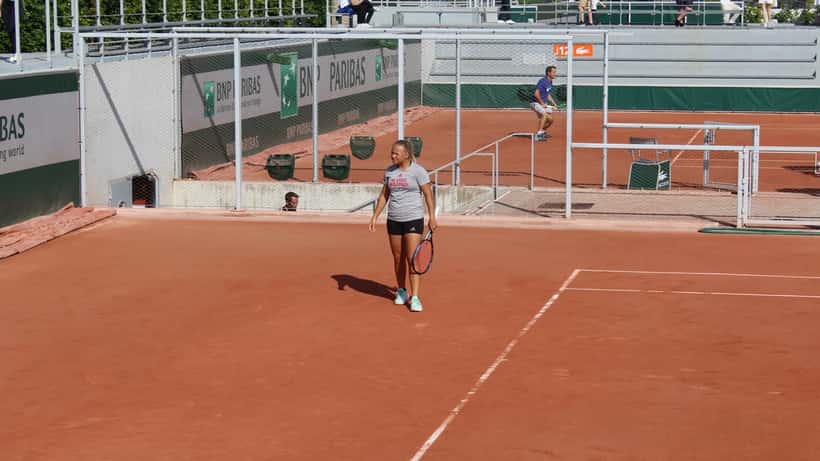
Diana Shnaider's 6-3, 6-3 demolition of fifth-seeded Jessica Pegula in Toronto on August 9, 2026 drew gasps around the tennis world. The 21-year-old Russian player — ranked 17th globally after a Roland Garros semifinal run earlier this year — is building a case as one of the most dangerous competitors heading into the US Open. But behind the headlines about her serve and forehand lies a legal and financial dimension to her North American earnings that almost no one in the stands is thinking about.
Shnaider's Toronto Run and the Road to Flushing Meadows
Arriving at the National Bank Open presented by Rogers as a known threat after her strong clay-court results in 2026, Shnaider's campaign shifted into another gear when she dispatched Pegula with barely 67 minutes of play. A quarterfinal slot against Iga Swiatek followed on August 10 — a legitimate shot at the semifinals of one of the WTA's biggest hard-court events.
The US Open begins August 25 at Flushing Meadows, New York. The 2026 tournament's prize pool is expected to approach or exceed the $75 million distributed in 2025, making it the year's richest Grand Slam financially. The numbers are significant even for early-round exits: a first-round loss still pays over $100,000. A run to the quarterfinals is worth approximately $510,000. The champion takes home more than $3.6 million.
For most players, these are the defining paydays of the season. For Russian nationals like Shnaider, every dollar of US prize money now passes through a legal filter that changed completely in August 2024 — and that most players' teams are still navigating without the treaty framework they once relied on.
The WTA's Neutral Policy: What It Covers and What It Doesn't
Since March 2022, the WTA has barred Russian and Belarusian players from competing under their national flags or having their national anthems played at tour events. Shnaider competes without Russian insignia on court, and tournament ceremonies reflect that policy. The arrangement has allowed the WTA to retain its full field of elite competitors while acknowledging the political context of Russia's invasion of Ukraine.
What the WTA's neutral athlete rules do not do is alter a Russian player's legal identity. Shnaider remains a Russian national under international law. Her income from US tournaments is classified by the Internal Revenue Service as US-source income earned by a nonresident alien. That classification — not WTA policy — determines how her prize money is taxed. And that treatment changed fundamentally in the summer of 2024.
The legal complexity surrounding international athletes' status is not limited to tax. As Daria Kasatkina's Australian citizenship process illustrated, Russian players increasingly need cross-border legal counsel to understand how nationality affects career options, visa rights, and financial obligations in each country where they compete.
The Tax Treaty Suspension That Changed Everything
On June 17, 2024, the US Department of the Treasury formally notified Russia of the suspension of key provisions of the US-Russia Income Tax Convention — specifically Articles 5 through 21 and Article 23 of the treaty. The suspension took effect on August 16, 2024.
Before that date, Russian nationals earning US-source income had treaty protections: reduced withholding rates on certain income categories, clearer rules about what the US government could tax, and mechanisms to prevent the same earnings from being taxed twice. After August 16, 2024, those protections ceased to apply.
The result: prize money paid to Russian nationals at US tennis events is now subject to the standard 30% withholding tax on FDAP income — fixed, determinable, annual, or periodic payments to nonresident aliens without a qualifying treaty in place. This is the statutory default rate under US tax law. According to IRS Publication 515, which governs withholding on nonresident aliens and foreign entities, tournament organizers are legally required to withhold at this rate before disbursing prize funds. There is no opt-out at the point of payment.
The $153,000 Withholding Scenario at the US Open
Here is what the numbers look like in practice. If Diana Shnaider reaches the quarterfinals of the 2026 US Open — a credible projection given her current form — she would earn approximately $510,000 in prize money. At the 30% statutory withholding rate, $153,000 is withheld from that payment before it reaches her account.
If she advances to the semifinals, the calculation shifts further: roughly $950,000 in prize money, with $285,000 withheld. A title victory, worth approximately $3.6 million at 2026 prize levels, would see more than $1 million withheld at source in a single payment.
These are not the final tax bills — they are the amounts withheld upfront by the tournament organizer. A Russian-national player with proper legal representation can file a US nonresident income tax return (Form 1040-NR) for the year in question. Legitimate business expenses — coaching and training fees, travel costs, equipment, agent commissions — reduce the taxable income base. If deductions are substantial enough, the actual tax liability falls below the withheld amount, generating a refund. For a player who has racked up significant expenses across a full season, this difference can reach $80,000 to $120,000 on a single Grand Slam quarterfinal run.
The critical caveat: this recovery is not automatic. It requires filing a correctly structured return, accurately characterizing the income, and substantiating all claimed deductions. Filing late or incorrectly can forfeit the refund opportunity entirely. The sooner a player or their legal team engages with this process, the more options remain open.
This Affects More Than Professional Athletes
Shnaider's situation illustrates a broader legal reality for any Russian national earning income in the United States in 2026. The treaty suspension does not apply only to professional athletes. It affects Russian-passport holders working in the US as consultants, freelance professionals, visiting academics, performing artists, or contract workers who earn US-source fees or payments.
Before August 2024, many Russian nationals in these positions relied on treaty benefits to avoid or significantly reduce US withholding. Those benefits no longer apply. If you are a Russian national who has received US-source payments since August 16, 2024 — from a US client, employer, or event organizer — and the 30% withholding was not accounted for in your tax planning, you may already have both an exposure and a recovery opportunity worth examining.
Understanding the split between withholding and actual tax liability is the starting point. As the rights and financial structures surrounding young professional athletes become increasingly complex at the international level, the need for legal and financial counsel that spans jurisdictions is accelerating — not only for stars like Shnaider, but for anyone navigating a career that crosses international tax lines.
Before the US Open Draw, Legal Planning Still Has Time
The US Open begins August 25, 2026. Any Russian national expecting to earn US prize money, consulting fees, or performance income in New York this summer is currently in a window where proactive structuring is still possible. Once the earnings are paid and the withholding is executed by the tournament, the options narrow to the retrospective route: file Form 1040-NR in the following spring, argue for correct characterization of income, and wait on any refund.
An international tax attorney or CPA specializing in nonresident alien taxation can model the actual liability against what will be withheld. They can also plan for quarterly estimated payments where relevant and ensure the annual return captures every allowable deduction. For a player with a serious US Open run, doing this work in advance rather than after the fact can be the difference between an efficient outcome and a prolonged IRS dispute spanning multiple tax years.
The treaty suspension has no current end date. Both governments would need to act jointly to restore the original framework — and no such process is underway in 2026. Until that changes, the 30% withholding rate is the operative reality for every Russian national earning US-source income, court by court and tournament by tournament.
This article is for informational purposes only and does not constitute legal or tax advice. If you are a nonresident alien earning income in the United States, consult a qualified international tax attorney or CPA for guidance specific to your situation.
Diana Shnaider will face whatever the US Open's first-round draw brings. Off the court, she and every Russian national earning money on American soil are navigating a legal landscape that has no WTA neutral designation — and that requires a very different kind of expert.
