 Isabella Torres
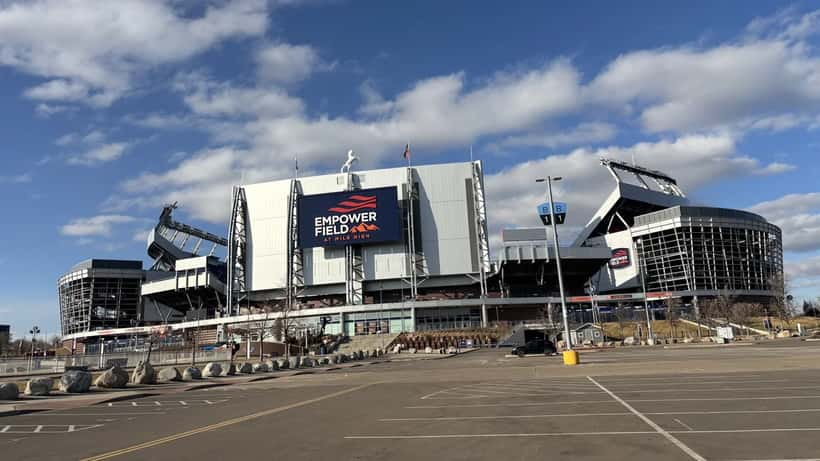
The Denver Broncos just completed the most significant AFC West power shift in a decade — dethroning the Kansas City Chiefs and entering the 2026 season as the division's new standard-bearers. With Bo Nix at quarterback and a fanbase that's been waiting years for this moment, Empower Field at Mile High is louder, fuller, and more electric than it's been in years. Week 4 brings the San Francisco 49ers to Denver on October 4, 2026 — a marquee matchup that will pack all 76,125 seats. But with record energy comes a risk that 76,000 fans rarely think about: what Colorado law actually gives you if something goes wrong inside that stadium.
How the Broncos' Comeback Season Is Changing the Crowd Dynamic at Empower Field
After years of watching Patrick Mahomes' Kansas City team dominate the AFC West, the Broncos' ascent to the top of the division has triggered fan energy that Colorado hasn't seen since the Super Bowl 50 era. Season ticket demand surged this offseason. The lower bowl is at capacity for every home game. CB Patrick Surtain II received a $5 million pay raise that signaled the team is building around its current core — and fans are responding.
That enthusiasm translates into very specific crowd behaviors on game day: surges after touchdowns, bottlenecks at the concourse-level stairwells, lines that back into walkways at concession areas, and post-game crowds that compress into ramps and corridors all at once. These are not hypothetical risks. In a case that became a landmark in Colorado stadium liability law, a Broncos fan fell approximately 60 feet from a stadium stairwell at Mile High in circumstances a subsequent lawsuit described as a "defective, unsafe, non-obvious and dangerous condition in a fire escape corridor and staircase." The family's attorneys argued that "inadequate staircase railings constituted an unreasonable risk of injury or death to patrons." The lawsuit named both the Metropolitan Football Stadium District and the stadium's private management company as defendants.
That case is worth understanding before you take your seat at the October 4 Broncos-49ers game — or any 2026 home game that follows.
What Sports Lawyers Say Is Different About Colorado's Premises Liability Law
Under Colorado's premises liability statute — C.R.S. § 13-21-115, codified by the Colorado General Assembly — every ticket-paying fan at Empower Field is classified as an "invitee": a person who enters a property for a business or commercial purpose. Invitees receive the highest standard of care that Colorado law imposes on property owners.
That means the Metropolitan Football Stadium District and its management company are legally obligated to exercise reasonable care to protect ticketed fans from known hazards, reasonably anticipated conditions, and dangers that a competent venue operator should identify and eliminate. This is not a vague standard. Colorado courts have applied it to specific conditions: slippery concourse surfaces, overcrowded stairwells, missing handrails, inadequate usher staffing at high-density sections, and lighting failures in emergency exits.
Where the law gets complicated — and where most injured Broncos fans get it wrong — is the quasi-governmental status of the Metropolitan Football Stadium District. Because the district operates as a public entity, Colorado law caps its direct liability at $150,000 per claim. That ceiling is not printed anywhere on your ticket, posted at the gates, or disclosed in the stadium's terms of entry. For a serious injury requiring surgery, rehabilitation, and weeks of lost wages, $150,000 will often fall well short of total damages.
This is exactly why attorneys representing injured fans consistently name both the Stadium District and every private management company involved in stadium operations on the day of injury. The private entities carry no such statutory cap, meaning the full value of a serious injury claim remains legally accessible if the case is properly structured from the outset.
A Season Ticket Holder Falls in Section 104: What the Numbers Look Like
Consider this specific situation, grounded in real legal parameters for Empower Field in the 2026 season:
A 38-year-old Denver resident — a season ticket holder in Section 104, lower bowl — attends the October 4 game against the 49ers. In the fourth quarter, after a Broncos go-ahead touchdown, the crowd in the lower bowl surges forward. She's descending the aisle stairs when a fan in the row behind loses balance and falls into her. She grabs a handrail that holds, but the impact twists her sideways and she fractures her wrist on the seat armrest.
Her emergency room bill: $9,400. Wrist surgery and hardware placement: $14,800. Occupational therapy: $3,200. She is a physical therapist's assistant and misses eight weeks of work — $12,800 in lost wages.
Total quantifiable damages: approximately $40,200.
If the fall happened because of a physical defect — a broken stair tread, a loose floor mat, a handrail that was documented as needing repair — she has a premises liability claim against both defendants. The Stadium District's portion is capped at $150,000 (her claim falls entirely below that ceiling), and the management company has no cap. Under Colorado's comparative fault rule (C.R.S. § 13-21-111), her recovery is reduced by her own percentage of fault: if she's found 20% responsible for not watching her footing, she recovers 80% — roughly $32,160. A plaintiff found more than 50% at fault receives nothing, which is why how the incident is documented in the first 24 hours is so consequential.
If the fall happened because of crowd surge without a physical defect, the legal path requires demonstrating that the venue had knowledge of the crowd density risk at that specific section and failed to act — by deploying additional ushers, widening the exit aisle, or managing post-touchdown surges the team has observed in prior games. This is harder to prove but not impossible, particularly in sections that have generated prior incident reports.
What changes her outcome significantly: whether she requested a stadium incident report before leaving, whether surveillance footage was preserved (stadiums typically retain footage for 30 days absent a legal hold request), and whether the fall location was photographed that day. These three actions — available to any fan in the first 60 minutes after an injury — determine whether a viable claim exists or dissolves.
Colorado sets the statute of limitations for premises liability at two years from the date of injury. For a game on October 4, 2026, that clock runs to October 4, 2028. The legal deadline seems distant, but the evidence deadline — especially surveillance footage — is 30 days.
The Pattern Lawyers See Every NFL Season
Fan injury claims at NFL stadiums follow predictable patterns. The injuries that generate viable premises liability claims in Colorado generally fall into three categories: structural defects (stairs, railings, flooring), crowd management failures (inadequate staffing at known high-density points), and food or beverage service incidents (spills that create slip hazards and are not promptly addressed).
Claims that are harder to sustain typically involve injuries caused entirely by other fans' unpredictable conduct, since the venue can only be liable for foreseeable third-party behavior it had a duty to prevent. However, post-score crowd surges at NFL games — especially in sold-out stadiums during a winning season — are increasingly treated as foreseeable by Colorado courts, because the venue has advance knowledge of attendance, the timing of peak crowd moments, and the locations where surges have historically occurred.
For context, see how comparable fan injury claims have played out at other major sports venues this season: Red Sox Fan Injury Legal Claim 2026: What Experts Say documents the legal framework at Fenway Park, while fan rights at international sporting events held in the US are examined in Brazil vs USA 2026: What Fan Legal Rights Apply When Things Go Wrong. The Colorado premises liability framework is comparable in structure but distinct in the quasi-governmental cap that applies specifically to publicly operated stadium districts.
What to Do If You're Injured at a Broncos Game This Season
The actions fans take in the first hour after an injury at Empower Field are more consequential than anything they do in the following months.
Before leaving the stadium: request a written incident report from stadium staff and get either a printed copy or a case reference number. If staff decline to file a report, document that refusal in writing via a text message to yourself noting the time and the employee description.
At the scene: photograph the specific condition that caused the injury — the stair edge, the flooring, the area of crowd density — from multiple angles. If other fans witnessed the fall, collect their names and contact information.
At the hospital: seek treatment the same day, even if the injury seems manageable. Delayed treatment creates documentation gaps that defense attorneys routinely exploit to argue the injury was pre-existing or not caused by the incident.
Afterward: send a written notice to the Metropolitan Football Stadium District within 180 days of the injury. For public entities in Colorado, this notice requirement under the Colorado Governmental Immunity Act (C.R.S. § 24-10-109) is separate from and earlier than the two-year statute of limitations — failing to file it can forfeit your right to sue the district regardless of how strong your case is.
Do not sign any release or settlement offer from the stadium, its management company, or their insurers without independent legal review.
A consultation with a Colorado premises liability attorney is typically free and will quickly establish whether your injury crosses the threshold for a viable claim, which defendants should be named, and whether the quasi-governmental cap affects your recovery strategy.
The Broncos' 2026 season is historic. Just make sure your game-day experience stays that way.
This article is for informational purposes only and does not constitute legal advice. Premises liability claims depend on the specific facts of each incident. Consult a licensed Colorado attorney for advice about your individual situation.
