 Jessica Johnson
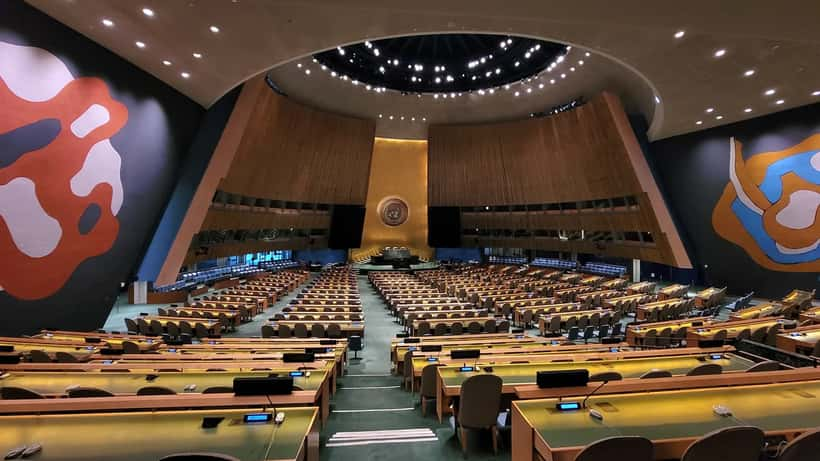
When Pacific island nation Nauru stepped up to the podium at the United Nations General Assembly on September 22, 2026, President David Adeang delivered a declaration that resonated far beyond the Pacific: "Say our name. Naoero." With those words, he formalized one of the most symbolically and legally significant administrative transitions in recent international law — a sovereign state shedding a colonial-era name and reclaiming its indigenous identity on the world stage.
The Republic of Naoero, as the country is now officially called, completed its constitutional name change in August 2026. The name "Nauru" was how colonial rulers — Germany, Britain, Australia, and New Zealand over successive administrations — approximated the indigenous Nauruan word. Now, for the first time in 58 years of independence, the spelling and pronunciation match: "Now-ero," not "Now-roo."
For most observers, this is a powerful story about decolonization and sovereignty. For international lawyers, compliance officers, and businesses with Pacific commercial ties, the name change raises an immediate and very practical question: what happens to every treaty, contract, passport, and compliance database entry that still reads "Nauru"?
Why 2026 Was the Year Naoero Reclaimed Its Name
The rename has been building for years, but 2026 supplied the legislative momentum. In May 2026, Naoero's parliament passed a constitutional amendment — a binding legal instrument under domestic and international law — officially changing the country's English name to the Republic of Naoero. The country formally notified the United Nations on June 26, 2026, triggering the recognition protocols that govern name changes among UN member states.
The context matters. According to the Australian Institute of International Affairs, renaming is part of a broader Pacific movement to reclaim indigenous sovereignty through legal and administrative channels. Naoero is one of the world's smallest independent nations: eight square miles of coral atoll with roughly 12,000 residents, independent since 1968 after successive colonial administration under four powers. For more than half a century, its name on every official document was the colonizers' approximation. That chapter is now formally closed.
The administrative consequences are concrete: the country's ISO international code is transitioning from NRU to NRO, and its citizens are now officially dei-Naoero rather than Nauruan.
What International Lawyers Are Watching
Name changes by sovereign states are not without precedent — Burma became Myanmar, Swaziland became Eswatini, Czechia became the shortform of Czech Republic — but each one creates genuine legal ambiguity that plays out in courts, arbitration tribunals, and compliance systems for years after the announcement.
The foundational question in international law is state continuity. Under the Vienna Convention on the Law of Treaties, when a state changes its name, it does not become a new legal entity. The existing rights and obligations of the formerly-named state continue under the new designation. Naoero therefore inherits all of Nauru's treaty obligations and retains all of its treaty rights — the legal person is uninterrupted.
That principle, while clear in theory, creates friction in practice across three distinct areas that international lawyers are already tracking:
Bilateral and multilateral treaties. Every treaty signed as "Nauru" technically remains valid, but parties must determine how to reference the counterparty in future correspondence and amendments. Some treaty registries, including the UN Treaty Collection, will update entries over the coming months — but the process is not instantaneous, and the interim period creates documentation gaps.
Commercial contracts. Private parties — shipping companies, resource agreements, aviation service contracts — may have executed instruments specifically naming "the Republic of Nauru" or "Nauruan law" as the governing framework. Depending on the drafting precision, a strict reading by an adversarial counterparty could raise questions about whether the contract's named entity still exists.
Country codes in financial and compliance systems. The shift from NRU to NRO touches every banking compliance system, sanctions screening database, and trade finance platform that uses ISO 3166-1 alpha-3 codes. Institutions that are slow to update may inadvertently flag legitimate Naoero-related transactions as involving an unrecognized or anomalous entity, creating delays and unnecessary compliance burdens.
A Concrete Case: The Honolulu Freight Operator's $180,000 Problem
Consider a scenario directly relevant to American businesses with Pacific exposure. A mid-sized freight operator based in Honolulu signed a multi-year contract in early 2024 with a Naoero-based phosphate trading intermediary. The contract — fairly standard boilerplate for Pacific commodity transactions — designates "the laws of the Republic of Nauru" as governing law and lists "Nauruan regulatory authorities" as the relevant oversight body for compliance certification.
Post-August 2026, that contract contains terminology that no longer matches any officially recognized legal entity by that name. What happens if a payment dispute arises?
If the Honolulu company needs to enforce a payment clause worth $180,000 in mid-2027, its counsel faces a threshold issue before reaching the merits: does the contract's reference to "Nauru" bind "Naoero"? Under the state continuity doctrine, the answer is almost certainly yes — courts and arbitrators would read "Nauru" as meaning the same sovereign state now called Naoero. But "almost certainly" is not "certainly," and the delta between those two phrases is measured in legal fees, potential delay, and the leverage a bad-faith counterparty can extract from that ambiguity.
The more acute risk lies in arbitration clauses. If the contract specifies "Nauruan arbitration procedures" or references a dispute resolution body whose formal name has changed as part of the country's rebrand, a counterparty facing a losing position has a ready-made procedural objection: that the arbitral clause designates an institution that technically no longer exists under that name.
The cost-benefit arithmetic is straightforward: a qualified international lawyer can draft a contract amendment — sometimes called a name-change novation — that substitutes "Republic of Naoero" throughout the original instrument in roughly two to four hours of billable time. At typical rates for international transactional work, that runs $600–$1,200. Against a $180,000 exposure, and the $15,000–$40,000 litigation cost of resolving a jurisdictional challenge in Pacific arbitration, the amendment is an obvious investment. For contracts above $25,000 with Pacific counterparties, most international trade lawyers would say the novation is non-negotiable.
What This Means for American Businesses and Individuals
The commercial footprint of Naoero in the United States is modest but real, concentrated in specific sectors:
Pacific shipping and logistics. Naoero serves as a transit and resupply point on Pacific freight routes. Contracts, bills of lading, and port service agreements using "Nauru" in party names or governing-law clauses need a systematic review.
Fishing and maritime rights agreements. Pacific island nations, including Naoero, hold sovereign rights over substantial exclusive economic zones. US fishing companies holding Pacific access licenses may have agreements referencing Nauruan jurisdiction or enforcement authority.
Financial compliance and KYC systems. Banks and fintechs performing Know Your Customer checks on Pacific-linked entities or their principals may find that NRU country codes no longer resolve correctly in their systems. Until compliance databases complete the update to NRO — a process that can take six to eighteen months across major providers — legitimate transactions may trigger false flags. A compliance attorney can prepare a brief legal opinion memo documenting the state continuity principle, which satisfies most institutional review requirements at a fraction of the disruption cost.
Existing visas and work authorizations. Any American holding a Naoero work permit or long-stay visa issued under "Republic of Nauru" branding should verify with Naoero consular authorities whether existing documents require endorsement. In prior analogous transitions (Eswatini being the most recent comparable case), existing valid documents were honored without reissuance — but obtaining written confirmation is prudent.
For a comprehensive explanation of state succession and name-change effects under international treaty law, the UN Office of Legal Affairs maintains the authoritative commentary on the Vienna Convention on the Law of Treaties.
Disclaimer: This article provides general information for educational purposes and does not constitute legal advice. Situations involving international contracts, treaty rights, or compliance obligations should be assessed by a qualified international lawyer.
What to Do Before Year-End
The proactive window is open and inexpensive. Here is what advisors are recommending to clients with Pacific commercial exposure:
Audit your contract portfolio. Any agreement executed before August 2026 that references "Nauru," "Nauruan," or the ISO code NRU should be identified and assessed. This is a document review task, not a legal analysis — start with your contract management system or outside counsel's file index.
Issue novation letters for material contracts. For agreements above $25,000, a name-substitution amendment is low-cost insurance. The amendment itself is simple; what requires professional judgment is ensuring it is correctly executed and that all counterparty signatories are properly identified under the new name.
Update compliance screening parameters. If your compliance infrastructure uses country-code-based screening, add NRO explicitly and map it to the historical NRU record. Do not simply delete NRU — legacy transaction history still references it.
Request a state continuity opinion memo where required. Institutional counterparties — correspondent banks, regulated clearinghouses, government procurement offices — sometimes require documented legal confirmation before accepting contract continuity. A one to two page opinion from an international law specialist satisfies this requirement in most contexts.
Consult an international lawyer. Applying the state continuity doctrine to specific contract language requires professional judgment. The fact pattern in your agreements will determine whether a novation is sufficient or whether a more formal amendment is needed. Earlier review means lower cost and more options.
