 Daniel Miller
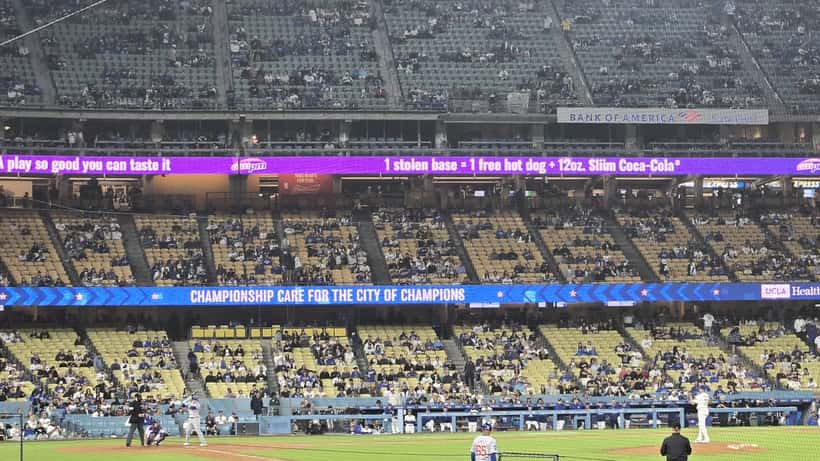
The Chicago Cubs arrived in Los Angeles on April 24, 2026, riding a stunning 10-game winning streak. By April 25, the Dodgers had ended it decisively — six runs in the fourth inning, a 12-4 victory, and the series knotted at one game apiece. As both teams prepare for today's decisive third game (April 26), Cubs left-hander Shota Imanaga facing Dodgers starter Justin Wrobleski, the real competition between these two franchises is playing out in a place fans never see: the data centers powering modern baseball.
Seven Terabytes Per Game
Statcast, Major League Baseball's official tracking system, generates up to seven terabytes of data per game, according to MLB.com. High-speed cameras and radar arrays positioned throughout every MLB stadium continuously measure pitch velocity, spin rate and spin direction, launch angle, exit velocity, sprint speed, fielding arm strength, and catch probability — on every single pitch, hit, and fielding play across a 162-game season.
That data volume would overwhelm most organizations. MLB handles it through a partnership with Google Cloud — documented in the Google Cloud MLB case study — using Vertex AI and BigQuery to transform raw ball-tracking and player-pose data into predictive models in real time. The result is a system capable of answering questions during a game that previously required weeks of post-season film review.
How Teams Translate Data Into Wins
The competitive applications of Statcast data have reshaped how MLB franchises build rosters, manage games, and develop players:
Defensive alignment optimization. The Houston Astros used Statcast-generated heat maps of batted-ball distribution to redesign their defensive positioning — successfully reducing right-handed hitters' opposite-field hit rate to a league-low 9% during a 2023 season that the analytics community widely studied. The Cubs and Dodgers operate similarly sophisticated analytics departments that inform every defensive alignment decision.
Injury prevention through wearable integration. Beyond Statcast cameras, teams now integrate wearable sensor data that captures workload, heart rate, and joint stress during games and practices. Combined with motion capture analysis of pitching mechanics and swing paths, teams can identify early warning signs of overuse injuries before they manifest as missed starts. This capability explains why Shota Imanaga has been managed so carefully by the Cubs — his 2.17 ERA through the early 2026 season reflects not just talent but a precisely calibrated workload strategy.
Real-time in-game adjustments. Statcast gives coaching staffs the ability to make data-informed decisions during the game itself — adjusting pitcher usage based on velocity decline trends, shifting defensive alignments based on situational batter data, or recognizing when a hitter has adapted to an opposing pitcher's release point. Teams that act on this information faster than their opponents gain measurable advantages in late-inning situations.
Machine learning for player evaluation. Teams train proprietary machine learning models on years of Statcast data to evaluate players beyond traditional statistics. Exit velocity, spin rate, and expected batting average metrics allow scouts and analysts to identify players whose underlying performance metrics outpace their current statistics — essentially surfacing undervalued talent before the broader market catches up.
The Cubs' Winning Streak — What the Data Says
The Cubs' 10-game winning streak — one of the most impressive early-season runs in recent memory — reflects an organization that has fully embraced evidence-based roster construction. The acquisition of players like Imanaga, whose mechanics and spin data attracted advanced analytics attention in Japan before his MLB debut, exemplifies how Statcast-era evaluation has globalized player scouting.
The Dodgers, equally data-forward, ended the streak by exploiting specific vulnerabilities exposed in their own analysis — the six-run fourth inning on April 25 came against the Cubs' bullpen, a segment of the roster where Dodger analysts had identified matchup advantages. Justin Wrobleski's 3-0 record and 1.88 ERA entering today's game reflect similar analytical backing: his pitch mix, designed around Statcast-validated movement profiles, has proved difficult for opposing batters to time.
What Baseball Analytics Teaches Any Business
The technology architecture behind Statcast — high-volume data collection, machine learning classification, real-time decision support — is no longer exclusive to sports. The same principles that allow the Cubs and Dodgers analytics departments to turn seven terabytes of game footage into competitive strategy are available to businesses of any size through cloud platforms, AI analytics tools, and data management systems.
What changes the outcome is not access to the technology but the expertise to implement it. IT specialists who understand how to architect data pipelines, train predictive models, and present actionable insights to decision-makers provide the same function for businesses that a baseball analytics director provides for a team: turning raw information into competitive advantage.
The Cubs-Dodgers series this week is a useful reminder that in 2026, performance differences at the highest levels of competition are rarely about effort alone. They are about information — and who uses it better.
At ExpertZoom, IT specialists with expertise in data analytics, cloud architecture, and digital transformation are available to help businesses build the technology infrastructure that turns their own data into strategic decisions.
