 Bernard Stone
Whether you are dodging the line for a hot dog combo or debating whether the new chicken tenders are worth the splurge, the Costco food court has become one of the most-discussed value propositions in American retail in 2026. With fast-food prices rising 3.2% year over year according to Toast's 2026 Menu Price Monitor, Costco's stubbornly cheap menu is attracting renewed attention — and not just from hungry shoppers.
Financial planners are increasingly pointing to the Costco food court as a case study in systematic household budget optimization. The numbers are real, the savings are significant, and for millions of American families, understanding how to leverage this resource could translate into hundreds — or even thousands — of dollars redirected toward savings or investment.
Why the Costco Food Court Is Back in the Spotlight in 2026
The food court's return to the headlines this fall has several drivers. First, Costco completed its transition back to Coca-Cola products at the food court fountain this summer, ending its years-long Pepsi partnership. For regulars, this is the most tangible change to the daily experience.
Second, the chain is currently rolling out Chicken Tenders in select US warehouses — a five-piece basket priced at $6.99, the first significant protein addition since the calzone was retired. The test item has generated considerable buzz since its July 2026 debut.
Third — and most importantly for budget-watchers — the broader fast-food landscape has continued its upward drift. The average fast-food burger now costs $14.53, a 3.2% increase year over year. A burrito has risen 3.3% to $13.43. Against this backdrop, the Costco $1.50 hot dog and soda combo stands as one of the most remarkable economic anomalies in American consumer life.
The Numbers That Tell the Real Story
The Costco hot dog combo has been priced at $1.50 since 1985, when a lone cart was parked outside the Portland, Oregon, warehouse. In the four decades since, the U.S. Consumer Price Index for food away from home has risen by more than 200%. According to the U.S. Bureau of Labor Statistics CPI Inflation Calculator, that $1.50 hot dog would cost approximately $4.62 today if it had simply tracked inflation — more than three times the current price.
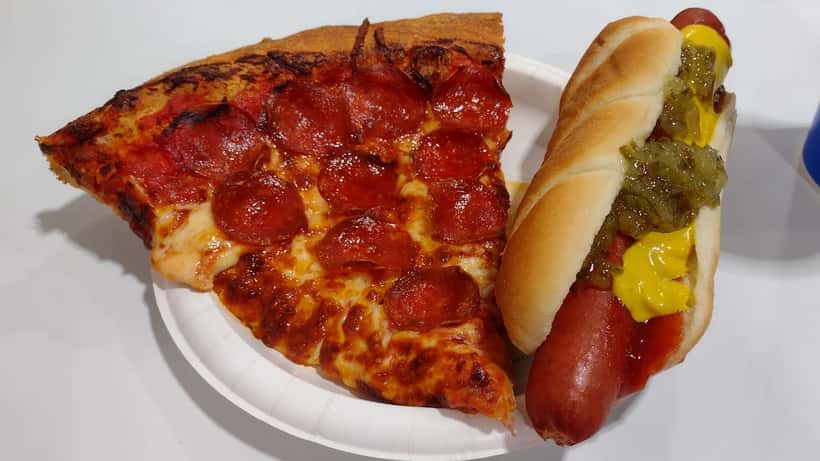
The pizza slice tells a similar story. At $1.99, it has barely moved in years, while comparable quick-service meals routinely top $10 at most chains.
The 2026 Costco food court menu now includes 12 main items. Highlights:
- Hot dog + soda combo: $1.50
- Pizza slice: $1.99
- Chicken bake: $3.99
- Chicken tenders (test, select locations): $6.99
- Double Chocolate Mint Sundae: $2.99
- Fountain drink (small): $0.79
Prices top out at $6.99 — still competitive with the cheapest fast-food combo at most national chains. Costco has historically treated the food court as a loss-leader: items are priced below market cost to drive warehouse traffic and membership renewals. CEO Ron Vachris has publicly committed to keeping the hot dog combo at $1.50 for the foreseeable future. This is not charity — it is a calculated strategy that benefits every cardholder who eats there.
A stat-grid snapshot: Costco vs. the market
| Item | Costco 2026 | Fast-food avg 2026 | Savings |
|---|---|---|---|
| Hot dog + drink | $1.50 | $4.62 (inflation value) | $3.12 |
| Pizza slice | $1.99 | ~$5.50 (QSR avg) | $3.51 |
| Burger combo | N/A | $14.53 | — |
| Chicken basket | $6.99 | ~$12–14 | ~$5–7 |
What Changed on the Menu in 2026
The biggest operational shift this year was the Coca-Cola transition. Costco's fountain beverage program reverted to Coca-Cola products this summer after running on Pepsi, a move the company had telegraphed earlier in the year. Most US locations now dispense Coke, Diet Coke, and Sprite from the soda station.
On the food side, the standout addition is the Chicken Tenders — a 5-piece basket currently in limited test rollout. At $6.99 and approximately 1,640 calories, this item targets the lunch crowd that previously passed on the food court for heartier off-site options. If the test performs well, a national rollout before the 2027 fiscal year appears likely.
The Double Chocolate Mint Sundae debuted in February 2026 as a seasonal replacement for the Salted Caramel Brownie Sundae introduced last fall. At $2.99, it continues the food court's tradition of rotating dessert items designed to keep frequent visitors engaged.
What has NOT changed is equally telling: the core value menu — hot dog, pizza, chicken bake — remains anchored at prices that have stayed flat for years as every competitor has drifted upward.
The Concrete Budget Scenario: What These Prices Actually Mean for a Family
Consider a household of four — two adults and two children — who visit a Costco warehouse on weekends. Each trip, they stop at the food court for a quick meal before heading home.
Typical Costco food court meal for four:
- 2 hot dog combos (adults): 2 × $1.50 = $3.00
- 2 pizza slices (children): 2 × $1.99 = $3.98
- 1 sundae to share: $2.99
- Total: $9.97
Same scenario at a national fast-food chain:
- 2 adult combo meals at current average: 2 × $14.53 = $29.06
- 2 kids' meals: 2 × $6.99 = $13.98
- Total: approximately $43.04
Gap per visit: $33.07. If this family visits Costco twice per month — a conservative figure for active members — the annual savings from choosing the food court over fast food reaches approximately $793. For families eating there weekly, that figure climbs past $1,720 per year.
Now apply a simple if/then logic: if you currently spend $43 per fast-food visit and you shift two of those visits per month to the Costco food court at $9.97, then you free up roughly $793 annually. That sum, redirected into a high-yield savings account at 4.5% APY, grows to approximately $8,800 over ten years without any additional contributions. Invested in a diversified index fund at a historical average of 7% annually, it compounds to roughly $11,000 over the same period.
This is precisely the type of recurring spending shift that wealth management consultants identify during household cash flow audits. The Costco membership itself costs $65 per year (Gold Star) or $130 (Executive). At two food court visits per month, the membership fee is recovered in a matter of weeks from food savings alone.
When a $1.50 Hot Dog Becomes a Wealth Management Conversation
Identifying savings opportunities like the Costco food court is one piece of a larger household budget picture. Where most families stumble is in follow-through: the savings exist on paper but get absorbed back into discretionary spending rather than being systematically directed toward financial goals.
A wealth management consultation becomes particularly valuable when:
- Your household spends more than $600 per month on dining out or food away from home
- You have variable income and need help structuring a predictable monthly budget
- You are approaching a major life event — home purchase, college funding, retirement — that requires deliberate reallocation of discretionary spending
- You want to build a concrete investment plan for small but recurring monthly savings
A qualified wealth advisor can analyze your current spending patterns, model the compounding impact of targeted behavioral changes, and identify tax-advantaged accounts that maximize the value of redirected dollars. Just as Costco systematically protects its $1.50 price point as a deliberate business strategy, households benefit from applying the same intentional discipline to their own finances.
As fast-food prices continue their upward trajectory into 2026 and beyond, the gap between what families spend eating out and what they could spend is widening — and so is the opportunity cost of ignoring it.
Disclaimer: This article provides general financial information for educational purposes only and does not constitute professional financial or investment advice. Consult a licensed wealth management professional for guidance specific to your financial situation.
