 Daniel Sterling
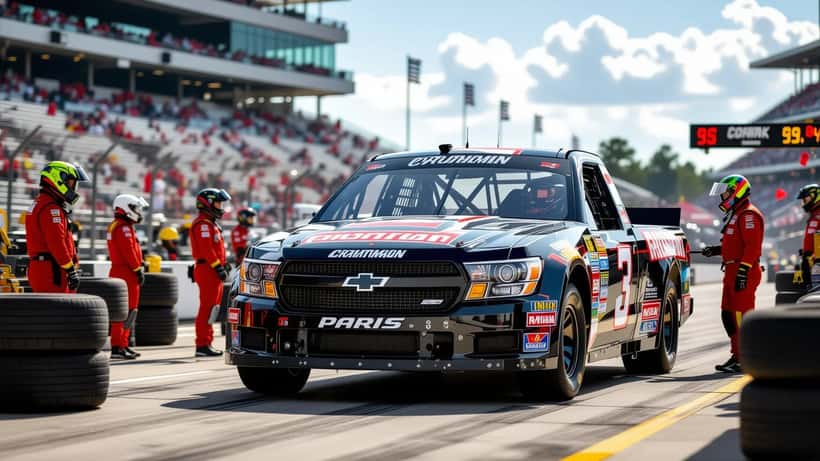
Corey Heim is leading the 2026 NASCAR Craftsman Truck Series in points after sweeping Darlington and Rockingham in back-to-back race weekends. He won the Buckle Up South Carolina 200 on a stunning last-lap pass of Ross Chastain, claimed the Triple Truck Challenge bonus at Rockingham, and now sits atop the standings tied with Kaden Honeycutt on 190 points — holding the tiebreaker on two victories. He is also entirely ineligible to defend his 2025 championship.
The reason is not performance. It is paperwork. Heim and TRICON Garage never filed the series-declaration waiver that NASCAR's rulebook requires when a driver wants to compete for points in a series while also racing in another national series during the season. With Heim splitting time across the Truck, Xfinity, and Cup schedules in 2026, TRICON did not apply — and NASCAR has not granted — the waiver that would put him back in the championship picture.
Why this is a contract story, not just a racing story
For fans the headline is "best driver, no title." For the rest of us it is a useful look at how sport-eligibility rules collide with athlete contracts, sponsor obligations, and team strategy — and how those tensions get resolved (or don't) outside the public eye.
NASCAR's series-declaration rule lives in Section 11 of the NASCAR Rule Book, the part of the document covering driver and entrant eligibility. The rule is administered by the sanctioning body, which means the decision to grant or deny a waiver sits with NASCAR officials, not the driver and not the team. That structure — a private league exercising commissioner-style discretion — appears across most US professional sports and has been repeatedly upheld by federal courts under the "internal affairs" doctrine.
For an attorney advising a professional athlete, three questions come up immediately whenever a league rule like this is in play.
The three questions a sports attorney asks
1. Who has the right to file?
Eligibility waivers in motorsport are typically filed by the team, not the driver, because the team holds the charter or owner license that NASCAR sanctions. That puts the driver in a structurally weak position: a champion-caliber competitor cannot unilaterally apply for the paperwork that would let him chase the title. Driver contracts at the top development teams usually contain a clause obligating the team to "use commercially reasonable efforts" to preserve championship eligibility, but the language varies and is rarely litigated publicly.
2. What does the sponsor contract require?
A driver's primary-sponsor agreement almost always contains a championship-or-playoff incentive — bonus payments triggered by points-paying race finishes, top-10 standings, or a postseason berth. When eligibility is lost mid-season, those incentives can become unreachable. Sponsors generally have negotiated remedies (a make-good in the following season, additional appearances, or a renegotiated base fee), but the back-and-forth happens through counsel, not on social media.
3. What is the league's discretion really worth?
Sanctioning-body discretion is broad but not unlimited. Courts have generally declined to second-guess league competition decisions, but they will intervene where a rule is applied arbitrarily or in violation of the league's own written procedures. The relevant federal framework, including the antitrust exemptions and labor-law treatment summarized by the U.S. Department of Labor's coverage of professional athletes, shapes what claims a driver can or cannot bring.
Why TRICON didn't file
The reporting around Heim's status suggests a strategic calculation, not an oversight. Splitting a top-tier driver across the Truck, Xfinity, and Cup schedules is expensive in tire allocation, crew hours, and travel, and the points the driver scores in a non-declared series do not advance any championship. By not declaring him in the Truck Series, TRICON keeps Heim's calendar flexible for Cup development starts without the weekly pressure of defending a title.
That logic is rational from a team perspective. From a driver-career perspective it is more complicated. Truck Series championship pedigree is one of the few hard credentials a young driver can take into Cup-team negotiations, and walking away from a likely back-to-back title is a meaningful career-equity decision. Whether Heim's contract gave him any say in that decision — and what compensation, if any, he received for waiving it — is the kind of question a sports lawyer would press on hard.
The takeaway for anyone with a high-performance contract
The Heim situation is a clean reminder that the most consequential clauses in a professional-services contract are often the ones nobody reads twice: who controls eligibility filings, who controls schedule decisions, who pays when an external rule wipes out an incentive payment. Three things any athlete, performer, or commission-based professional should look for in their own agreements:
- Eligibility-preservation clauses — does the team, agency, or employer commit to filing the paperwork required to keep you qualified for bonus-triggering outcomes?
- Make-good language — if eligibility is lost for reasons within the counterparty's control, is there a substitute payment, a roll-forward to the next year, or a reduction in the counterparty's deliverables?
- Notice provisions — when must you be told about a decision that affects your incentive compensation, and in what form?
These are the questions a competent contract attorney runs through before signing. They are also the questions that surface, painfully, after the deal is already done.
Heim has six more races' worth of wins ahead of him this season, no realistic path to a title defense, and a contract structure that almost certainly anticipated this outcome. For everyone else watching, the lesson is that the fine print decides more championships than the green flag does.
