 Laura Clark
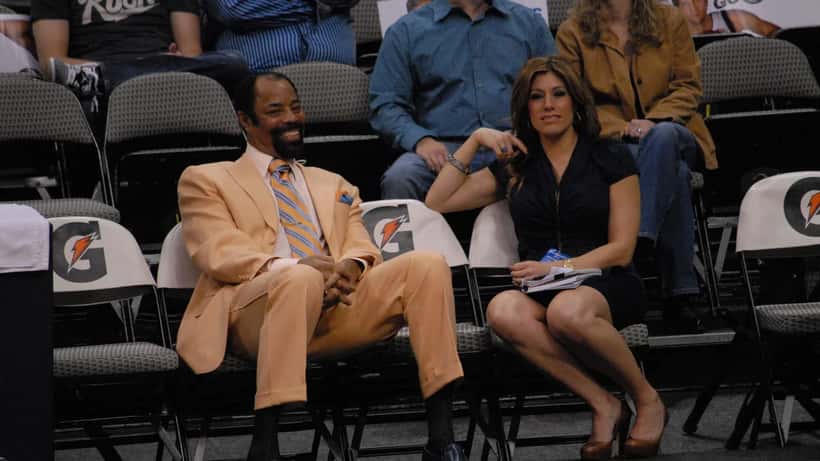
Walt "Clyde" Frazier was the one handing out the trophy. On May 23, 2026, as the New York Knicks completed a sweep of the Cleveland Cavaliers to advance to the NBA Finals for the first time since 1999, Frazier stood courtside to present Jalen Brunson with the Larry Bird Trophy as Eastern Conference Finals MVP. At 81 years old, the Knicks legend looked as sharp as the suits he has made famous over five decades. Just one week earlier, on May 16, Long Island University had honored him with a Doctor of Humane Letters at their centennial commencement ceremony at Barclays Center.
Frazier is not merely surviving his 80s — he is thriving in them. That reality prompts a serious health question: what do elite former athletes do differently, and what can ordinary Americans learn from their approach to aging?
A Lifetime in Motion
Clyde Frazier played 13 seasons in the NBA, winning two championships with the Knicks in 1970 and 1973. His position as a guard demanded explosive lateral movement, high-intensity cardio, and sustained hand-eye coordination — physical demands that, counterintuitively, may have set a foundation for healthy aging decades later.
Research published by the National Institute on Aging shows that lifelong physical activity is among the strongest predictors of healthy aging outcomes, including lower rates of cardiovascular disease, better cognitive function, and reduced risk of falls. Former athletes who continue even moderate activity into their 50s, 60s, and beyond tend to outperform sedentary peers on measures of muscular strength, balance, and metabolic health.
Frazier has spoken publicly about maintaining a disciplined diet and exercise regimen throughout his life. "I've never smoked, never really drank," he told interviewers. His consistency is unusual — but it points to a health principle that any doctor working in geriatrics or preventive medicine would recognize.
The Joints Question: What Former Athletes Actually Face
The common assumption is that former professional athletes pay a heavy price in their later years — arthritic knees, bad hips, degenerative spine conditions from years of high-impact play. And that assumption is partially correct. Former NFL linemen, for instance, face elevated rates of joint replacement and chronic pain compared to the general population.
But the picture is more nuanced for basketball players. According to MedlinePlus, the National Library of Medicine's public health resource, joint outcomes in older athletes depend heavily on injury history (especially ACL and meniscus damage), body weight management in retirement, and sustained low-impact activity. Former guards who maintained a healthy weight and stayed active often retain better joint function than sedentary non-athletes of the same age.
Frazier's slim, athletic build at 81 is not incidental — it is likely one of the primary reasons he remains physically vibrant. Excess weight is among the leading drivers of knee and hip osteoarthritis in older adults, and the load reduction from maintaining a healthy body mass index is measurable in joint imaging studies.
Cognitive Longevity: The Broadcaster's Edge
What is perhaps most remarkable about Frazier is his continued excellence as a broadcaster. His vocabulary — rhyming phrases, creative descriptions, quick situational analysis — requires strong working memory, linguistic fluency, and sustained concentration. He is doing cognitively demanding work in front of millions of viewers in his ninth decade of life.
Cognitive science has long established that mental engagement is a key predictor of brain health in aging. Continuous learning, complex language use, and social interaction are all associated with reduced rates of cognitive decline. Frazier's broadcasting career, which began in 1988 after his playing days, may have provided exactly the kind of sustained mental challenge that keeps the brain resilient.
For ordinary Americans approaching retirement, the lesson is actionable: staying mentally engaged — whether through work, volunteering, learning a new skill, or active social participation — is not just emotionally rewarding. It is medically significant. A physician specializing in geriatric medicine or preventive health can help patients design a health-aging plan that incorporates both physical and cognitive elements.
What the Knicks' Finals Run Means for Frazier — and for Aging Fans
The Knicks' advance to the 2026 NBA Finals is not just a sporting event. For a generation of New York fans who grew up watching Frazier play, it is a moment that reconnects the present to a celebrated past. The emotional intensity of fandom, while generally positive, does carry real physiological effects in older adults.
Research consistently shows that intense emotional arousal — the kind experienced during a high-stakes sporting event — temporarily elevates blood pressure and heart rate. For older fans with underlying cardiovascular conditions, this is worth monitoring, not avoiding. Cardiologists and sports medicine physicians often recommend that patients with heart conditions keep their home medication accessible during high-stress sports events and take note of any chest pain or unusual shortness of breath.
That said, the joy of shared experience and community that major sports moments generate has its own protective effects. Social connectedness is one of the most robust predictors of longevity and mental health in older adults — a fact that makes being a Knicks fan, at least for this postseason, potentially good for your health.
Frazier himself embodies the connection between emotional vitality and physical health. His evident joy in the Knicks' current run — and in a career still in full swing at 81 — is a living demonstration that aging need not be retreat.
What a Doctor Can Help You Build
If Frazier's story prompts you to think about your own aging trajectory, that is exactly the right response. A primary care physician, geriatrician, or preventive medicine specialist can assess your current baseline — cardiovascular fitness, joint health, cognitive markers, metabolic indicators — and build a plan suited to where you are now and where you want to be at 70, 80, or beyond.
The elements that Frazier appears to have maintained — physical activity, a healthy body weight, cognitive engagement, a sense of purpose — are not secret. They are well-documented drivers of healthy aging. The challenge is implementation. And the earlier that plan begins, the more effective it tends to be.
Just as late-career athletes like Paul Goldschmidt remind us that physical performance can extend well past what conventional wisdom suggests, Clyde Frazier at 81 is evidence that the ceiling for vibrant aging is higher than most Americans assume.
This article is for informational purposes only and does not constitute medical advice. Consult a licensed physician or healthcare professional for personalized health guidance.
