 Emily Wang
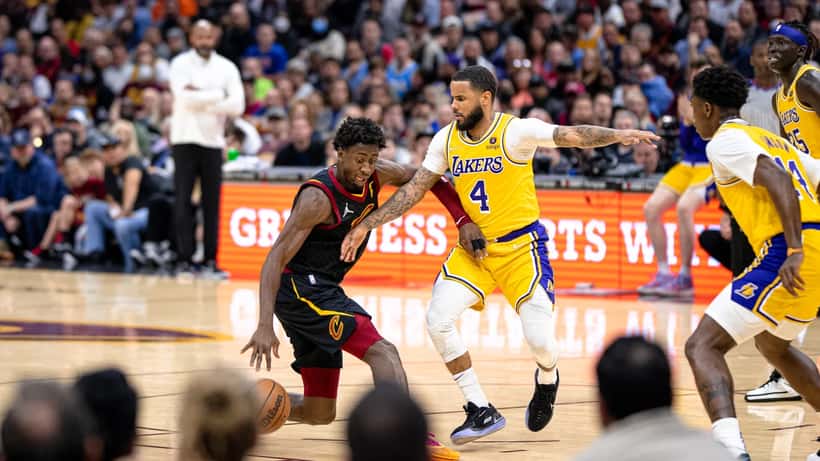
On May 11, 2026, Caris LeVert suited up for the Detroit Pistons in Game 4 of the Eastern Conference Semifinals against the Cleveland Cavaliers — the team that traded him away just over a year ago. He was listed questionable with a right heel contusion. He played anyway, hitting a 25-foot three-pointer in the first quarter. For the Pistons, he is averaging 4.7 points per game in the playoffs on a contract worth $14.5 million per year. The contrast between that salary and that stat line raises a question that goes beyond basketball: when an NBA team pays a veteran that kind of guaranteed money, what legal protections and obligations come with the deal — on both sides?
What "Guaranteed" Actually Means in an NBA Contract
LeVert signed a two-year, $29 million deal with the Detroit Pistons in the 2025 offseason, following a trade from Cleveland to Atlanta in February 2025. The contract is fully guaranteed, meaning the Pistons are obligated to pay the full amount regardless of his performance, injuries, or how many minutes he plays.
Under the collective bargaining agreement between the NBA and the National Basketball Players Association (NBPA), guaranteed money cannot be recovered by the team without the player's consent — even if a team believes the player is underperforming. Teams can trade fully guaranteed contracts, but cannot simply release a player and recoup the dollars. The only exception: contracts with for-cause termination clauses, which typically apply only to criminal convictions, fraud, or deliberate misrepresentation during contract negotiations.
For the full framework governing guaranteed salaries and termination rights, see the NBA Collective Bargaining Agreement via the NBPA.
The Second Apron Era: Reshaping the Mid-Tier Veteran Market
LeVert's situation reflects a structural shift in how NBA franchises approach veteran contracts in the 2025-26 era. The 2023 CBA introduced the "second apron" — a hard salary cap threshold above which teams face severe restrictions: no sign-and-trade acquisitions, no aggregating salaries in trades, and reduced draft compensation for sent picks.
Teams operating above the second apron — including several Eastern Conference contenders — have effectively been frozen out of signing mid-tier veterans at $10M+ per year. This paradoxically inflates the market for players like LeVert in the off-market: teams below the threshold compete aggressively for veterans who can fill bench depth, driving salaries higher than traditional efficiency metrics might justify.
For a bench veteran averaging 7.4 points per game in the regular season, $14.5 million per year would have seemed extraordinary under the previous CBA. Under the second apron structure, it reflects new market logic.
Minutes Disputes and Trade Clauses: What Player Rights Actually Cover
A common misconception is that high-paid bench players have recourse if a team dramatically reduces their minutes. Under the standard NBA contract, there is no guaranteed minutes clause. Teams retain full discretion over rotations. LeVert can average 12.8 playoff minutes and have no legal basis to demand more floor time.
However, certain contract protections do exist:
No-trade clauses (NTC): A veteran with eight years of NBA service and four consecutive seasons with the same team can earn an NTC through the CBA's "super-maximum" salary framework. At LeVert's career stage, he may not yet qualify for full NTC eligibility, though partial no-trade protections can be negotiated individually.
Injury protections: If LeVert's heel contusion worsens into a more serious condition, his contract includes standard injury protection — the team cannot waive him to avoid paying for a basketball-related injury during the contract period.
Bird Rights: When LeVert's contract expires after the 2026-27 season, the Pistons will hold his Early Bird Rights, allowing them to re-sign him at up to 175% of his current salary or the midlevel exception — whichever is greater. Whether they exercise that option will depend heavily on his performance through the 2027 offseason.
Our earlier coverage of NBA contract law in the Magic vs. Pistons series explored similar dynamics — how guaranteed deals interact with team-controlled rotation decisions during the playoffs.
The 2027 Free Agency Question
The broader market implication of LeVert's current contract is straightforward: a $14.5M bench player who averages under 5 points per playoff game enters free agency in 2027 with a complicated narrative. Teams below the second apron will have room, but the question of whether a player at that price point and production level represents value will be scrutinized more closely than ever.
His playoff experience — playing through a heel injury on the road against his former team — speaks to professional durability and character, factors that agents routinely use to negotiate non-statistical value into contracts. How his agent, Mark Bartelstein of Priority Sports, positions that narrative will matter as much as the box score.
What This Means for Professional Athletes Managing Their Contracts
LeVert's situation is a microcosm of challenges facing professional athletes across all major sports: guaranteed money is not the same as guaranteed opportunity. The legal protections in a fully guaranteed contract are real and enforceable — but they do not cover every expectation a player might have about role, minutes, or market positioning.
Athletes negotiating contracts at any level benefit from legal counsel that understands both the letter of the CBA and the strategic context in which those rights are applied. Sports law specialists can review contract language around injury protections, trade clauses, and termination provisions before a player signs — and represent their interests if disputes arise mid-contract.
Understanding your contract isn't just for multimillion-dollar NBA veterans. It's a principle that applies to any professional employment agreement where the stakes are high.
