 Laura Clark
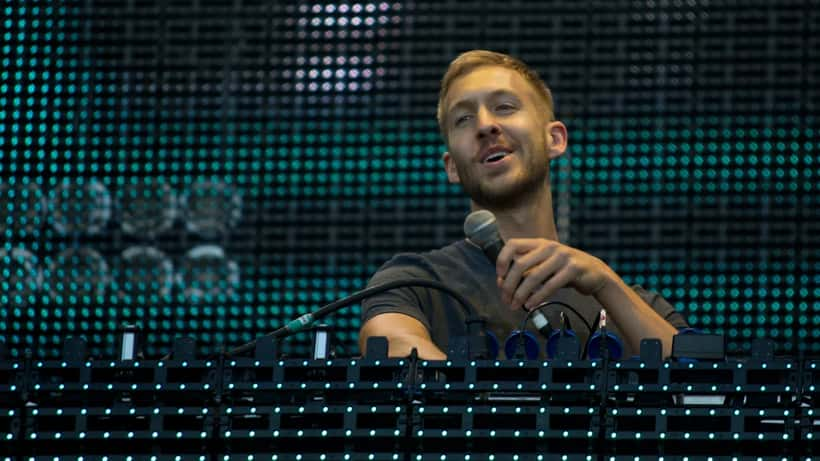
Every time Calvin Harris fires up his opening synth, the crowd at Empire Polo Club surges forward — and so does the decibel meter. With his 2026 world tour now bringing massive festival headline sets to North America and beyond, millions of fans are spending three to five hours inside sound pressure zones that routinely exceed 110 dB. That's not just loud. According to the National Institute on Deafness and Other Communication Disorders (NIDCD), sounds above 100 dB can cause permanent hearing damage in as little as 15 minutes of unprotected exposure. Audiologists are already reporting a spike in tinnitus consultations in the weeks following major festival weekends — and the summer-into-fall 2026 circuit has been one of the busiest in years.
The Sound Science Behind a DJ Set
Calvin Harris doesn't perform the way a rock band does. A DJ headlining a festival stage controls the full PA system output — and modern festival rigs are engineered to push sound across open fields and enclosed arenas with extraordinary force. At events like his October 2026 shows at Empire Polo Club in Indio, California, peak stage sound levels routinely reach 105–115 dB in front-of-house zones, with bass frequencies that carry acoustic energy deep into the chest cavity.
The key difference from a live concert is duration and density. A DJ set can run 90 minutes to three hours of continuous high-volume music without the natural pauses that occur between songs in a band show. Audiologists describe this as sustained exposure — and it's significantly more damaging to the hair cells in the cochlea than short, interrupted bursts.
The NIDCD's exposure limits are blunt: at 110 dB, safe exposure time before hearing damage risk is approximately one minute and 29 seconds. Most festival fans spend the entire headline set within 50 feet of the stage.
What Happens Inside Your Ears During an EDM Show
Your hearing works through tiny hair cells in the inner ear (cochlea) that convert sound vibrations into electrical signals sent to the brain. These cells do not regenerate. Once they're damaged — whether by a single explosive noise or repeated loud exposure — the loss is permanent.
At EDM events, the typical damage pattern is:
- Temporary threshold shift: Muffled hearing and ringing in the ears immediately after the show. Most fans know this sensation. It feels like it resolves overnight — but partial, cumulative damage may remain.
- Tinnitus: Persistent ringing, buzzing, or hissing in one or both ears. The American Tinnitus Association estimates that 15% of Americans — roughly 50 million people — experience some form of tinnitus, and noise exposure is the leading cause.
- High-frequency hearing loss: The first frequencies to go are in the 4,000–8,000 Hz range, which affects speech clarity and the ability to distinguish consonants in conversation.
The insidious part: these changes often go unnoticed for months or years. By the time a patient notices they're asking people to repeat themselves, the damage is well established.
A Concrete Scenario: Three Shows, One Season
Consider a 28-year-old fan who attended three major EDM festival sets this fall — Calvin Harris at Empire Polo Club in October, a club night in Miami in September, and a festival headline set in August. Each show ran approximately two hours of continuous exposure at a measured 108–112 dB at their typical standing position (20 to 40 feet from the stage), with no hearing protection used.
Cumulatively, that's roughly six hours of exposure in the 108–112 dB range across 60 days.
If/Then analysis: If your cumulative noise exposure over a 30-day period includes more than 2 hours at 105+ dB without hearing protection, you have almost certainly exceeded OSHA's permissible noise exposure limits (designed for an 8-hour workday at 90 dB, with a doubling of dose for every 5 dB increase). That means by the time this fan attended their second show, they had already exhausted their "safe" dose budget for the month.
What should this person do? An audiologist would recommend:
- A pure-tone audiogram to establish a baseline and check for high-frequency dips (a classic noise-damage signature).
- An extended high-frequency audiogram (8,000–16,000 Hz), which catches damage that standard hearing tests miss until it has progressed significantly.
- Assessment for tinnitus severity and, if present, tinnitus management options including sound therapy or cognitive behavioral therapy.
The appointment itself takes under an hour and is often covered by standard health insurance. The cost of not going — progressive hearing loss in your 30s and 40s — is orders of magnitude higher.
What the Research Says About Recreational Noise
A 2019 systematic review published in the BMJ estimated that 1.1 billion young people worldwide are at risk of hearing loss due to unsafe listening practices, with concert and nightclub attendance among the primary contributors. More recent data from the World Health Organization (WHO) suggests that 24% of people aged 12–35 are already exposed to unsafe sound levels from recreational sources.
The WHO's Make Listening Safe initiative specifically flagged music venues and concerts as high-risk environments, recommending that venues keep maximum sound levels below 100 dB averaged over a 15-minute period — a standard most US festivals do not meet or even measure at audience level.
In practical terms: the festival industry is not regulated the way industrial workplaces are. There is no federal requirement for festivals to post sound level warnings or provide free hearing protection. Some venues in the EU now have legal obligations; in the US, compliance is voluntary.
When to See a Specialist
Audiologists flag several warning signs that should prompt an evaluation after any loud event:
- Tinnitus (ringing, buzzing, hissing) that persists more than 24 hours after the event
- Muffled hearing that doesn't fully resolve within 48–72 hours
- Increased difficulty understanding speech in noisy environments (restaurants, crowded bars)
- A history of more than 4–5 loud event exposures per year without consistent hearing protection
- Any single exposure to an extremely loud, sudden noise (speaker feedback, pyrotechnic effect at close range)
These are not panic triggers. They're the clinical checkpoints that, caught early, allow an audiologist to intervene before temporary damage becomes permanent. An ExpertZoom audiologist or ENT specialist can review your exposure history, conduct appropriate diagnostic tests, and give you a personalized risk profile — including whether hearing aids, sound therapy, or simply better prevention habits are the right next step.
Protect Your Hearing at the Next Show
The cheapest, most effective intervention costs about $5: a pair of high-fidelity earplugs (also called musician's earplugs or flat-frequency earplugs). Unlike standard foam earplugs, which muffle bass frequencies and make music sound like it's coming through a wall, high-fidelity earplugs attenuate sound evenly across the frequency spectrum — reducing overall volume by 15–25 dB while preserving the mix's detail and clarity.
Premium custom-molded versions, made by an audiologist, can cost $150–$400 but are reusable for years. For regular festival-goers, the return on investment is self-evident.
Standing further from the stage and taking breaks in quieter zones (every 30–45 minutes during a long set) also meaningfully reduces cumulative exposure. Sound intensity drops with distance: moving from 10 feet to 30 feet from a speaker stack can reduce exposure by approximately 10 dB — the equivalent of cutting your hearing damage risk in half.
Calvin Harris's 2026 tour continues through the fall and into 2027 with major Australian dates. The music is extraordinary. Your cochlear hair cells don't have to pay for it.
This article covers general health and wellness information. For a professional evaluation of your hearing health, consult a licensed audiologist or ENT specialist.
