 Isabella Torres
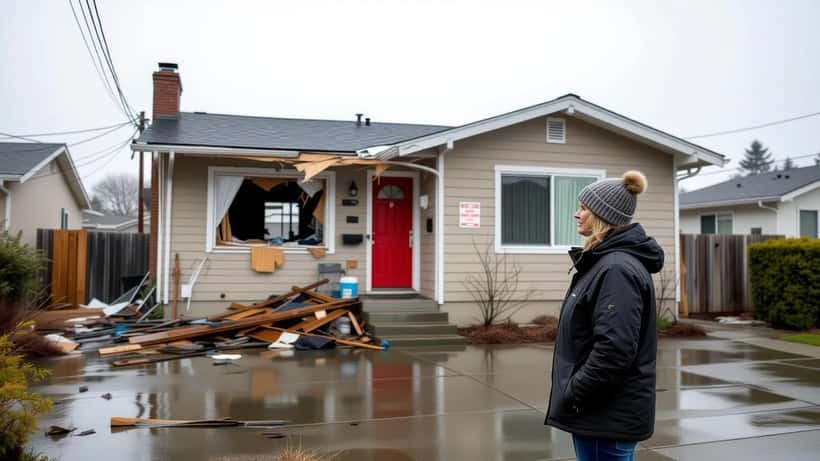
Governor Gavin Newsom declared a statewide emergency on September 22, 2026, as storm Marie stripped California's coastlines bare and El Niño threatens to deliver the state's most damaging flood season in a generation. In Dana Point's Capistrano Bay community alone, 14 homes were damaged — six red-tagged and marked uninhabitable — after waves and high tides shredded Beach Road. Thunderstorms have already unleashed flash flooding across multiple regions. For millions of California homeowners watching storm forecasts with growing dread, the urgent question is not just about the weather: it is about what their insurance actually covers, and what legal rights they have when a claim gets denied.
The Scale of What El Niño Is Bringing to California
Coastal damage is already mounting months before El Niño's expected peak, with California facing potentially billions of dollars in flood losses, according to Bloomberg reporting from September 26, 2026. Storm Marie's early September assault — erasing beaches, damaging seawalls, and destroying oceanfront homes in Orange County — was described by state officials as a preview, not the main event.
Governor Newsom's September 22 emergency declaration directed transportation officials to assess vulnerable infrastructure statewide. The California Department of Insurance issued public warnings urging homeowners to review their coverage before "likely historic" winter storms arrive. The National Flood Insurance Program has activated resources specifically for California property owners.
What state officials are not saying loudly enough is this: reviewing your coverage may be the most sobering exercise you do this fall. Because for most California homeowners, that review will reveal they have no flood coverage at all.
Why Standard Homeowners Policies Leave You Exposed
Here is the fact that blindsides California homeowners every flood season: a standard homeowners insurance policy does not cover flood damage. Not from heavy rain, not from storm surge, not from a river overflowing its banks, and not from water sheeting down a hillside after a storm. These events are explicitly excluded.
The only significant legal exception California courts recognize is the post-wildfire mudslide rule. If a recent fire was the "efficient proximate cause" of a debris flow or mudslide — meaning the burn-scarred hillside caused the land to move — California law may place the claim back on the standard homeowners policy, even without flood coverage. For homeowners near recent burn areas, this exception is critically important.
According to the California Department of Insurance, flood coverage requires a separate policy purchased either through the federal National Flood Insurance Program (NFIP) or a private flood insurer. Two timing traps catch homeowners every year: flood insurance typically does not take effect until 30 days after purchase, and NFIP residential policies cap out at $250,000 for structure and $100,000 for contents — leaving higher-value properties significantly under-insured without excess coverage from a private carrier.
What a Lawyer Sees When Flood Claims Get Disputed
Even homeowners who do carry flood insurance encounter serious obstacles. Insurance adjusters and NFIP claims examiners routinely dispute the cause and scope of flood damage, and those disputes can cost homeowners tens of thousands of dollars — or everything — if not handled correctly.
The disputes a California insurance attorney encounters most often in flood seasons like this one fall into three categories:
Cause-of-loss attribution. An adjuster may conclude that water entered a property through the foundation rather than via rising external floodwaters. The homeowner sees the same standing water and considers the cause obvious. That disagreement — often requiring independent engineering analysis to resolve — is the basis for tens of thousands of dollars in coverage disputes after every major storm cycle.
Proof of Loss deadlines. For NFIP policies, policyholders must submit a signed, sworn Proof of Loss statement within 60 days of the date of loss. FEMA can extend this deadline after declared disasters, but many homeowners — overwhelmed with displacement and emergency repairs — miss the window before any extension is announced. A missed Proof of Loss deadline can invalidate an otherwise legitimate claim.
Maintenance versus storm damage scope disputes. Adjusters frequently attribute part of the damage to pre-existing wear, deferred maintenance, or foundation issues rather than the storm event. These determinations are not final — they can be challenged — but the appeal windows are strict and unforgiving.
Concrete Case: A Beach Road Homeowner Navigating an NFIP Dispute
Consider the specific situation of a homeowner on Beach Road in Capistrano Bay — one of the six red-tagged properties from September 2026. They purchased an NFIP policy in July 2025 (well outside the 30-day waiting period), with coverage of $250,000 for the structure and $100,000 for contents.
The NFIP adjuster inspects in early October and produces the following determination: $180,000 in building damage, of which $35,000 is attributed to pre-existing foundation wear rather than storm surge. The contents claim of $62,000 is approved in full. Total payout offered: $207,000.
The homeowner disputes the $35,000 foundation attribution — the foundation was professionally inspected and certified in March 2026, showing no deficiencies. Here is the exact legal timeline they are now racing against:
- 60 days from date of loss to submit a signed Proof of Loss statement disputing the adjuster's scope and requesting the full $242,000 (structure) plus contents.
- If FEMA issues a partial payment or denial, 60 days from the denial letter to file a formal FEMA appeal by mail or email.
- If the FEMA appeal also fails, 1 year from the written denial to file a federal lawsuit — the FEMA appeal does NOT pause or extend this 1-year deadline.
- Missing any of these deadlines without a FEMA-granted extension extinguishes the right to recover the disputed amount permanently.
For a family that is simultaneously arranging temporary housing at $3,500/month, managing children's school transfers, and coordinating emergency repairs — these legal deadlines are easy to miss. An experienced California insurance attorney typically charges $300–$600/hour for flood claim disputes, but many take contingency arrangements in clear under-payment cases, meaning no upfront cost to challenge the decision.
Practical Steps for California Homeowners This Season
Whether you are already dealing with flood damage or bracing for what El Niño delivers this winter, these are the steps that make the most meaningful difference:
Document before you clean up. Photograph and video every damaged room, every damaged item, every water line. Create a written inventory with purchase prices and ages. Adjusters arriving weeks after a storm have severely limited visibility into pre-storm conditions — your documentation is the record that decides disputed claims.
File promptly — within 48 hours of discovering damage. Delays in notification can trigger coverage disputes. Do not wait for a full assessment before making contact with your insurer or NFIP.
Understand what you are signing. When an insurer presents a partial payment check, it may come with release language. Accepting a check does not automatically close a claim, but signing a release form can. Read everything before you sign, and consult counsel if anything is unclear.
Check whether a recent wildfire may change your coverage picture. If your property sits downhill from a burn area that experienced fire in 2025 or early 2026, California's efficient proximate cause doctrine may bring your damage claim under your standard homeowners policy rather than requiring separate flood coverage. This is a legally significant and frequently overlooked point.
Contact a lawyer before deadlines expire — not after. The 60-day Proof of Loss window and the 1-year federal lawsuit deadline are hard stops with no automatic extensions. An hour of legal consultation early in the claims process — before you accept a settlement or miss a deadline — costs a fraction of what it costs to rebuild a valid claim after the window closes.
Disclaimer
This article provides general legal and insurance information only. It does not constitute legal advice and does not create an attorney-client relationship. Specific policy terms, FEMA determinations, and California statutes vary; consult a licensed California insurance attorney for guidance tailored to your situation.
