 Laura Clark
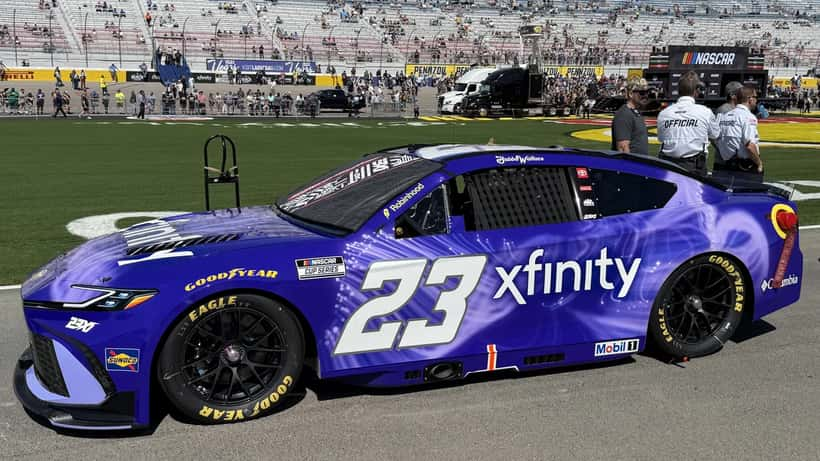
On October 11, 2026, Alex Bowman lost control of his car entering Turn 2 at Charlotte Motor Speedway, sending his Chevrolet spinning directly into Bubba Wallace's No. 23 Toyota and William Byron's machine. The Stage 1 collision ended Wallace's day with significant rear-end damage — damage he did not cause — and removed one of the more competitive 23XI Racing cars from the Bank of America ROVAL. What the television cameras captured in seconds takes far longer to process physically, and for the millions of Americans who participate in amateur motorsport, the Charlotte crash is a timely reminder of what happens to a human body when metal meets at speed.
What the Charlotte Crash Tells Us About Impact Forces
Rear-end collisions in NASCAR routinely generate peak deceleration forces between 40g and 80g, even in seemingly "minor" incidents. The No. 23 car was struck from behind while traveling at competition speed in a corner — a loading scenario that combines linear deceleration with rotational torque. Per NASCAR's official race report, Wallace absorbed significant structural damage to the rear of his car before safely exiting the vehicle.
NASCAR's safety infrastructure — carbon composite tubs, HANS (Head and Neck Support) devices, six-point harnesses, and SAFER barriers — means that crashes which once caused career-ending injuries now produce walk-away outcomes for drivers. That is the good news. The less-discussed reality is that walking away does not mean walking away unharmed. It means the visible, catastrophic injuries have been engineered out. The subtle ones remain.
For Wallace, who had been building toward postseason momentum with a second-place finish at New Hampshire in August 2026 and strong points results through September, the emotional cost of an unavoidable crash is obvious. The physiological cost is less visible — and that is precisely the problem that sports medicine specialists spend careers addressing.
What Experts See That Cameras Miss
Sports medicine physicians who work with motorsport athletes consistently identify one sentence as the most dangerous thing a crash survivor can say: "I feel fine." Post-impact adrenaline — a flood of catecholamines that suppresses pain signaling for two to six hours — is extraordinarily effective at masking the early symptoms of injuries that will become apparent the following morning.
According to the CDC's Traumatic Brain Injury resource center, TBIs are chronically under-reported in contact and motorsport contexts because athletes tend to attribute early symptoms — headaches, light sensitivity, difficulty concentrating — to normal post-exertion fatigue. The same mechanism applies in every crash scenario, from NASCAR's 160 mph oval racing to a weekend track day at 45 mph.
The specific injury profile of a rear-impact motorsport crash typically includes:
Concussion and sub-concussive trauma: Rotational forces transmitted through the seat and chassis can produce brain acceleration even without direct head contact. Symptoms — headache behind the eyes, slowed cognitive processing, irritability — often peak 24 to 48 hours after impact.
Cervical soft-tissue strain: Even in properly fitted HANS devices, sudden direction changes load the neck's myofascial system significantly. Stiffness, numbness radiating toward the shoulder, and reduced rotation range are common presentations within 72 hours.
Rib and sternocostal fractures: The five-point harness concentrates restraining force directly onto the rib cage. Hairline fractures produce no acute pain but become sharply apparent when a driver breathes deeply, coughs, or rotates the torso the day after a crash.
Abdominal visceral injury: Blunt harness loading can bruise the liver, spleen, or kidneys — organs with limited pain sensitivity in the short term that can produce serious complications if fluid accumulates without detection.
A Concrete Scenario: What a Weekend Racer Faces After a 45 mph Impact
Marco is a 38-year-old project manager from Charlotte who races SCCA autocross on weekends. At a Sunday event, a competitor spins in front of him at the exit of a sweeper. Marco's car hits a tire barrier at approximately 45 mph. His airbag deploys. He steps out, waves off the course marshal, feels "a bit rattled," and rides back in the pace car. He drives himself home two hours later.
By Tuesday morning, Marco has a persistent headache behind his right eye, stiffness turning his head to the right, and a nagging pain in his lower rib cage when he coughs. He attributes it to delayed muscle soreness and plans to race the following weekend.
If Marco sees a sports medicine specialist within 48 hours, the clinical picture is manageable and the timeline is recoverable:
- ImPACT concussion baseline testing ($75–$150 at most sports medicine clinics) reveals a cognitive processing-speed score 18% below his documented pre-season baseline — a clinically significant drop indicating mild concussion.
- Oblique chest X-ray identifies a hairline fracture of the 9th right rib.
- The specialist prescribes a 2-week no-driving protocol and a 6-week graduated return-to-activity plan. Total cost including imaging: approximately $400–$550 depending on insurance, with full racing return by week 8.
If Marco waits two weeks without specialist evaluation, the risk calculation changes dramatically. Returning to autocross with an undiagnosed concussion creates exposure to second-impact syndrome — a condition where a second head impact before full neurological recovery produces rapid cerebral swelling. Sports medicine literature places second-impact syndrome case fatality rates between 50% and 100% when it occurs in athletes who have not cleared the return-to-sport protocol. The untreated rib fracture, meanwhile, has a meaningful probability of fibrous non-union if he races prematurely, turning a 6-week recovery into a 3–4 month medical pause with follow-up CT imaging costs of $1,200–$2,000. The comparison is not abstract: $400–$550 in early specialist triage versus potential emergency complications that routinely exceed $15,000.
The 48-Hour Window: A Practical Checklist
Sports medicine consensus identifies a clear post-crash evaluation threshold. Any motorsport participant — amateur or professional — should seek specialist consultation within 48 hours of any significant impact if they experience any of the following:
- Headache that begins after the incident and persists beyond 2 hours
- Neck pain or stiffness with radiation toward the shoulder or arm
- Chest pain on deep inspiration, coughing, or rotational movement
- Cognitive symptoms: slowed thinking, light sensitivity, nausea, or trouble concentrating
- Abdominal tenderness not present before the crash
Even in the absence of symptoms, a post-crash baseline neurological screen is clinically valuable for regular motorsport participants. Many sports medicine practices and telehealth platforms offer cognitive function assessments remotely, helping drivers determine whether in-person imaging is necessary before they return to competition.
What Changed After NASCAR's Charter Settlement — and Why It Matters
The Charlotte crash occurred under a meaningfully different institutional safety framework than would have existed before December 2025. Following the landmark antitrust settlement between NASCAR, 23XI Racing, and Front Row Motorsports, the reformed charter system introduced "evergreen" charter guarantees and restructured governance provisions. Among the less-publicized elements of the new framework: strengthened provisions for team-designated medical liaisons who can independently request post-crash evaluations at track facilities — a right previously held exclusively by NASCAR's official medical staff.
For Bubba Wallace, who has driven for 23XI Racing since the team's founding and whose organization fought hard for those reformed charter terms, the October 11 crash at Charlotte represented exactly the scenario those provisions were designed to address. The No. 23 team had independent medical access. Their driver walked away safely under close observation.
Amateur racers at regional events and local tracks have none of that infrastructure. No team medical liaison, no mandated post-crash neurological protocol, no standardized return-to-competition clearance process. The responsibility sits entirely with the individual participant.
Disclaimer: This article is for informational purposes only and does not constitute medical advice. If you have been involved in a crash or are experiencing symptoms following a physical impact, consult a licensed medical professional promptly.
ExpertZoom connects you with sports medicine physicians and neurologists who understand the specific demands of motorsport. Whether you need a pre-season cognitive baseline or post-crash evaluation guidance, a specialist consultation can establish where you stand — before the next flag drops.
