 Jessica Johnson
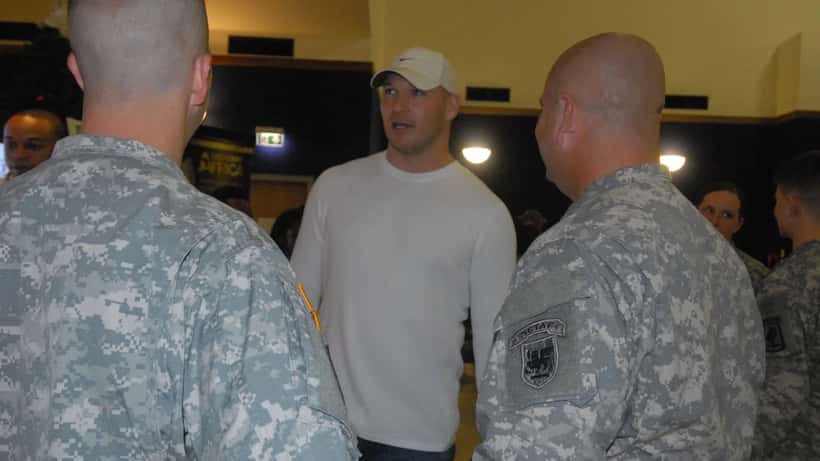
When NFL Hall of Famer Brian Urlacher told The Craig Carton Show on September 25, 2026, that Colin Kaepernick's national anthem kneeling "would have been a line in the sand" in his Chicago Bears locker room, the clip went viral within hours. Urlacher, who anchored Chicago's defense from 2000 to 2012, said the racial divisions sparked by the protests were something he'd have found "hard to put up with." He and his wife, he added, stopped watching NFL games altogether for roughly two to three years during the height of the controversy.
But behind the sports culture debate lies a legal question that affects every American worker — not just NFL players: if a team captain or a corporate manager had the same reaction as Urlacher, would the law be on their side? The answer depends on where you work, who your employer is, and what exactly you were saying. In 2026, with political expression at work becoming an increasingly frequent flashpoint, the rules are more nuanced than most people realize.
This article is for informational purposes only and does not constitute legal advice. Consult a licensed employment attorney for guidance specific to your situation.
What Urlacher Said — and What Kaepernick's New Book Reignited
Urlacher's comments arrived during the rollout of Kaepernick's memoir, The Perilous Fight, which details the events of 2016 when, as the San Francisco 49ers' quarterback, he first knelt during the pre-game national anthem to protest police brutality and racial injustice. The protest created a national firestorm and, many legal analysts argue, effectively ended his NFL career — the 49ers released him in 2017, and no team has signed him since.
Whether that decision constituted unlawful retaliation remains contested. Kaepernick's legal and professional trajectory in 2026 continues to generate debate as his memoir reaches new audiences. Urlacher's September 25 interview has added fresh fuel to a conversation the NFL — and American workplaces — have never fully resolved.
The First Amendment: Not What Most Workers Think It Is
Here is the foundational legal fact most Americans misunderstand: the First Amendment does not protect you from your private employer. It reads: "Congress shall make no law…abridging the freedom of speech." That language targets governmental action — federal, state, and local government entities. It has no bearing on what a private corporation, sports franchise, or small business owner chooses to tolerate or prohibit inside its own walls.
Courts have consistently upheld this framework. If you work for a private-sector employer — which describes roughly 85% of the U.S. workforce — your employer can legally discipline or even terminate you for political speech expressed during work hours or at company-related events, so long as their policy is applied consistently and does not conflict with other protective statutes.
The NFL and all 32 of its franchises are private employers. When Urlacher describes setting a "line in the sand," he is describing precisely what private employers are generally permitted to do under U.S. constitutional law. According to the National Labor Relations Board (NLRB), however, constitutional silence does not mean workers are entirely without recourse.
When Political Expression at Work Is Legally Protected
Three separate legal frameworks can protect employee speech in ways that private employers often underestimate — and that workers often fail to invoke in time.
The National Labor Relations Act (NLRA). The NLRA grants employees the right to engage in "concerted activity" — collective speech about wages, working conditions, or shared workplace grievances. If a protest is tied to employment conditions rather than purely individual expression, it may qualify for NLRA protection, and any retaliation against it constitutes an unfair labor practice. NFL players arguing that anthem kneeling was a statement about their collective working environment — specifically, racial disparities in NFL coaching and executive hiring — could potentially assert this protection. Employers cannot lawfully interfere with concerted activity, regardless of their views on the underlying message.
State political-activity statutes. At least a dozen states have enacted laws specifically shielding employees from termination for lawful off-duty political activity. California's Labor Code Sections 1101–1102 prohibit employers from coercing or influencing employees based on political views or affiliations. New York Labor Law Section 201-d provides similar protections, covering off-duty political activities and legal recreational pursuits. Colorado's Lawful Activities Statute adds further safeguards for conduct occurring outside of regular work hours. Employees in these states enjoy protections that simply do not exist in at-will employment states like Texas or Florida.
Anti-discrimination laws. Title VII of the Civil Rights Act prohibits employment decisions based on race, color, religion, sex, or national origin. If an employer disciplines employees engaging in protests tied to racial justice while permitting other forms of political speech — a company flag display, a political bumper sticker in the parking lot — that selective enforcement can give rise to a race discrimination or disparate treatment claim, regardless of whether the employer frames the decision as a "team culture" or "professionalism" matter.
A Concrete Case: The Same Protest, Two Very Different Legal Outcomes
Consider this realistic 2026 scenario: a senior logistics manager at a private warehouse company in Houston, Texas, silently kneels during the national anthem at the company's annual Fourth of July celebration — a company-sponsored outdoor event held on company property during a paid workday. Management asks her to stop. She continues. She is terminated the following Monday morning.
Does she have a legal claim?
Under current federal law and Texas employment law — almost certainly not, if her protest was purely individual and unrelated to a concerted workplace campaign. Texas follows strict at-will employment doctrine and has no state political-activity protection statute. The First Amendment does not constrain a private employer. If her action was not part of a group effort to address shared workplace concerns (which would disqualify it from NLRA protection) and was not treated differently based on her race (removing a Title VII angle), her employer's termination is likely lawful under every applicable framework.
Now apply the identical facts in Denver, Colorado. Colorado's Lawful Activities Statute (C.R.S. §24-34-402.5) prohibits employers from terminating employees for lawful activities conducted during non-work hours — and if the Fourth of July event was outside her standard working schedule and technically non-mandatory, the statute's protection could apply. A Colorado employment attorney would need to analyze whether the company event constituted "working hours" under the statute's meaning, but if it does not, the employer could face a wrongful termination claim carrying significant exposure.
In Colorado wrongful termination cases under similar statutes, settlements have ranged from $25,000 for entry-level employees to over $200,000 for senior staff when back pay, lost benefits, and emotional distress damages are totaled. The same silent act — performed in two states 1,000 miles apart — can carry radically different legal and financial consequences in 2026. The state where you physically work, not where your employer is headquartered, is typically the governing jurisdiction.
What to Do If You've Been Disciplined for Political Expression
If you have been warned, suspended, or terminated because of political speech at or around your workplace, time is your most immediate constraint. Employment law claims carry strict filing deadlines that, once missed, permanently extinguish your right to bring a claim:
- NLRA unfair labor practice charges: Must be filed with the NLRB within 6 months of the adverse action — no extensions.
- Title VII charges with the EEOC: Must be filed within 180 days of the discriminatory act, or 300 days in states that operate a parallel state anti-discrimination agency.
- State wrongful termination claims: Statutes of limitations vary from 1 to 3 years by state, but some state notice-of-claim requirements are as short as 90 days from termination.
An employment attorney can assess in a single consultation whether your specific situation — the state you work in, your employer's size and type, the nature and timing of the speech, and the terms of any employment contract or collective bargaining agreement — creates a viable claim. Many employment lawyers handle wrongful termination matters on a contingency basis, meaning no upfront cost if they believe the case has merit. Understanding what legal protections apply to professional athletes and workers alike is an increasingly important first step before any workplace confrontation, not after.
Brian Urlacher's words reignited a cultural debate that has been simmering since 2016. What they also reveal, perhaps unintentionally, is how much legal complexity underlies a single workplace decision. Whether you're an NFL veteran managing a locker room or a warehouse supervisor navigating company culture, knowing what protection the law actually offers is no longer optional — and an employment lawyer can tell you exactly where the line is.
