 Elizabeth Chen
Fitness Test Is Back in Schools: Brian Kilmeade's Warning Every Parent Should Hear in 2026
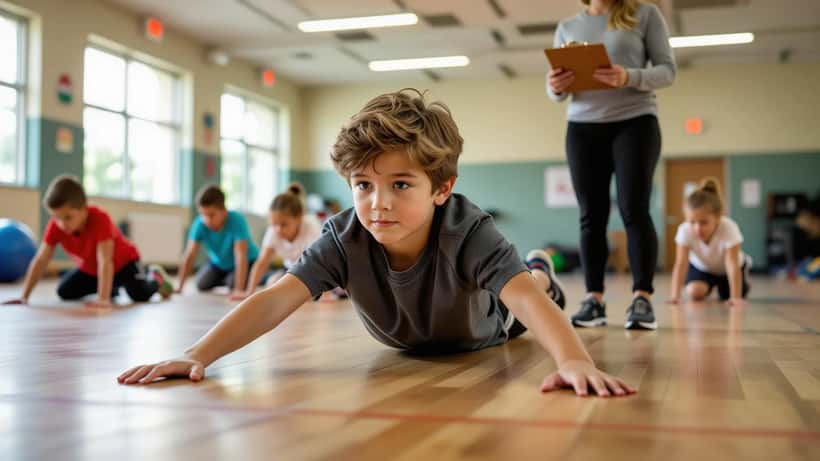
On May 5, 2026, President Trump signed a memorandum reinstating the Presidential Fitness Test in American schools as part of the Make America Healthy Again initiative. One day later, on May 6, Fox News host Brian Kilmeade addressed the revival on Fox & Friends with a notable call for compassion: gym teachers should be mindful of heavier or less athletic children as the program rolls out nationwide. Kilmeade's comment was brief, but it pointed at a tension that pediatricians across the country know well — school fitness assessments can motivate some children while demoralizing others, and for many families, the bigger question is not whether a child passed the test but what their performance might be signaling about their overall health.
What Trump's Presidential Fitness Test Reinstatement Actually Means
The Presidential Fitness Test was a standard feature of American physical education from 1966 through 2012, when the Obama administration replaced it with the President's Youth Fitness Program, which used an assessment called FitnessGram. That program focused on tracking Body Mass Index and aerobic capacity rather than competitive scoring. Trump's May 2026 memorandum reverses that direction, restoring the performance-based benchmark format.
In its first phase, the reinstated test will be required in schools on U.S. military bases. Other public schools may choose to adopt it, and Mississippi Governor Tate Reeves has already issued an executive order re-establishing the Presidential Fitness Test in Mississippi schools ahead of the 2026-2027 academic year. The test includes events such as the mile run, curl-ups, push-ups, and the V-sit-and-reach flexibility assessment.
Whether schools choose to adopt the test or not, the policy conversation has put children's physical fitness — and fitness disparities — at the center of national attention for the first time in over a decade.
The Real Numbers Behind America's Childhood Fitness Crisis
Kilmeade's compassion call is well-grounded in data. According to the Centers for Disease Control and Prevention, only 1 in 5 American children and adolescents aged 6 to 17 meet the recommended 60 minutes of daily moderate-to-vigorous physical activity. The consequences of that gap are visible in the numbers: between 2021 and 2023, more than 21% of Americans aged 2 to 19 were classified as obese — a nearly 500% increase since the 1970s. An additional 7% of American youth had severe obesity.
When a child struggles on a physical fitness assessment — unable to complete a mile run within a benchmark time, or performing significantly fewer push-ups than the age-group standard — that result is not simply a measure of athletic effort or motivation. It is a data point about cardiovascular fitness, muscular endurance, and physical health status that parents and physicians need to understand in context.
When Struggling With a Fitness Test Is a Medical Signal
Not every child who scores below the Presidential Fitness Test benchmark needs medical evaluation. Some children are naturally less athletic; others haven't had access to regular physical activity due to socioeconomic or environmental factors. But for some children, poor fitness test performance is one visible indicator of a health picture that a pediatrician should assess.
Specific patterns warrant a professional evaluation:
A child who is significantly above healthy weight for their age and height — not just the fitness test bottom quartile, but truly struggling to sustain basic exertion for a minute or two — may have an undiagnosed metabolic issue, pre-diabetes, or cardiovascular risk factors that are uncommon in childhood but increasing in prevalence.
A child who reports chest pain, unusual shortness of breath, dizziness, or significant fatigue during normal exertion — during the fitness test or in ordinary physical education — needs prompt medical attention. These symptoms during moderate exercise can occasionally point to cardiac issues that require specialist evaluation.
A child who has sharply declined in physical performance compared to their own prior baseline — a previously active child who suddenly struggles — may be dealing with an underlying condition such as anemia, thyroid dysfunction, or an inflammatory condition affecting energy and endurance.
Kilmeade's point about compassion is important precisely because shame or embarrassment around fitness scores can cause families to avoid the conversation with a doctor. Getting a low score on a presidential fitness assessment is not a stigma — it is a starting point for understanding a child's health.
What a Pediatrician Evaluates That a Fitness Test Cannot
A pediatrician's assessment of a child's physical fitness and health goes substantially beyond what any school test can measure. During a well-child visit or sports physical, a pediatrician can evaluate growth trajectory and BMI in the context of the child's specific family history, screen for cardiovascular risk factors including lipid levels and blood pressure trends over time, assess for musculoskeletal issues that may limit physical performance (including flat feet, joint hypermobility, or developmental differences in gait), and identify barriers to physical activity that may be behavioral, psychological, or environmental.
For children who are significantly overweight or inactive, a pediatrician can refer to a pediatric dietitian, a physical therapist specializing in pediatric conditioning, or — for children with specific metabolic indicators — a pediatric endocrinologist. Early intervention in childhood fitness and weight management has dramatically better outcomes than adult intervention: the habits and physiological patterns set between ages 6 and 16 carry forward into adult health trajectories.
Turning a Fitness Test Score Into a Health Plan
Whether your child's school adopts the Presidential Fitness Test this year or not, the national conversation Brian Kilmeade and Fox News have helped trigger this week is an opportunity for parents. If your child is not active for 60 minutes most days, that is a health pattern worth addressing — not with shame or competition, but with professional guidance.
A pediatrician can help you understand your child's current fitness baseline, identify any underlying health factors limiting their physical activity, and build a practical, age-appropriate plan for sustainable improvement. ExpertZoom connects parents with board-certified pediatricians and family medicine physicians who can provide the kind of individualized assessment that a standardized fitness test simply cannot offer.
A fitness test score is a number. A pediatrician helps you understand what it means — and what to do next.
