 Bernard Stone
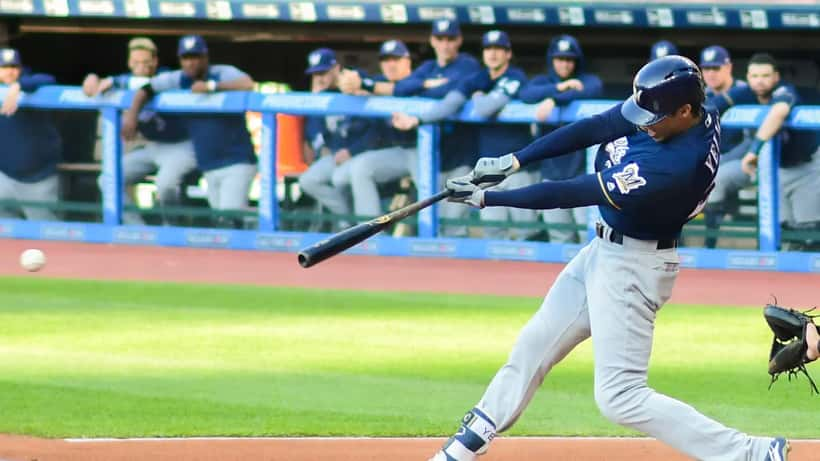
The Milwaukee Brewers are 67-40 and sitting in first place in the NL Central as of August 5, 2026 — the best record in the National League and one of the strongest through early August in franchise history. Fans are refreshing the standings multiple times a day. But this surge arrives at a uniquely charged financial moment for the state: Wisconsin Governor Tony Evers signed Assembly Bill 601 into law on April 9, 2026, making Wisconsin the 33rd U.S. state to legalize online sports betting. Analysts project the Wisconsin market will handle up to $4 billion in bets annually once platforms go live — expected by late 2026 or early 2027. For Brewers fans eyeing that playoff picture, the temptation to put money behind their team has never been more legal, more accessible — or, according to wealth management professionals, more worth a serious financial conversation first.
The NL Central Numbers Driving the Frenzy
Milwaukee's 67-40 record puts the Brewers on pace for approximately 100 wins — territory the franchise hasn't consistently reached in years. The Cubs are the closest NL Central competition at roughly 64-49, while the Diamondbacks and Phillies are locked in a battle for Wild Card spots at around 60-53. Milwaukee's .626 winning percentage leads the entire National League.
By historical standards, a team carrying a winning percentage above .620 at this stage of a season makes the postseason more than 95 percent of the time, per Baseball-Reference's historical records. The Brewers are not simply in the playoff picture — they have been drawing it for months. The pitching staff has stayed remarkably healthy through the summer heat, a critical factor that expert analysis of winning streaks and pitcher arm risk highlights as the hidden engine behind sustained first-place runs.
On major platforms operating across state lines, World Series futures on Milwaukee are currently trading at roughly +300 to +400 — odds that look extremely attractive to a fan who has watched the Brewers dominate all summer. But those odds are doing something subtle that wealth management advisors notice immediately: they make a negative-expected-value bet feel like informed confidence.
Why Wisconsin's New Betting Law Changes the Financial Stakes
Before April 9, 2026, Wisconsin residents who wanted to bet legally on sports had extremely limited options. The signing of AB 601 changed that calculus entirely. The bill authorizes Wisconsin's 11 federally recognized tribal nations to negotiate gaming compacts that include online and mobile sportsbooks, with the state's gaming market expected to launch by late 2026 to early 2027 pending compact negotiations.
What that launch will mean in dollar terms is staggering. Neighboring Illinois recorded more than $1.4 billion in sports betting handle in a single month — March 2026 — according to PlayUSA data. Wisconsin analysts project a mature statewide market approaching $4 billion in annual handle. That is hundreds of millions of dollars flowing through brand-new accounts opened by first-time legal bettors who have never had a regulated mobile app before.
This is precisely the demographic that behavioral finance researchers and gambling counselors watch most closely. First-time legal bettors are statistically more likely to wager on emotional instinct rather than analytical framework, to overestimate win probabilities, and to misinterpret a hot team's current record as a reliable predictor of postseason success. A Brewers team that looks "unbeatable" in August has generated that same feeling for fans of many great teams — teams that were later eliminated in five games by October.
The Wealth Manager's Actual Math on a Playoff Futures Bet
Here is the part of the sports betting conversation that certified financial planners wish more fans heard before opening their first sportsbook account.
Betting odds are not probabilities. They are probabilities with the sportsbook's margin — the "vig" — baked in. When you see the Brewers listed at +350 to win the World Series, the implied probability from those odds is approximately 22 percent (calculated as 100 ÷ 450). But sportsbooks build in a margin of roughly 5 to 10 percent. The actual probability the market assigns to a Brewers championship is likely closer to 18 to 20 percent. You are paying a premium simply for the privilege of placing the bet.
For comparison, slot machines at Wisconsin's tribal casinos carry a typical house edge of 3 to 8 percent. A World Series futures bet on your favorite team routinely runs a 10 to 20 percent house edge. Structurally, you are worse off than at a slot machine — and that is before factoring in the emotional decision-making that surrounds playoff betting on a team you love.
Concrete Case: What a $500 Brewers World Series Bet Returns Over Time
Here is a specific, numbers-grounded scenario.
You place $500 on the Brewers to win the World Series at +350 odds on August 5, 2026, after watching them go 67-40 and feeling the momentum is undeniable.
If the Brewers win the championship: You collect $1,750 in profit plus your $500 stake returned — $2,250 total. A real $1,750 gain.
If the Brewers don't win: You lose $500. This outcome happens approximately 80 to 85 percent of the time, even for the best team in baseball. Since 2000, teams with the best record in the major leagues have won the World Series only about 20 to 25 percent of the time — upsets are routine in a best-of-five or best-of-seven format.
Now apply expected value math, assuming the true probability of a Brewers championship is 20 percent:
- Expected gain from wins: 20% × $1,750 = $350
- Expected loss from losses: 80% × $500 = -$400
- Net expected value: -$50 per $500 bet
That is a 10 percent expected loss on every dollar you put in. If you made this type of bet each time the Brewers led the division — roughly every three to five years for a competitive franchise — you would lose an expected $50 per cycle. Over five cycles spanning 15 to 25 years, that is $250 in net expected losses from $2,500 wagered.
Now consider placing that same $500 into a broad market index fund instead. At a historically averaged 8 percent annual compounded return — the approximate long-run average of the U.S. stock market after inflation — $500 grows to about $2,330 in 20 years. Not as exciting as a Brewers championship. Considerably more reliable.
The point is not that winning is impossible. It is that the financial structure of sports betting systematically extracts money from bettors over time, and the enthusiasm generated by a dominant team in August is the exact emotional state that makes the worst betting decisions feel like the most logical ones.
What Financial Advisors Recommend Before Wisconsin Apps Launch
Wealth management professionals in newly legalized states have developed a consistent pre-launch playbook for clients who want to participate in sports betting without undermining their financial health.
Define an entertainment budget, not a gambling budget. Before the Wisconsin apps go live, decide the maximum dollar amount you are willing to lose entirely — with zero expectation of return. Treat it exactly like buying a game ticket or an authenticated jersey. If you cannot afford to light that amount on fire and walk away comfortable, it is not your entertainment budget yet.
Never pull from earmarked accounts. The single most destructive pattern financial advisors identify in new-market bettors is the drift from a dedicated entertainment fund into the emergency fund, then into the savings account. Promotional "first bet" bonuses and matched deposits from incoming Wisconsin sportsbooks will be aggressively marketed. They are designed to get new customers in the door, not to make you money.
Understand the difference between a $20 game bet and a $500 futures wager. A modest single-game bet on a Brewers win can be a fun, low-risk way to engage with the sport. A $500 futures bet placed on emotional momentum is a categorically different financial decision — one with a defined negative expected value and no liquidity until October.
Watch for escalation after losses. The clearest warning sign of gambling moving from entertainment to problem: placing a larger bet after losing in order to recover the previous loss. According to the National Council on Problem Gambling, this pattern of "chasing losses" is the most consistent predictor of gambling-related financial harm. Their national helpline — 1-800-522-4700 — is available 24 hours a day.
The Brewers are 67-40 and building something that fans in Milwaukee haven't seen in years. That is worth celebrating. Whether you are planning your first legal sports bet or reassessing how gambling fits into your broader financial picture, a Wealth Management specialist on ExpertZoom can help you structure your entertainment spending so the October outcome — whatever it is — doesn't affect your long-term financial goals.
This article is informational in nature and does not constitute financial or gambling advice. For personalized guidance, consult a certified financial planner or wealth management professional.
