 Bernard Stone
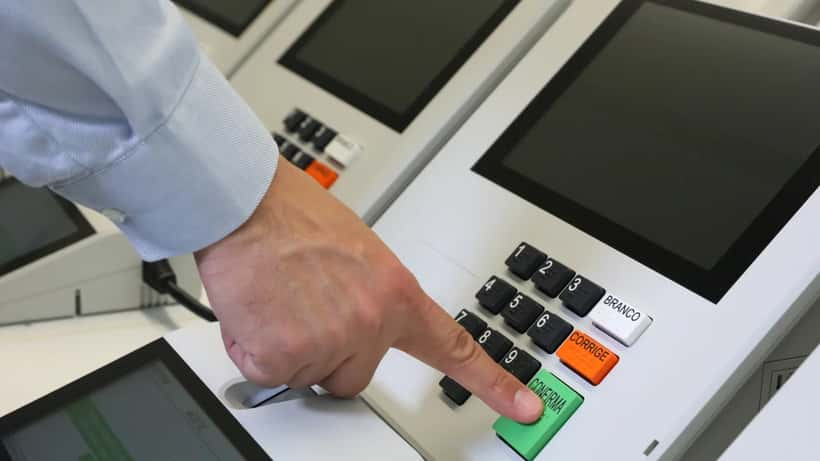
Brazil is casting ballots today, October 4, 2026, in the first round of its presidential election — and the outcome is too close to call. With pre-election polls showing incumbent President Luiz Inácio Lula da Silva at 42% and challenger Senator Flávio Bolsonaro at 37% (BTG/Nexus, September 28, 2026), a runoff on October 25 is the most likely scenario. For US investors holding international assets, the next three weeks represent a concentrated window of political risk that could move emerging-market (EM) allocations by 5% to 12% in either direction.
What the Polls Are Actually Telling the Market
The data is unusually detailed for a first-round scenario. Three major polling firms — BTG/Nexus, Quaest, and Datafolha — have tracked the race through September. Their runoff projections are striking: BTG/Nexus shows Lula at 46% to Bolsonaro's 44%, a two-point gap within the margin of error. Quaest has it tied at 42% each. A third candidate, self-help author Augusto Cury, polled as high as 11% in August before settling back — votes he drew came disproportionately from Bolsonaro's base.
What this means for investors: the Brazilian real (BRL) and the Ibovespa stock index have already been pricing in these scenarios for weeks. According to market analysis, a clear Lula first-round win — which would require him to clear 50% of valid votes — is valued very differently from a tight-but-confirmed runoff. A first-round knockout typically triggers a BRL appreciation of 2–4% as political uncertainty collapses rapidly. A messy runoff, by contrast, tends to keep volatility elevated for three weeks, with the BRL often weakening 5–8% during the uncertainty window.
Brazil is the largest economy in Latin America, with a GDP of approximately $2.2 trillion. It accounts for roughly 60% of the MSCI Emerging Markets Latin America index and sits inside the broader MSCI EM index that US-based ETFs like EEM and VWO track. An election this close does not stay in Rio de Janeiro — it reaches into the brokerage account of every American with an index fund.
Why This Election Creates Structural Risk for US Portfolios
The economic policy differences between Lula and Flávio Bolsonaro (the son of former President Jair Bolsonaro, who ran under the Liberal Party banner) are significant in two areas that directly affect international investors: fiscal policy and regulatory posture toward foreign capital.
Lula has governed since January 2023 under a new fiscal framework that tied spending to revenue growth. His government passed a fiscal framework law in May 2023 that replaced the old spending cap. While markets initially welcomed the structure, questions about compliance have resurfaced ahead of the election. Analysts note that the fiscal balance moved from a -1.2% of GDP deficit in 2023 to an estimated -0.8% in 2025, but structural spending pressures — particularly on social programs — remain.
Bolsonaro's platform, meanwhile, centers on privatization of state-owned enterprises, deregulation of the agricultural export sector, and a more adversarial posture toward multilateral climate commitments. Historically, markets have rewarded Brazilian privatization proposals with short-term equity gains, particularly in the energy and utilities sectors.
Neither outcome is inherently bad for US investors — but the transition period is where risk concentrates. According to the U.S. Securities and Exchange Commission's guidance on international investing, political risk in emerging markets is one of the primary factors that can cause international investments to underperform domestic alternatives, and it operates independently of company-level fundamentals.
How Your Portfolio Actually Reacts: The Mechanics
The transmission mechanism from Brazilian election to US investor portfolio runs through three channels:
1. Currency (BRL/USD): A depreciating real reduces the USD value of Brazil-denominated assets even if local prices are flat. A 7% BRL depreciation turns a 5% local stock gain into a -2% USD return. The real fell from approximately 4.85 BRL/USD at the start of 2026 to a range of 5.20–5.40 in September as election uncertainty increased.
2. Country ETF flows: Funds like EWZ (iShares MSCI Brazil ETF) see outflows when political uncertainty spikes. EWZ lost approximately 14% between January and September 2026 in USD terms, partly reflecting this dynamic.
3. EM index weighting: Passive funds tracking the full MSCI EM index automatically hold Brazilian equities proportional to their weight (approximately 5.2% of the full index as of Q3 2026). Even investors who never explicitly chose Brazilian exposure may hold it through a standard international index fund.
A Concrete Case: What This Means for a $150,000 Portfolio
Consider a 45-year-old US professional with a $150,000 retirement portfolio allocated as follows: 60% US equities ($90,000), 25% international developed markets ($37,500), and 15% emerging markets ($22,500). Of that EM allocation, approximately 5.2% — or $1,170 — sits in Brazilian equities through an index fund like VWO.
Scenario A — Runoff goes smoothly, Lula wins October 25: Markets price in continuity. The BRL recovers from 5.35 to approximately 5.10 BRL/USD (a 4.7% appreciation). The $1,170 Brazilian position becomes roughly $1,225. Net impact: +$55 on direct Brazil exposure.
Scenario B — Contested results, delayed certification: If the October 25 runoff produces a disputed outcome — as has occurred in multiple EM elections in recent years — and the certification process extends beyond 72 hours, historical EM volatility models suggest the BRL could test 5.70–5.90. The $1,170 position could fall to approximately $1,050–$1,070. Net direct impact: -$100 to -$120.
The if/then logic that matters: If your EM allocation is more than 12% of your total portfolio, and more than 30% of that EM exposure is concentrated in Latin America, then Brazil's election outcome this October could move your portfolio by 0.8–1.5% in either direction — enough to matter on a $150,000 balance. A wealth manager can run a stress test using current BRL sensitivity and your specific fund holdings to quantify the exact exposure before October 25.
What Changes After October 4
Two near-term dates now dominate the Brazil investment timeline:
- October 4, 2026: First-round results. If Lula clears 50%, the uncertainty window closes immediately. If not (most likely), a runoff is confirmed.
- October 25, 2026: Second-round vote. The three weeks in between are historically the highest-volatility period for BRL-denominated assets.
Investors should note that regardless of who wins, Brazil's central bank (Banco Central do Brasil) has maintained an interest rate policy framework that has kept the benchmark Selic rate at 13.25% as of September 2026 — a level designed to anchor inflation expectations during political transition periods. This limits some downside but does not eliminate it.
What to Do With Your International Exposure Right Now
For most US investors, the Brazil exposure inside a diversified index fund is small enough that active rebalancing is unlikely to be cost-effective. However, three actions are worth considering before October 25:
Review your EM allocation. Pull up your current holdings and identify what percentage is in EM index funds. Any fund with "Emerging Markets" or "International" in its name likely holds Brazilian equities. If the combined EM weight exceeds 15% of your portfolio, you have meaningful exposure to this election cycle.
Check for concentrated Latin America positions. Some investors hold regional funds (iShares Latin America 40, for example) that concentrate EM exposure in Brazil, Mexico, and Chile. These are significantly more sensitive to the Brazil outcome than a broad global index.
Talk to a fee-only wealth advisor before October 25. A professional can run a scenario analysis on your actual holdings, assess whether any rebalancing makes tax-efficient sense given year-to-date gains, and help you distinguish between short-term volatility and structural portfolio risk. The difference between a reactive trade and a strategic decision often comes down to having that conversation before the volatility event — not during it.
DISCLAIMER: This article contains general financial information and does not constitute investment advice. The scenarios presented are illustrative and based on historical volatility patterns. Past performance is not indicative of future results. Consult a licensed wealth management professional before making any investment decisions.
