 David Miller
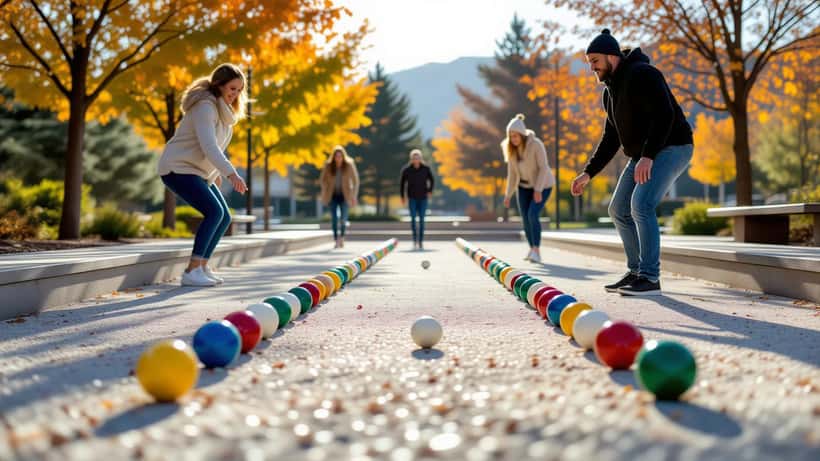
Bocce is having a moment in 2026. Once confined to Italian-American leagues and retirement-community courts, the ancient target sport is now showing up in craft breweries, urban parks, and corporate wellness programs across the United States. The reasons are easy to understand: it requires little equipment, welcomes mixed-age groups, and turns any flat patch of ground into a competitive arena. But as newcomers pick up pallinos and Pallinos, a surprising number are playing under improvised rules that create arguments rather than fun. For anyone hoping to host a tournament, settle a neighborhood dispute, or simply sound informed at the next company picnic, a clear grasp of regulation bocce is worth having.
At its core, bocce is a game of proximity. A small ball called the pallino is thrown down a long, narrow court. Each side then rolls larger balls, trying to finish closer to the pallino than the opponent. The team or player whose ball is nearest after all balls are thrown scores one point for every ball closer than the opponent’s closest ball. Rounds, called frames, continue until one side reaches a predetermined total, usually 12 or 15 points. That simplicity is bocce’s greatest strength, but it is also where misunderstandings begin, because the details of delivery, measurement, and court boundaries matter.
A regulation bocce court is roughly 76 to 90 feet long and 10 to 13 feet wide, with a smooth, level surface of packed stone dust, crushed oyster shell, synthetic material, or even well-maintained grass. Casual backyard sets rarely match those dimensions, which is perfectly fine for friendly play as long as everyone agrees on boundaries before the first frame. The foul line is the most frequently ignored detail: a player’s foot may not cross it during delivery, and the ball must be thrown underhand. Balls that hit the back wall and then rebound into play are usually legal, but a ball that touches the sideboards and remains in bounds depends on the local rule set, so tournament hosts should print a one-page version and post it near the court.
Scoring frames is where most arguments start, and the fix is almost always measurement, not shouting. After all eight balls have been rolled, the frame belongs to the side with the ball closest to the pallino. That side earns one point for each of its balls that lies closer to the pallino than the opponent’s closest ball. Only the inside team can score, and only the balls inside the opponent’s best ball count. If the two closest balls are from opposite teams and equidistant, the frame is tied and no points are awarded; possession of the pallino then rotates or follows the previously agreed rotation rule. Using a retractable tape measure, a caliper, or even a dedicated bocce measuring cord removes 90 percent of conflicts.
Strategy in bocce runs deeper than many assume. The first ball toward the pallino is often an attempted “point,” but subsequent shots must balance scoring with disruption. A skilled player will knock an opponent’s ball away from the pallino, or intentionally move the pallino toward a cluster of friendly balls. This tactical shot, sometimes called a spock or hit, is legal in most rule sets but must be called clearly when played in mixed-skill groups. Teams alternate throws, which means the last ball usually carries enormous leverage. Experienced captains therefore plan the sequence so their strongest pointer or hitter has the final opportunity in a frame.
In 2026, several trends are accelerating the sport’s growth. Municipalities are installing public courts in parks because bocce is cheaper to maintain than tennis and more inclusive than basketball. Corporate event planners like it because teams of four can be mixed without athletic experience. Physical therapists also note that bocce offers low-impact standing activity, mild balance work, and social engagement, making it popular among active-aging communities. Meanwhile, younger players are importing techniques from lawn bowls and pétanque, creating hybrid styles that are fun but occasionally clash with traditional rules.
The legal angle is small but real. Homeowners associations, restaurant owners, and municipal renters should confirm that bocce courts comply with local setback, drainage, and noise ordinances before construction begins. Injuries are rare, but a heavy resin ball on an uneven surface can turn an ankle or strike a bystander. Event organizers hosting tournaments for prizes should check whether their general liability policy covers recreational sports and whether a simple waiver is advisable. In most cases, a posted set of rules and a clear “play at your own risk” sign will address the majority of liability concerns.
For readers who want to start playing this weekend, the entry cost is low. A decent recreational bocce set with eight balls and one pallino costs between thirty and sixty dollars. Look for balls with a consistent diameter and weight, typically around 107 millimeters and 920 grams for regulation sets. Smaller, lighter sets are fine for children and casual backyard use but will behave differently on public courts. Bring a tape measure, a small brush to clear debris from the throwing lane, and a copy of the rules everyone has agreed to follow.
As bocce courts multiply across American cities in 2026, the players who thrive will be the ones who know the rules, respect the measuring tape, and remember that the game is ultimately about controlled rolls and good company. Whether you are organizing a charity tournament, advising a client on liability, or simply trying to win a family reunion grudge match, a solid understanding of bocce scoring and strategy is the best opening move.
