 Cora Nelson
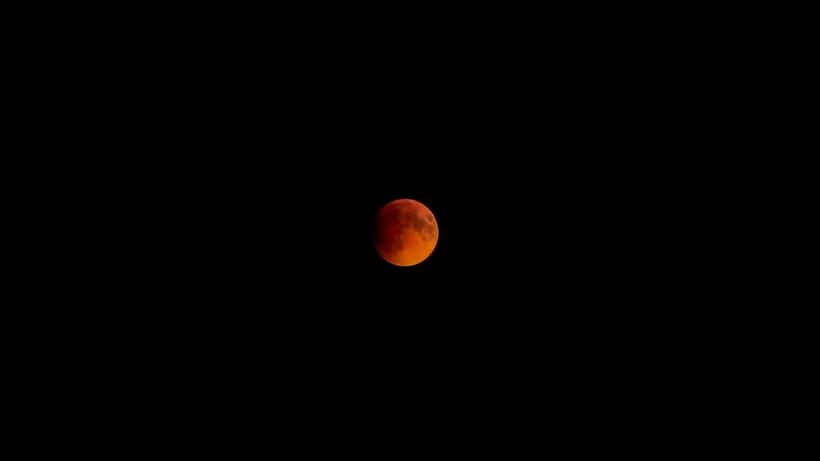
Tonight, millions of Americans will step outside to watch one of the most dramatic astronomical events of the decade — a deep partial lunar eclipse covering 96% of the Moon, turning it a vivid copper-red. The August 27–28, 2026 blood moon begins its obvious partial phase at around 10:27 p.m. EDT, reaching maximum darkness at 12:12 a.m. Eastern — and that midnight timing is exactly what has sleep health specialists paying attention.
What's Happening in the Sky Tonight
According to NASA's Scientific Visualization Studio, tonight's partial lunar eclipse is one of the deepest in years: 96% of the Moon will enter Earth's dark inner shadow (the umbra), producing the characteristic blood-red coloring from which the eclipse takes its popular nickname. Unlike a solar eclipse, no special glasses are needed — the Moon is entirely safe to observe with the naked eye, binoculars, or a telescope.
The timeline for U.S. viewers on August 27 (all times approximate):
- Partial phase begins: 10:27 p.m. EDT / 7:27 p.m. PDT
- Maximum eclipse: 12:12 a.m. EDT / 9:12 p.m. PDT
- Partial phase ends: approximately 1:45 a.m. EDT / 10:45 p.m. PDT
West Coast viewers have the advantage: maximum eclipse occurs at 9:12 p.m. Pacific, a civilized hour that doesn't threaten the next morning's alarm. But for the 180 million Americans in Eastern and Central time zones, "peak blood moon" falls squarely at midnight or beyond — and the complete show, beginning to end, demands more than three hours outdoors.
The Hidden Health Cost of Midnight Stargazing
Sleep medicine researchers have long documented what happens when adults trim even 90 minutes from their nightly total. Research from Harvard Medical School's Division of Sleep Medicine found that losing fewer than six hours of sleep in a single night impairs reaction time and cognitive performance to a degree comparable to legal intoxication — and most people significantly underestimate their own impairment after a short night.
For the August blood moon, this matters in concrete terms. The eclipse partial phase stretches from 10:27 p.m. to approximately 1:45 a.m. EDT. An East Coast viewer who stays for the full spectacle will likely return to bed no earlier than 2:00 a.m., leaving a five-to-six hour sleep window before a typical workday start. The Cleveland Clinic notes that even one night of fewer than seven hours can spike cortisol — the body's primary stress hormone — and suppress immune function for up to 48 hours afterward.
Most healthy adults rebound from a single disrupted night within 24–48 hours. The concern arises when that one late night lands on an already-depleted baseline — which, in late August, describes a significant share of the adult population.
Why Late August Makes This Riskier Than Usual
The blood moon arrives at what sleep specialists call a pressure point in the calendar. August's final week consistently generates some of the highest volumes of sleep-related consultations in the United States. Back-to-school transitions force earlier morning alarms onto schedules that spent July adapting to a later social clock — a phenomenon sleep researchers describe as "social jet lag reversal," physiologically similar to flying eastward several time zones at once.
For parents managing school-morning routines, the problem compounds: you're staying up late while simultaneously moving wake times earlier. Sleep physicians on platforms like Expert Zoom flag several specific patterns that warrant evaluation regardless of the celestial trigger: persistent fatigue lasting more than three days after resuming a normal schedule, mood disruption that persists past the second recovery night, cognitive fog or unusual difficulty concentrating at work, and elevated resting heart rate in adults over 45.
The key distinction sleep doctors draw is between acute sleep loss — one bad night that resolves in 48 hours — and a chronic pattern that a single eclipse merely exposes.
A Concrete Scenario: When One Late Night Reveals a Bigger Problem
Consider a situation sleep medicine practitioners encounter regularly in the weeks following high-profile nighttime events.
A 38-year-old project manager in Charlotte, North Carolina — call her Dana — stays up until 2:00 a.m. on August 28 to watch the blood moon with her two elementary-school-aged children. She normally gets 6.5 hours of sleep, already below the CDC-recommended 7–9 hours for adults. The morning after the eclipse, her alarm sounds at 6:45 a.m. for the school run: a 4.75-hour night.
By the numbers, Dana enters Thursday operating on a cumulative sleep debt of roughly 5–7 hours when her pre-eclipse baseline deficit is factored in. Research from the American Academy of Sleep Medicine shows that cognitive recovery from this level of accumulated debt requires two to three full nights of uninterrupted sleep — meaning Dana is unlikely to feel fully sharp until Sunday morning at the earliest.
The if/then logic is clear-cut: if Dana was already sleeping fewer than 7 hours per night before the eclipse, then one all-nighter can push her into a zone where commute accident risk rises by an estimated 33%, according to National Sleep Foundation data on drowsy driving. If, on the other hand, Dana normally sleeps a solid 8 hours and the blood moon is a genuine one-time exception, full cognitive recovery typically arrives within 24 hours of returning to her normal schedule.
The practical threshold for seeking expert input: if you feel back to your pre-eclipse baseline by Saturday morning, no intervention is needed. If fatigue, mood changes, or cognitive difficulties persist past Sunday despite two recovery nights, that persistence is worth discussing with a sleep health specialist — not because the eclipse caused a disorder, but because it stress-tested a system that was already struggling.
Smart Strategies for Watching Without the Week-Long Recovery
Sleep physicians offer several evidence-supported tactics for eclipse watching that limit the physiological cost:
Strategic napping: A 20–25 minute nap taken before 3:00 p.m. on August 27 reduces sleep pressure enough to extend the alert window by two to three hours without interfering meaningfully with that night's sleep architecture. Naps longer than 30 minutes risk entering deep sleep and generating grogginess that outlasts the nap itself.
Watch only the maximum: For East Coast families with children, consider observing only the peak phase (12:12 a.m. EDT, approximately 30–40 minutes of peak blood-red coloring) rather than the full three-hour event. The visual payoff is highest when the time cost is lowest — the umbral coloring is most intense within 20 minutes of maximum.
Light hygiene after 9:00 p.m.: Avoid bright indoor LED lighting on the evening of August 27. Blue-spectrum light exposure suppresses melatonin production for up to 90 minutes, compounding the delay effect of the late bedtime and making it harder to fall asleep once you come back inside.
Shift tomorrow's alarm, not tonight's bedtime: If your schedule allows, setting Thursday's alarm one hour later recovers a disproportionate share of cognitive function compared to going to bed earlier the following night. This "sleep inertia management" approach lets the body complete more full 90-minute sleep cycles during the most restorative early-morning hours.
After the Eclipse: Reading Your Recovery
The blood moon is a finite event — it ends, and the sky returns to normal. Social jet lag does not self-correct, which is the condition a sleep specialist can actually treat. If tonight's eclipse is one of several factors disrupting your August sleep — summer travel, a new school schedule, irregular work hours — the cumulative effect is worth mapping with a professional.
If you noticed that the recovery period after the March 2026 aurora borealis event felt longer than expected, our earlier guide on nighttime astronomical events and sleep health covers why some individuals are physiologically more vulnerable to circadian disruption than others. For readers already tracking how irregular late-night events stack up across a season, this overview of how schedule shifts affect sleep quality offers a framework for spotting cumulative sleep debt before it becomes a clinical issue.
The blood moon will be one of the most spectacular astronomical events visible from North America this decade. Watching it doesn't require trading your health for the view — but knowing your body's recovery signals before you step outside tonight is the most useful preparation you can make.
This article is informational and does not constitute medical advice. If you are experiencing persistent sleep difficulties or fatigue that affects daily functioning, consult a licensed sleep medicine physician.
