 Odette Caplan
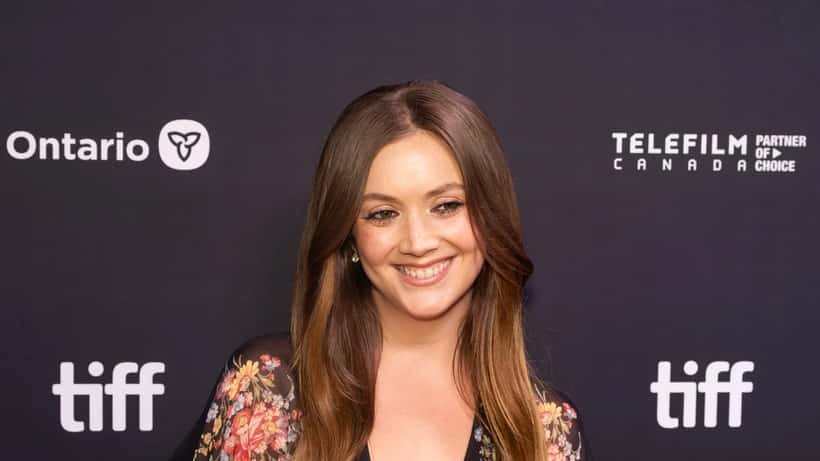
When Amazon MGM Studios dropped Luca Guadagnino's nearly finished film "Artificial" in summer 2026 — just days after finalizing a $50 billion partnership with OpenAI — the move sent a shockwave through Hollywood. Billie Lourd, Andrew Garfield, and the rest of the cast faced weeks of uncertainty before distributor Neon stepped in to rescue the project. The film will now premiere at the New York Film Festival on October 5, 2026, and open in U.S. theaters on Christmas Day. But the crisis exposed a legal vulnerability that affects every working actor, writer, and producer in the modern studio system: when a parent company's technology deal kills your project, what are you actually owed?
The Film, the Deal, and the Fallout
"Artificial" is a prestige drama directed by Luca Guadagnino exploring the origins of OpenAI through the story of its co-founder and CEO Sam Altman. Andrew Garfield stars as Altman. Billie Lourd — known for her work across multiple seasons of American Horror Story — is part of the ensemble cast. Amazon MGM Studios originally acquired worldwide distribution rights and was targeting an early 2027 theatrical release, according to Variety's reporting.
The cancellation came within days of Amazon announcing a $50 billion investment in OpenAI — one of the largest technology partnerships ever disclosed publicly. A film dramatizing OpenAI's controversial internal history, including the short-lived firing of Altman in November 2023, suddenly posed an obvious business conflict for a distribution partner now deeply embedded with the company depicted on screen.
The decision attracted immediate scrutiny from industry observers, legal commentators, and labor advocates. Neon's swift acquisition of distribution rights defused the immediate crisis. But the underlying question — one that will persist as studios become increasingly entangled with technology conglomerates — remains open: what legal protections does a working actor have when a studio abandons a project not because of production failure, but because of a corporate strategic pivot?
What Entertainment Lawyers Say About Studio Abandonment
Under standard entertainment contracts governed by SAG-AFTRA collective bargaining agreements, actors who have completed principal photography are generally entitled to their contracted compensation. A studio's decision to abandon distribution rights does not automatically void payment obligations for work already performed.
The complication arises in the structure of payment itself. Industry-standard contracts frequently tie a portion of compensation to "delivery and acceptance" — a condition that requires a distributor to formally accept the finished film before the final payment tranche is released. In the "Artificial" scenario, the relevant question was: if Amazon stepped away and there was no distributor, had the acceptance condition technically failed?
Entertainment attorneys argue that the doctrine of prevention applies in these circumstances. Under this principle, when a contractual condition fails because of the obligor's own action — in this case, Amazon's deliberate choice to abandon the project — the obligor cannot cite that failure as a defense against paying what is owed. The law does not permit a party to engineer the non-occurrence of a condition and then claim the benefit of that non-occurrence.
However, this is a legal argument, not an automatic right. Enforcing it requires formal action: typically a demand letter, followed by arbitration under SAG-AFTRA dispute resolution procedures. For cast members whose agents did not negotiate "pay or play" provisions — which guarantee full payment regardless of whether the project reaches the screen — the path to receiving that final payment becomes considerably more complicated.
"Pay or play" clauses are effectively standard for top-billed talent on studio productions. For supporting roles, co-stars, and ensemble members — exactly the tier where Lourd and similar actors often operate — these provisions are frequently absent, making corporate-driven cancellations a real financial risk.
When a $85,000 Role Becomes a Legal Dispute: A Concrete Scenario
Consider this scenario, drawn from the actual structure of SAG-AFTRA modified low-budget agreements used on prestige independent productions that later attract major studio distribution deals.
A supporting actor signs a contract for a studio-backed feature. Their negotiated fee is $85,000 for six weeks of completed principal photography. No "pay or play" clause was included — not unusual for roles outside the top five billing positions. Payment terms: 50% upon signing ($42,500), with the remaining 50% due "upon delivery and acceptance by distributor."
The actor completes all six weeks of filming. The studio then drops the project because of a corporate conflict — exactly as Amazon did with "Artificial." There is, temporarily, no distributor.
The actor has received $42,500. The remaining $42,500 is in limbo.
If the actor does nothing, there is a real risk the production company argues the acceptance condition was never met and delays or refuses the final payment. In practice, if a replacement distributor is found quickly — as Neon was for "Artificial" — the issue may resolve on its own. But if no replacement emerges, or if the replacement deal is structured differently, the actor may need to pursue the remaining balance through formal channels.
The resolution timeline matters enormously. SAG-AFTRA arbitration typically runs three to nine months. During that period, the actor has effectively extended their financial exposure on a project they completed six months earlier. For actors without substantial savings or a robust back-catalog of royalties — the majority of working professionals in the industry — a four-to-six-month delay on $42,500 carries genuine consequences.
The fix is straightforward, and the "Artificial" situation gives negotiators a concrete precedent to cite: replace "acceptance by distributor" with "acceptance by production company" in every contract, and negotiate a "pay or play" clause for any role carrying a fee above a set threshold. The SAG-AFTRA Wages & Working Conditions guidelines, available at sag-aftra.org, provide a baseline framework actors can reference when pushing for stronger protections.
The Bigger Shift: Big Tech as Studio Owner
The "Artificial" situation is not an isolated incident. It is an early, highly visible example of a structural change in the entertainment industry that has been accelerating since 2020: major studios are now subsidiaries of technology companies whose primary competitive relationships are with each other.
Amazon owns MGM. Apple funds original productions through Apple TV+. Netflix's infrastructure depends on cloud services and AI tools supplied by companies it may also compete against. The result is a growing category of project cancellation that existing entertainment contracts were not designed to address: not a failure of creative development, not a budget overrun, not a force majeure event — but a corporate strategic calculation made at the parent-company level, with no input from the creative team, cast, or production company.
For actors, writers, directors, and producers, this creates a new layer of professional risk that cannot be managed through conventional networking or reputation-building. It requires contractual adaptation.
Entertainment attorneys in 2026 are increasingly recommending a three-part approach for any professional entering a studio contract where the studio is owned by a technology conglomerate:
First, insist on a "pay or play" provision for any role or agreement above a minimum fee threshold — ideally any contract over $30,000. This eliminates the acceptance-condition ambiguity entirely.
Second, negotiate a "corporate conflict termination" clause that specifies guaranteed compensation if a project is abandoned due to a parent company's business partnership or competitive-conflict decision. This is a newer provision and studios will resist it, but post-"Artificial," the precedent exists to support the request.
Third, ensure that arbitration rights are clearly established in the contract and that the dispute resolution timeline is capped at 90 days for payment claims under a defined threshold — a safeguard that prevents compensation disputes from stretching across half a year of uncertainty.
What to Do If You Are in a Similar Situation
Billie Lourd and her castmates were fortunate: Neon moved quickly, and "Artificial" will be seen. The financial and legal crisis resolved without litigation. Not every cast faces that outcome.
If you are currently involved in a production associated with a studio owned by or in a significant commercial partnership with a major technology company, the time to review your contractual protections is before a conflict arises — not after an announcement lands. An entertainment lawyer can review your existing agreement, identify exposure points related to acceptance conditions and payment triggers, and advise on whether you have grounds to renegotiate protections before production concludes.
The entertainment landscape of 2026 is shaped by technology partnership deals worth tens of billions of dollars. The contracts that govern working professionals in that landscape were largely written for a different era. Closing that gap is no longer a niche concern reserved for A-list talent — it is a standard professional responsibility for anyone working in the industry.
If you are facing a contract dispute following a studio cancellation, an entertainment attorney can review your specific agreement and advise on your options. Find qualified legal experts on Expert Zoom who specialize in entertainment and contract law.
Disclaimer: This article provides general legal information for educational purposes only. It does not constitute legal advice. Specific contract situations vary widely; consult a licensed entertainment attorney in your jurisdiction for advice applicable to your circumstances.
