 Bernard Stone
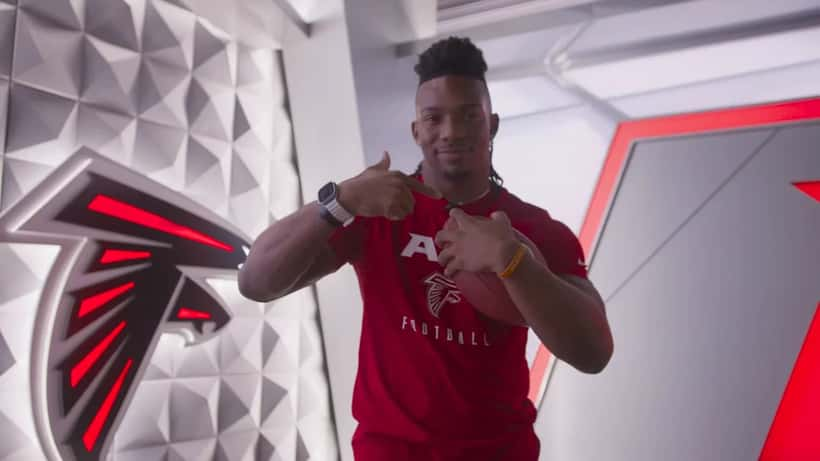
Bijan Robinson walked into Atlanta Falcons training camp on August 1, 2026, and then walked right back off the practice field without running a single play. His message to the organization was unmistakable: pay me what I'm worth, or I won't play until you do. With a target of $25 million per year — a figure that would shatter the NFL running back market — Robinson's holdout is already one of the most consequential financial standoffs in professional sports this decade.
The story isn't just about football. Robinson's calculated decision to sit out reps reveals a set of wealth strategy principles that apply far beyond the NFL: when to hold the line, how to calculate the break-even point on a risky negotiation, and why professional financial guidance isn't optional when the numbers get this large.
The Data Behind the Standoff
Robinson's current contract tells the financial story with brutal clarity. He signed a four-year, $21 million rookie deal in 2023. In 2026 alone, he earns a base salary of $1.145 million plus a $2.6 million roster bonus — a total cash payout of roughly $3.7 million for a player widely regarded as a top-three running back in the league. His cap hit of $6.99 million means the Falcons extract enormous economic value from a dramatically underpaid asset.
The market benchmark resets the conversation entirely. Saquon Barkley's deal with the Philadelphia Eagles set the running back standard at $20.6 million per year in new-money average annual value (AAV). Robinson's camp is targeting $25 million per year — a 21% premium over Barkley — and multiple NFL insiders report that figure is neither bluster nor fantasy given Robinson's statistical profile.
In 2025, Robinson rushed for 1,472 yards and 14 touchdowns while adding 67 receptions for 541 yards in the passing game. By Pro Football Focus grade, yards over expected, and yards created, he ranks in the 99th percentile at his position. The gap between his market value and his current compensation is one of the widest in professional sports right now.
Robinson is not acting alone. Detroit Lions running back Jahmyr Gibbs is holding in simultaneously, a coordinated pressure campaign that wealth management professionals and agents describe as textbook leverage timing. When two elite players at the same position hold out together, the market-resetting effect is amplified — teams cannot easily cite precedent to lowball either player.
Why the Running Back Market Hit This Inflection Point
The NFL running back position has been systematically underpaid relative to its on-field impact for years. League teams historically used the position's physical attrition and roster replaceability to suppress salaries — a logic that finally began cracking in 2024 when Barkley's deal broke open a new compensation era.
According to Spotrac, the average AAV for the top ten running backs entering 2026 is approximately $14.8 million — a figure Robinson already vastly outperforms in production, even as his paycheck hasn't caught up. The structural misalignment between market value and contract reality is precisely what makes this holdout credible and, from a wealth management standpoint, rational.
The Falcons have leverage of their own: they exercised Robinson's fifth-year rookie option, locking him through the 2027 NFL season. That creates an interesting asymmetry. Atlanta can afford to wait, in theory — but the closer the regular season gets, the more Robinson's absence from practice reps becomes a competitive liability. Every week without their best offensive weapon in full training is a week of execution and conditioning lost.
The Wealth Manager's Lens: When Is a Holdout Worth the Risk?
From a pure financial planning standpoint, the decision to hold out is a structured bet with quantifiable upside and downside. A wealth management professional working with a professional athlete would model this decision across three variables: the player's injury history and durability, the team's legal leverage via the existing contract, and the market timing relative to comparable deals.
For Robinson, all three factors currently favor holding the line. He is 24 years old with no significant injury history. The Falcons cannot force him to practice under the CBA. And Barkley's deal — signed just months ago — provides an immediately comparable data point that supports the $25M ask.
The upside of a successful extension is straightforward: a four-year deal at $25 million per year means $100 million total, with a meaningful portion guaranteed. The downside is real but bounded. Under the NFL CBA, a player who sits out training camp practices does not forfeit regular-season game checks — those penalties apply only if a holdout extends into the regular season proper. Robinson has time. The math supports the risk.
What the Numbers Actually Look Like: A Concrete Scenario
To understand what's at stake in precise terms, consider this specific scenario:
Robinson signs a four-year extension at $23 million per year — a conservative figure below his $25M target but meaningfully above Barkley's $20.6M benchmark. The deal includes $72 million in fully guaranteed money, paid out in the structure typical of modern NFL skill-position contracts.
If Robinson resolves the holdout before the preseason opener on August 19, then he sacrifices zero regular-season earnings, secures $72 million in guaranteed money, and achieves a net financial improvement of approximately $68.4 million over his two remaining years on the current deal. The math: the current contract pays him roughly $7.5 million in cash over 2026–2027 combined ($3.7M this year plus the 5th-year option year); the new deal pays him $46 million guaranteed over the same span. That's a $38.5 million gap in the first two years alone, before the extension years even begin.
If Robinson holds out into the regular season and misses the Falcons' Week 1 kickoff against the New Orleans Saints, he forfeits one game check at his 2026 rate — approximately $220,000. At a new deal rate of $23 million per year, he recovers that forfeit within the first three days of the new contract's signing bonus payment. The break-even is less than a week.
This kind of scenario modeling is not unique to elite athletes. It is the same framework a wealth management advisor would apply to any professional weighing the risk of a negotiation standoff against the financial upside of a better deal — whether they're a senior engineer considering walking away from a lowball retention offer, a physician negotiating a new practice partnership, or a founder evaluating acquisition terms.
For contextual reading on how NFL contracts are structured from a player-rights perspective, see our earlier coverage of what every drafted player should know about their first contract and how athletes can protect their financial future through agent and contract expertise.
The Wealth Strategy Principles Behind the Holdout
Robinson's situation carries lessons for any professional whose market value has outpaced their current compensation.
Timing is the primary variable. Robinson's holdout is calibrated precisely: the Falcons cannot replace him with an equivalent player mid-training camp, the regular season creates an approaching deadline that increases urgency, and Barkley's recent deal validates the ask with hard market data. In any salary negotiation — sports or otherwise — the moment of maximum leverage, when a competing offer or market comparable exists and a deadline approaches, is the optimal moment to press.
The math should drive the decision, not the emotion. Robinson's camp isn't holding out because it feels good. They're holding out because the fully guaranteed money he is targeting provides financial security his current deal simply doesn't. The difference between $7.5 million in remaining guaranteed money and $72 million in guaranteed money is not a negotiating posture — it is a life-altering financial outcome. A wealth management professional would frame any salary standoff the same way: what is the guaranteed floor, what is the injury-exposure window, and what is the break-even timeline?
Professional guidance is not optional at this scale. Robinson almost certainly has a sports agent, a financial advisor, a tax attorney, and a wealth manager all contributing to this decision. At $25 million per year, the tax implications alone — Georgia state income tax, NFL-city "jock taxes" on games played in other states, structured payment timing, and long-term investment allocation — can amount to millions in avoidable liability. The difference between well-advised and poorly-advised contract management at this earning level can easily exceed $5–10 million over the life of the deal.
The NFL Players Association publishes resources on CBA rights, holdout rules, and player protections — the governing framework that makes Robinson's training-camp hold-in legally viable in the first place.
Disclaimer: This article provides general financial information for educational purposes only. For personalized advice on salary negotiation, contract timing, or wealth management, consult a licensed financial professional.
The Bottom Line
Bijan Robinson's holdout is one of the highest-visibility wealth strategy decisions in professional sports right now. He is betting that his market value — confirmed by elite production, a favorable CBA structure, and a validated market comparable in Barkley's deal — is worth the short-term friction of sitting out summer practice reps.
For any professional, the lesson is the same: recognizing when your compensation has fallen behind your market value, and having the data and advisors to act on it at the right moment, is one of the highest-return financial moves available. Robinson knows his number. He has the advisors to model the risk. And he has the timing right.
Whether you're negotiating a contract extension, evaluating a career transition, or simply wondering whether the moment is right to push for what you're worth, the same financial modeling Robinson's team is running right now is available to you through a wealth management consultation.
