 Carl Graham
In February 2026, BetMGM quietly updated its terms of service to make one thing explicit: harass an athlete, and your account is gone — permanently, at BetMGM's sole discretion, with no automatic refund of your remaining balance. With more than 7 million registered users across 20 US states, the policy change has triggered a legal conversation about what bettors can actually do when a sportsbook shuts them out.
What BetMGM's New Policy Actually Says
BetMGM's revised terms, announced on February 2, 2026, now explicitly state that any customer who uses "abusive, threatening, defamatory, or harassing" language toward athletes, coaches, or league personnel may have their account suspended or permanently terminated. In a statement published on BetMGM's official platform, the company described the update as a commitment to "sports integrity and player safety," with enforcement operating at the platform's sole discretion.
The previous terms already allowed BetMGM to close accounts "for any lawful reason." The 2026 update goes further — it names athlete harassment as a specific and independently sufficient ground for termination. The policy covers communication through BetMGM's in-app chat, live bet stream comments, and customer service interactions.
What the revised terms do not address: what constitutes a formal review before suspension, what timeline governs that review, and what happens to funds sitting in an account when the ban takes effect. That silence is where legal disputes begin.
Why This Affects More Bettors Than You'd Expect
Sports betting has become one of the fastest-growing legal industries in the United States. According to the American Gaming Association, Americans placed more than $119 billion in legal sports wagers in 2025 — a national record. BetMGM operates across 20 states and Washington D.C., serving a range of users from casual weekend bettors to high-frequency players with account balances in the thousands.
The anti-harassment principle is straightforward. The enforcement mechanism is not. Because BetMGM's policy gives the platform discretion to determine what qualifies as harassment, and because no public-facing appeals process is spelled out in the revised terms, users who receive a suspension notice have very little clarity on what comes next — including what happens to money they were already owed.
Frustration after a losing streak is one of the most predictable human responses in sports betting. Angry comments about player performance are common, often fleeting, and sometimes flagged retroactively by automated moderation systems weeks after they're posted. The new policy means that any of those comments — depending on how they're classified — can trigger an irreversible account action.
Frozen Funds, No Warning: The Scenario That Plays Out More Than You'd Think
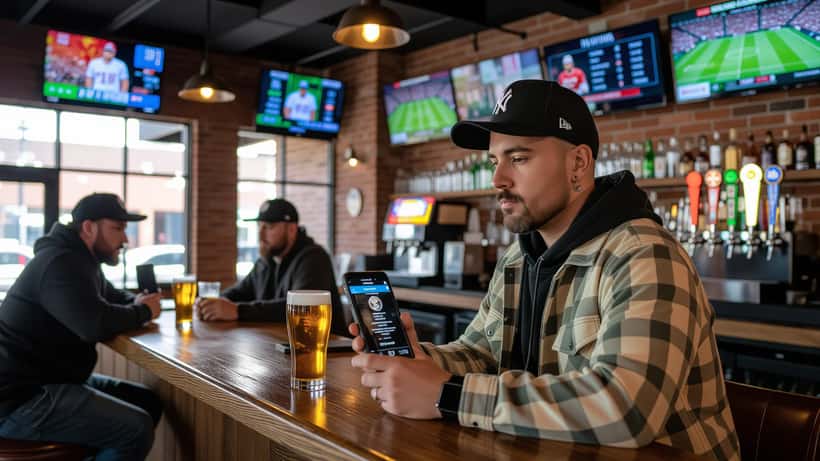
Take a situation gaming attorneys say they're already seeing in 2026: a bettor in New Jersey has $1,800 in his BetMGM account — $1,200 in a pending withdrawal he requested three days ago, and a $600 live parlay that's still active. During a rough run in late January, he posted a comment through BetMGM's in-app chat calling a pitcher "a waste of a roster spot" after a blown save.
BetMGM's moderation flags the comment under the updated harassment policy. By the next morning, his account is suspended. His pending withdrawal is paused. The live parlay settles — but the $600 proceeds are inaccessible. He receives an automated suspension notice with no timeline for resolution.
Here's the legal distinction that matters: BetMGM has grounds to close the account. It does not have grounds to indefinitely retain winnings that were earned under valid terms before the suspension. The violation gives the operator authority to terminate the relationship going forward — not to claw back funds the bettor was already owed.
If the suspended balance is $1,000 or more, a gaming attorney will tell you that you have a recoverable claim. Under New Jersey gaming regulations, licensed sportsbooks are required to provide documented justification for account closures upon user request, and the state's Division of Gaming Enforcement has a formal dispute process for exactly this type of situation. Filing a complaint within 30 days of the suspension triggers an operator-response obligation — which changes the dynamic considerably compared to simply calling customer support.
What a Gaming Lawyer Would Tell You to Do First
Attorneys who specialize in gaming and consumer protection law give consistent advice when a betting account is suspended unexpectedly: document everything before you reply to BetMGM.
Screenshot every piece of communication on the platform — in-app chat history, your full transaction and bet history, any suspension or account notice you received, and BetMGM's current terms of service as they appear at the time of suspension. Policies can be revised. Your screenshots create a record of exactly what you agreed to and exactly when the account action occurred.
Next, request in writing from BetMGM's customer support team a formal explanation citing the specific clause in their terms that justifies the suspension. In most US states with licensed sports betting, operators are required to respond to account closure requests with documented cause. The absence of such documentation can itself become grounds for a regulatory complaint.
If BetMGM does not release funds it owes you within 14 days of a written request, file a complaint with your state gaming regulator. In New Jersey, that's the Division of Gaming Enforcement. In Pennsylvania, it's the Gaming Control Board. In Michigan, the same. Regulatory complaints create an obligation for the operator to respond formally — and regulators have real authority over licensed operators' ability to keep their books open in that state.
For suspended balances above $1,500, a one-hour consultation with a gaming attorney (typically $150–$300 for an initial review) is worth the investment. Most BetMGM account agreements include mandatory arbitration clauses, but arbitration is a formal legal proceeding with discovery rights and binding outcomes — not a concession. An attorney can also assess whether BetMGM's "sole discretion" language is enforceable in your state, given that several states have consumer protection statutes limiting unilateral termination rights in standardized contracts.
The States Where You Have the Most Leverage
Not every state treats sportsbook disputes with equal weight. States with the most developed gaming regulatory frameworks give users the most practical leverage.
New Jersey, Pennsylvania, and Michigan have mature oversight structures with formal complaint processes that sportsbooks must respond to within specified timeframes. In these states, a regulatory complaint is a meaningful action — operators take them seriously because the alternative is regulatory scrutiny of their license.
In states where sports betting is newer — Ohio, Vermont, North Carolina — the regulatory apparatus is still developing. Users in those states will often find the arbitration clause in BetMGM's terms is the most accessible route, making careful documentation from day one even more important.
One nuance worth knowing: BetMGM's internal policy-based ban is separate from state self-exclusion programs. If BetMGM bans you for policy reasons, that does not automatically add you to your state's self-exclusion database. And if you're in that database, BetMGM's harassment policy is a separate enforcement layer on top.
Three Steps to Take Right Now
If your BetMGM account has been suspended in 2026 — or if you're concerned about past communications on the platform — gaming attorneys recommend this sequence:
First, request your full account and transaction history from BetMGM in writing, citing your right to access your account data under applicable state law. Second, if BetMGM does not release funds it owes you within 14 days of the request, file a formal complaint with your state gaming commission before the 30-day window closes. Third, if the suspended balance exceeds $1,000, consult a gaming attorney — most offer flat-fee or free initial consultations for account suspension disputes.
You can also learn from how similar disputes have unfolded by reviewing how sports betting account disputes play out under US contract law, which walks through the legal principles a lawyer applies when a sportsbook and bettor disagree about a balance.
BetMGM's policy change is a legitimate response to a genuine problem in the industry. But "sole discretion" enforcement without a clear appeals mechanism creates real exposure for users whose accounts hold meaningful balances. The law provides pathways — but only if you know to use them.
This article is for informational purposes only and does not constitute legal advice. Consult a licensed attorney in your jurisdiction for guidance specific to your situation.
format_used: News brief
