 Cora Nelson
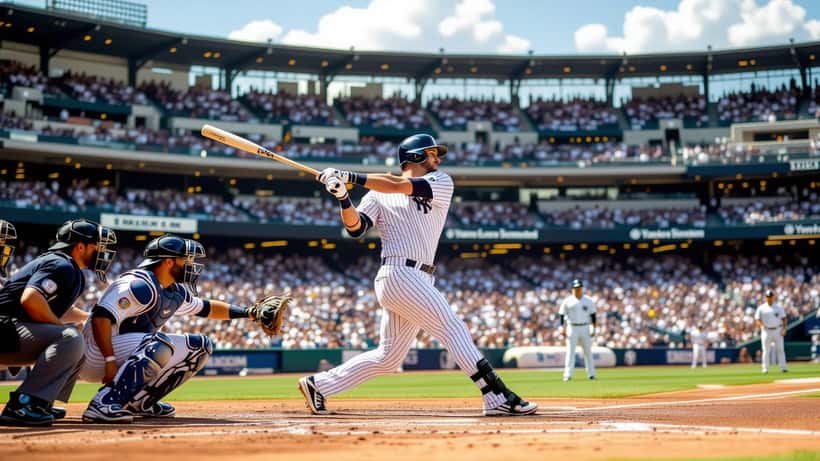
Ben Rice is putting together one of the most surprising starts to an MLB season in 2026. The New York Yankees first baseman is slashing .330/.447/.717 with 11 home runs and 26 RBIs in his first 132 plate appearances — numbers that place him among the elite hitters in the American League. His production has powered the Yankees to an 11-2 stretch run through early May, and the question on every baseball fan's mind is the same: how does a player go from unheralded fifth-round draft pick to one of the best hitters in the game?
The answer involves discipline, development, and a set of physical and mental performance principles that extend well beyond the baseball diamond.
From Fifth-Round Pick to Yankees Standout
Rice wasn't the kind of prospect who lands on top-100 lists. Drafted out of Harvard in the fifth round in 2021, he quietly worked his way through the Yankees' minor league system before making his MLB debut in 2024. Now, in 2026, he's producing like an All-Star.
"He's really disciplined, and he's got a good plan night in and night out for who he's facing," Yankees manager Aaron Boone said after Rice's three-run homer powered a 7-2 win over the Orioles on May 1. "We're continuing to see the evolution of one of the game's really outstanding hitters."
MLB insider Jeff Passan put it more directly: "Ben Rice, what a find — the Yankees player development process right now is really working."
His five home runs against left-handed pitching are tied with the Astros' Yordan Alvarez for the MLB lead — a stat that signals genuine mechanical refinement, not a hot streak built on favorable matchups.
What Sports Medicine Experts Say About Athletic Breakthroughs
Breakout seasons like Rice's don't come out of nowhere. According to the National Institutes of Health's MedlinePlus, structured physical training combined with proper recovery protocols is essential for sustained high-level performance — and the body's adaptation to those demands is a years-long process.
Sports medicine specialists identify several factors that drive sudden athletic improvement in trained adults:
Training periodization: Elite athletes alternate high-intensity work with deliberate recovery phases. Over time, the body adapts progressively to greater demands. Rice's years in the minor leagues — 600-plus at-bats of live-game repetitions against increasingly advanced pitching — built a foundation that is now paying full dividends.
Neuromuscular coordination: Much of what we call "athletic development" is actually the nervous system becoming more efficient at recruiting muscle fibers and sequencing movements. A .330 batting average in the majors reflects not just power but split-second reaction timing that takes years to calibrate.
Cognitive preparation and plate discipline: Rice's .447 on-base percentage — genuinely elite by any standard — points to an uncommon ability to read pitches early and resist expanding the strike zone. Sports psychologists describe this as "controlled focus under pressure," a trainable cognitive skill that compounds with deliberate practice.
Sleep and recovery optimization: Research published in leading sports medicine journals consistently identifies sleep as the most underrated performance enhancer. Professional athletes who prioritize 8 to 10 hours of sleep per night show measurable improvements in reaction time, accuracy, and muscular endurance.
The Late-Development Phenomenon — and What It Means for Everyone
Rice's path illustrates an important physiological reality: peak human performance is not fixed at age 18 or even 22. Many athletes — particularly those in skill-based sports requiring complex neuromuscular patterns — continue to develop meaningfully into their mid-to-late 20s. Muscle fiber maturation, hormonal balance, and neural pathway efficiency all continue evolving through a person's third decade of life.
This has direct implications for recreational athletes and fitness-focused adults:
- Consistency over intensity: Rice's breakthrough reflects years of showing up daily, not a single transformative moment. Regular, structured training compounds in ways that intermittent high-intensity sessions cannot replicate.
- Recovery is training: Rest days, proper sleep, and stress management are not optional luxuries for elite athletes — they are load-bearing components of the performance architecture.
- Expert guidance accelerates development: The Yankees employ a full roster of strength coaches, nutritionists, athletic trainers, and sports medicine physicians to support each player's development. Their calibrated approach is a core reason players like Rice continue improving long after most fans have written them off.
When to Consult a Sports Medicine Professional
For everyday athletes, the precision guidance that Rice receives from Yankees professionals isn't automatic. Many recreational athletes train hard without the structural support that turns effort into measurable improvement — or manage nagging injuries without addressing the underlying mechanics that caused them.
Sports medicine specialists can provide:
- Individualized training plans based on actual physiology, movement patterns, and health history rather than generic programming
- Injury risk assessment that identifies muscular imbalances or biomechanical weaknesses before they escalate into season-ending strains
- Recovery protocol design that matches rest intervals to actual training load and individual recovery capacity
- Performance plateau consultation for adults who have plateaued despite consistent training
Note: The information in this article is for general educational purposes and does not substitute for advice from a qualified healthcare professional. Consult a licensed sports medicine physician or physical therapist before beginning a new training program or if you are experiencing pain or reduced performance.
Platforms like ExpertZoom connect patients with verified sports medicine doctors, physical therapists, and health professionals who can deliver personalized guidance based on your specific goals, age, and fitness baseline.
The Yankees' Development Machine
Rice's emergence also reflects what happens when an organization systematically invests in player development over years, not months. The Yankees' approach — combining data analytics, video analysis, pitch recognition training, and mental performance coaching — has produced results across their entire roster in 2026.
The lesson scales. When individuals invest in consistent, expert-guided wellness practices — whether through a sports medicine physician, certified strength coach, or registered dietitian — the results tend to compound over time. The body responds to disciplined, incremental improvement far more reliably than to bursts of effort followed by neglect.
Rice isn't a superhero who arrived fully formed. He's a disciplined, well-coached athlete who showed up every day for five years and let the process work. For anyone chasing their own performance goals, that's a story worth paying attention to.
If you've been training consistently but not seeing the results you expected, or if you're returning from injury and want a structured path back to full capacity, a sports medicine consultation may be the clearest next step. An expert can identify exactly what's holding your performance back — and design a plan to fix it.
