 Laura Clark
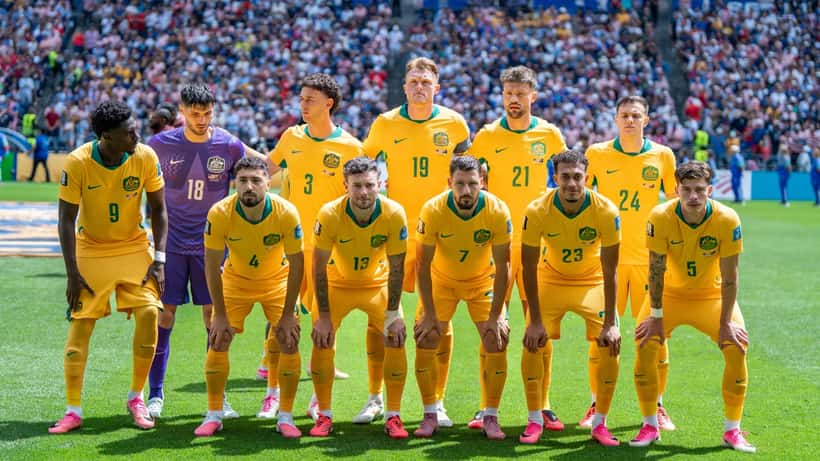
The anticipation in Townsville is palpable. Tonight, Queensland Country Bank Stadium hosts Australia vs. Brazil — the opening fixture of the Queensland Football Series and one of the most eagerly awaited post-World Cup friendlies of 2026. Both nations are rebuilding after painful exits: the Socceroos fell to Egypt on penalties in the Round of 32, while Carlo Ancelotti's Brazil were eliminated by Norway in the quarterfinals, losing 2-1. As Vinicius Junior, Raphinha, and 19-year-old Endrick warm up in the Queensland heat, millions of fans across the US and beyond are watching. And many are already thinking about dusting off their boots.
Brazil's Injury-Plagued World Cup: What the Data Reveals
No nation arrived at FIFA World Cup 2026 more physically depleted than Brazil. Before a single group-stage ball was kicked, the squad had already sustained a wave of injuries severe enough to reshape Ancelotti's plans entirely.
Rodrygo tore his ACL and lateral meniscus during a La Liga match in March 2026, ruling him out before the tournament began. Éder Militão, Brazil's first-choice centre-back, went under the knife on April 28 for a thigh injury that had resisted conservative treatment through the club season. Estevão, the electrifying 18-year-old forward, suffered a similar thigh injury on April 18 — just ten days earlier. And Neymar, Brazil's most capped outfield player, missed the tournament entirely for the second consecutive cycle.
Brazil still reached the quarterfinals, a testament to their depth. But the cumulative physical toll contributed to their 2-1 defeat to Norway — and it serves as a powerful illustration of how football's mechanical demands overwhelm even the most finely conditioned athletes on Earth.
These were not random accidents. They were the predictable outcome of bodies driven through relentless club calendars, intercontinental travel, and psychological pressure without adequate recovery margins. The injury patterns align precisely with what orthopedic specialists document year after year. According to the National Institute of Arthritis and Musculoskeletal and Skin Diseases (NIAMS), sprains, strains, and fractures account for the largest share of sports injuries — with the knee and ankle most vulnerable during the cutting, pivoting, and high-speed deceleration that define modern football.
To understand how physical attrition shaped the tournament's standings, see: Who Is Still in the World Cup 2026? The Physical Burden on the Human Body.
The "World Cup Effect": When Spectators Become Athletes
Every major international football tournament produces what sports medicine practitioners informally call the "World Cup effect": a measurable surge in recreational participation during and after the competition. Fitness apps log new running streaks. Sunday leagues fill their registration quotas. Pickup games in neighborhood parks intensify, last longer, and attract players who haven't competed in years.
This pattern is predictable, and so is what follows it. Watching elite footballers make explosive sprints and sharp directional cuts look effortless creates a dangerous illusion: that physical capability is transferable from the screen to the pitch without preparation. It is not.
Sports medicine specialists note that the same biomechanical forces that injured some of the world's best-conditioned players — explosive changes of direction, high-speed deceleration, repetitive jumping under fatigue — are equally present when a 38-year-old project manager plays 5-a-side for the first time in four years. The forces don't scale down with skill level. They scale with the intensity of the movement.
Recreational players in their 30s and 40s face a well-documented risk profile. Most significantly overestimate their current conditioning relative to their athletic capacity from a decade earlier. They skip warm-ups, play at intensities their body cannot sustain, and attribute the first warning signs of injury to "getting back into it." According to sports medicine researchers at Florida International University, this mismatch between perceived readiness and actual physiological capacity is the single most consistent factor behind recreational sports injuries in adults.
The players on the pitch in Townsville tonight are supported by physiotherapists, load management staff, and daily biomechanical monitoring. Weekend warriors inspired by watching them deserve equivalent protection — in a form that fits everyday life.
When Inspiration Turns Into an Injury
Here is how the World Cup effect plays out in practice, and why the next few weeks are the highest-risk window for recreational players.
Marcus, 38, is a project manager in Austin, Texas. He runs three miles two or three times each week and considers himself reasonably fit. He watches tonight's Australia vs. Brazil match and decides to join his company's Friday 5-a-side league, which starts in 10 days. He hasn't played organized football in roughly four years. He plans to "stretch beforehand."
Twenty-two minutes into his first match, Marcus plants his left foot to cut inside a defender and feels a sudden, sharp pull in his right hamstring. He plays the remaining eight minutes of the half. By Saturday morning, the muscle is stiff, tender to the touch, and slightly warm.
The if/then logic from this point is medically precise — and the window for early intervention is narrow:
If Marcus has localized tenderness along the mid-hamstring belly, pain when trying to actively flex his knee against light resistance, and bruising appears within 36 hours → he has a probable Grade 2 hamstring strain (partial tear). This requires 4 to 6 weeks of structured progressive loading under professional supervision. Playing on or returning to 5-a-side before completing that protocol raises re-injury risk by up to four times, according to published sports medicine rehabilitation research.
If Marcus heard an audible "pop" at the moment of injury, cannot flex his knee against minimal resistance, or bruising tracks toward the back of the knee within 24 hours → a Grade 3 tear or proximal avulsion fracture must be ruled out. Ultrasound or MRI within 48 hours is the standard of care; some avulsion injuries require surgical consultation.
If Marcus self-manages with ibuprofen, rests for a week, and returns to play when it "feels okay" → the hamstring heals incompletely, scar tissue forms across the muscle belly, and recurrence risk in the same site within 12 months climbs sharply.
The difference between these outcomes is not treatment complexity. It is a single 30-minute sports medicine consultation, taken early.
Five Signs That Require Professional Evaluation
Most sports injuries do not require emergency care — but many require prompt professional assessment that recreational athletes consistently delay. Sports medicine physicians identify the following as indicators that self-management is insufficient:
- Pain persisting beyond 72 hours despite RICE protocol (rest, ice, compression, elevation), or pain that initially improves then worsens after resumed activity.
- Visible swelling or bruising around a joint — knee, ankle, shoulder, or wrist — appearing within the first 24 hours of injury.
- Joint instability: a sensation that the knee, ankle, or shoulder might buckle or "give way" during normal walking or daily activity.
- Restricted range of motion on the injured side compared to the unaffected side, persisting after 48 hours of rest.
- An audible "pop" or "snap" at the moment of injury, especially involving the knee, ankle, or Achilles tendon region.
Any single one of these signs warrants a same-day or next-day appointment with a sports medicine physician. Early imaging differentiates injuries that heal with structured rest from those that require intervention — and prevents weeks of mismanaged, counterproductive self-care. A Grade 2 ankle sprain diagnosed and treated within 48 hours typically recovers in 4 to 6 weeks; the same injury self-managed for two weeks before assessment can extend that timeline by an additional 3 to 4 weeks.
The Consultation Most Weekend Warriors Don't Schedule
The highest-leverage moment to see a sports medicine professional is not after injury — it is before returning to sport following a break of more than 12 months.
A pre-participation assessment takes 30 to 45 minutes and covers muscle strength symmetry, flexibility deficits, cardiovascular baseline, and review of prior injuries that may have healed incompletely. For adults over 35 returning to football, a hamstring-to-quadriceps strength ratio assessment alone — a standard component of the evaluation — can identify imbalances that predict knee and thigh injury before any pain appears. Correcting a strength ratio deficit takes 4 to 8 weeks of targeted exercise; the alternative is discovering it on the pitch at minute 22 of a 5-a-side match.
The Australian and Brazilian players taking the field in Townsville tonight have career-long access to exactly this level of monitoring. For recreational players inspired by watching elite football, a single consultation with a sports medicine specialist provides a meaningful, evidence-based version of the same protection.
Disclaimer: This article is for informational purposes only and does not constitute medical advice. If you have sustained a sports injury or are planning to return to physical activity after a significant break, consult a qualified sports medicine physician or licensed healthcare provider before resuming competition.
