 Richard Thomas
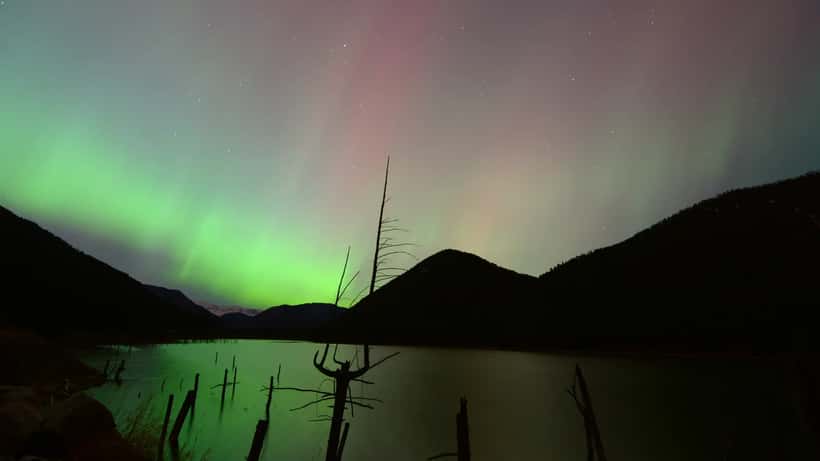
A G1-to-G2 geomagnetic storm earlier this week allowed nearly one-third of the United States to see the northern lights — and millions of Americans who had never searched "aurora forecast" in their lives suddenly became amateur space weather enthusiasts.
When a Solar Storm Goes Viral
Between April 17 and 20, 2026, a coronal hole high-speed stream from the Sun compressed Earth's magnetosphere enough to produce visible aurora displays across northern and central states. According to the NOAA Space Weather Prediction Center, the event reached G2 (moderate) storm levels at its peak, extending the southern edge of aurora visibility into states that rarely see the phenomenon.
Social media filled with photographs from Minnesota, Wisconsin, Montana, and even parts of the northern Midwest. By April 21, NOAA's forecast shows the storm fading — geomagnetic conditions settling back to quiet-to-unsettled levels, with Kp index values around 3-5, and aurora visibility retreating to Alaska and the far northern latitudes.
The next opportunity for widespread viewing across the contiguous U.S. will depend on the next significant solar event. NOAA updates its 3-day aurora forecast continuously at spaceweather.gov.
The Science Behind the Spectacle
The aurora borealis occurs when charged particles from the Sun — accelerated by coronal mass ejections or high-speed solar wind streams — interact with oxygen and nitrogen atoms in Earth's upper atmosphere. The resulting collisions release energy as visible light: green from oxygen at 60-150 miles altitude, red from oxygen above 150 miles, blue and purple from nitrogen.
The geomagnetic storm scale runs from G1 (minor) to G5 (extreme). The 1989 Quebec blackout was caused by a G5 event that collapsed the Hydro-Québec power grid and affected satellite communications across North America. The 1859 Carrington Event, the largest solar storm in recorded history, would likely be classified as G5+ and would cause catastrophic disruption to modern electrical infrastructure if repeated today.
This week's G2 storm was a minor event by comparison — beautiful to observe, with negligible impact on infrastructure. But the search traffic it generated reflects something real: when natural phenomena touch our daily lives, we look for experts to explain what is happening.
Space Weather Has Real-World Implications
Most people encounter space weather as a tourism opportunity — a reason to drive north and look up. But geomagnetic storms have practical consequences that extend well beyond photography.
For homeowners and infrastructure: G3 and above storms can induce currents in long-distance power lines and pipelines. Utility companies have monitoring protocols. Individual homeowners with solar panel systems that feed into the grid should understand how their inverters behave during geomagnetic events — an IT specialist or energy consultant can review your setup.
For travelers and aviators: Polar flight routes are sometimes diverted during high geomagnetic activity because of elevated radiation exposure and GPS disruption. Pilots and airlines receive NOAA advisories automatically. Frequent business travelers on polar routes may want to track the NOAA 27-day solar forecast during periods of high solar activity.
For technology-dependent businesses: High-frequency radio communications, GPS precision, and satellite-based services can all experience degradation during significant geomagnetic storms. Small businesses that depend on GPS timing for logistics or financial transactions have little awareness of this exposure. An IT specialist familiar with business continuity planning can assess your risk profile.
Solar Maximum: Why This Matters Now
The current period of geomagnetic activity is not coincidental. According to NOAA, Earth is experiencing Solar Cycle 25, which reached its predicted maximum in late 2025. Solar maximum is the period of peak activity in the Sun's approximately 11-year magnetic cycle — more sunspots, more coronal mass ejections, more geomagnetic storms, more aurora events.
We are currently in the declining phase of that maximum, meaning elevated aurora activity will continue into 2026 and likely 2027 before settling back into solar minimum conditions. This is the best two-year window in over a decade for aurora viewing across the continental United States.
It is also the highest-risk window for significant geomagnetic events. The probability of a major storm — G4 or G5 — is statistically higher during and immediately following solar maximum than at any other point in the cycle.
What Preparedness Looks Like
The vast majority of aurora events, including this week's G2 storm, have no practical impact on daily life. They are atmospheric light shows worth appreciating. But the same space weather system that produces northern lights is the same system that, at higher intensities, can disrupt the grid, GPS, and satellite services that modern infrastructure depends on.
Preparedness at the individual level means understanding your exposure:
- If you operate a business that depends on GPS accuracy, internet uptime, or satellite communications, a technology consultant can audit your systems for geomagnetic vulnerability
- If you manage physical infrastructure — utilities, pipelines, telecom — industry-standard geomagnetic monitoring protocols exist and should be part of your operational plan
- If you simply want to see the aurora, NOAA's 30-minute Kp forecast at swpc.noaa.gov is the most accurate free tool available
The G2 storm of April 17-20, 2026 offered millions of Americans a rare opportunity. The next significant event could be next week, next month, or next year. NOAA will know about it 1-3 days in advance. The question is whether you are paying attention — and whether you have the right experts in place if it matters for your business or home.
The northern lights are a reminder that the systems we rely on are embedded in a larger natural environment that does not always announce itself politely. Knowing who to call when it does is the first step toward readiness.
