 Isabella Torres
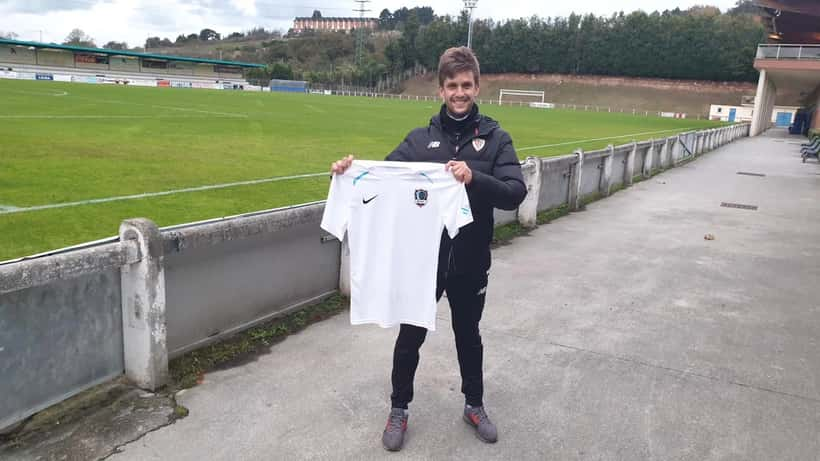
On July 22, 2026, Sestao River Club — a semi-professional team from the Basque municipality of Sestao — stepped onto the pitch at Estadio Las Llanas to face Athletic Club in a preseason friendly. For European soccer fans, the fixture was a routine warm-up for Athletic's 2026/2027 La Liga campaign. For thousands of American supporters watching from across the Atlantic, it sparked a question they couldn't quite answer: could any U.S. sports organization legally operate the way Athletic Bilbao does — by restricting its roster exclusively to players from one cultural region?
Employment attorneys who handle workplace discrimination cases have a clear answer: under current U.S. law, the answer is no — and the gap between the Spanish legal context and the American one carries serious consequences for any club that doesn't understand it.
The Club That Built an Empire on One Rule
Athletic Club de Bilbao is one of world football's most remarkable institutions. Since 1911 — when the club was accused of fielding ineligible players after featuring a large English contingent — Athletic has enforced an unwritten rule restricting its player pool to individuals born in the Basque Country, possessing Basque parentage, or trained in a Basque youth academy. According to the club's own public history, the policy applies to its first team, reserve side, women's team, and youth academies without exception.
The results are extraordinary by any measure. Athletic has competed in every single La Liga season since the league's founding in 1929 — nearly a century without relegation — while clubs with unlimited global recruitment budgets have slid in and out of Spain's top flight repeatedly.
In September 2025, the model produced one of its most complex cases: defender Aymeric Laporte returned to Athletic from Al-Nassr following a FIFA ruling confirming his eligibility, based on his formative years at the club's Lezama academy before his 2012 departure. The ruling underscored how seriously Athletic's framework is treated within European football's governance structures. American fans who followed Athletic's Copa del Rey ambitions this season can see how deeply embedded the club's identity is in the region's sporting culture — including the fierce debate over ticket prices and fan access to the Copa del Rey 2026 final.
Why Spain Permits What the United States Prohibits
Athletic's policy is legally permissible in Spain because European Union employment frameworks have treated cultural and regional identity associations differently from outright national origin discrimination. Spanish labor courts have repeatedly upheld the club's position, recognizing it as an expression of legitimate cultural association — analogous to how certain European laws allow a Peking Opera company to require Mandarin-speaking performers, or how a Breton folk ensemble can require members with Breton language training.
The EU's Employment Equality Framework Directive (2000/78/EC) focuses on religion, disability, age, and sexual orientation. National origin restrictions tied to verified cultural identity have been treated as a distinct category in member state courts, particularly when the organization itself is structured as a cultural institution with a demonstrable community mission.
That nuance disappears entirely when you apply the same model in the United States.
What Title VII Actually Prohibits — and Why It Matters for Sports
The Civil Rights Act of 1964's Title VII makes it unlawful for any employer to discriminate in hiring, compensation, or terms of employment based on race, color, religion, sex, or national origin. The U.S. Equal Employment Opportunity Commission defines national origin discrimination broadly: it covers treating any person unfavorably because of their birthplace, ancestry, culture, or linguistic characteristics linked to a particular national origin group. The EEOC received 88,531 new charges of workplace discrimination in fiscal year 2024, with approximately 10% of those involving national origin claims — according to the EEOC's annual enforcement data. Sports organizations are explicitly not exempt from these protections.
An American sports franchise attempting to replicate Athletic Bilbao's structure would face exposure on three fronts:
Disparate treatment: The moment a club states that a player is ineligible because they were not born in a specific region or do not possess regional ancestry, it has applied a hiring condition based explicitly on national origin. Under Title VII, intent to discriminate need not be malicious — the act of applying that criterion is sufficient.
Disparate impact: Even a facially neutral rule — "players must have trained in our regional academy" — becomes unlawful if it disproportionately excludes a protected class and the employer cannot demonstrate compelling business necessity.
The BFOQ exception: Employers can narrow the Title VII prohibition if national origin constitutes a bona fide occupational qualification (BFOQ) reasonably necessary to normal operations. Courts have applied this exception only in very limited authenticity contexts: an ethnic restaurant's need for chefs fluent in a cuisine's techniques, or an acting role requiring a performer of a specific national background. No U.S. court has ever found that a sports team's cultural identity rises to BFOQ status.
A Concrete Case: When a "Local Identity" Rule Crosses the Line
Consider this scenario. Miguel, 29, is a U.S. citizen born in Jalisco, Mexico, and raised in Houston since age six. He speaks English and Spanish, holds a Texas driver's license, and has played in the same adult recreational soccer league for eight years. He applies to join "Lone Star FC" — a newly formed Austin-based club that has adopted a "Texas-born players only" philosophy, inspired by the Athletic Bilbao model.
The club rejects Miguel's application. He was not born in Texas.
Miguel's employment attorney would present the following analysis: if Lone Star FC charges membership dues, pays coaches or administrators, and has 15 or more members in any capacity that could constitute an employment relationship, the club almost certainly falls within Title VII's employer definition.
The financial exposure breaks down this way:
- 15 to 100 employees: compensatory and punitive damages capped at $50,000
- 101 to 200 employees: cap rises to $100,000
- 201 to 500 employees: cap of $200,000
- More than 500 employees: maximum cap of $300,000
Beyond federal caps, Texas law's own anti-discrimination statute — the Texas Labor Code Chapter 21 — mirrors Title VII and covers employers with 15 or more employees, giving Miguel a parallel state claim with its own remedies. In states like California and New York, coverage extends to organizations with as few as 1 employee.
Miguel's EEOC charge filing window is 180 days from the discriminatory act (extended to 300 days in states with their own enforcement agencies). Missing that deadline forecloses his federal claims entirely. If his charge results in a "right to sue" letter, he has 90 additional days to file in federal court.
Add to that the club's defense costs — industry data suggests that even successfully defending an EEOC charge averages $75,000 in legal fees before any judgment — and the financial case for compliance becomes immediate.
What MLS Does Differently — and Why It Works
Major League Soccer's talent acquisition model, governed by the collective bargaining agreement with the MLS Players Association, creates powerful incentives for clubs to develop homegrown players through academy systems. MLS Homegrown Player rules reduce the cost of signing academy graduates and protect a club's investment in local youth development.
Crucially, none of these rules condition eligibility on birthplace, ancestry, or national origin. A player from Oaxaca who grew up in Columbus and trained with Columbus Crew's academy since age 12 qualifies as a homegrown player. The system rewards developmental investment, not geographic identity.
The distinction is essential: preferring players whom your club developed from childhood is defensible. Barring players because of where they were born or who their parents are is a federal claim waiting to happen.
What Every U.S. Soccer Organization Should Audit Before Next Season
Employment attorneys advise any recreational league, amateur club, or youth academy to conduct a membership eligibility review before the 2026/2027 season begins. Specific red flags to remove immediately:
- Language requiring members to "have roots in," "come from," or "represent" a specific ethnic or geographic community
- Application questions asking about a player's birthplace, ancestry, or parental nationality
- Verbal policies communicated to coaches or recruiters that mirror written ones — verbal discrimination claims carry the same legal weight
If your organization charges dues, pays any staff member, and has 15 or more participants in any capacity resembling an employment relationship, the cost of a one-hour consultation with an employment attorney is a fraction of a single EEOC defense.
Athletic Bilbao's story is one of the great narratives in world sport — proof that identity, loyalty, and competitive excellence can coexist across more than a century. The July 22 friendly against Sestao River is worth watching as an expression of that. Just don't build your American club's eligibility rules around it.
This article is for informational purposes only and does not constitute legal advice. Consult a licensed employment attorney before making changes to your organization's membership or hiring policies.
