 Daniel Sterling
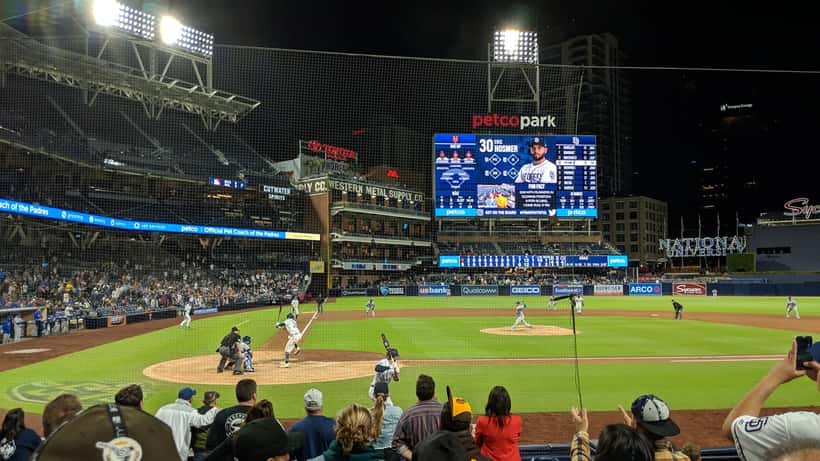
On the evening of August 7, 2026, Cam Smith launched two home runs into the San Diego night sky, carrying the Houston Astros to a 6-3 victory over the Padres at Petco Park. The performance was electric — and quietly unfair. Smith's 2026 salary is $809,900, according to Spotrac, a fraction of what his production commands on the open market. As the AL West-leading Astros (60-58) close out their three-game set against a San Diego club carrying approximately $262 million in payroll, millions of fans are watching a young player outperform his pay scale in real time. The reason why reveals one of professional baseball's most consequential — and least understood — legal processes: MLB salary arbitration.
The Question Fans Forget to Ask
Why is a player hitting game-changing home runs in August earning less than $810,000 a year?
The answer lies in how Major League Baseball structures compensation across four distinct stages: the pre-arbitration window (years one through three), arbitration eligibility (typically years three through six), Super Two status (which grants certain players a fourth arbitration year), and finally, free agency. During the pre-arbitration window, clubs control pay entirely. The floor is the league minimum — roughly $740,000 in recent seasons — and teams rarely go far above it regardless of on-field performance. Smith, in his pre-arbitration years, earned $809,900 this season. That compensation is set not by his output, but by where he sits on a service-time clock that governs every MLB player's career earnings.
The San Diego Padres, meanwhile, committed roughly $262 million to their 2026 roster. When Robbie Ray made his Padres debut in that same August 7 loss, he was almost certainly drawing a contract worth tens of millions annually. When Jackson Merrill hit his 17th home run to lift the Padres to a 3-2 win on August 8, he too is approaching the service-time thresholds that will eventually force the Padres to either pay him or let him walk. This is the hidden financial architecture of every MLB series — a layered system of wages, timelines, and legal leverage that most fans never see.
How MLB Salary Arbitration Works — Step by Step
According to MLB's official glossary, once a player reaches three or more years of MLB service time, they enter arbitration eligibility. Here is what that process looks like in practice:
Step 1 — Tender or non-tender. Before the arbitration filing window opens, the club decides whether to offer ("tender") the player a contract for the upcoming season. If the player is non-tendered, they become an immediate free agent. Most clubs tender arbitration-eligible players unless they believe the player's market salary has surpassed what he's worth to the team.
Step 2 — Negotiation. If tendered, both sides attempt to agree on a salary figure. The majority of arbitration cases settle during this phase, before any hearing. But settlement figures are heavily shaped by what each side believes would happen at a hearing — which means legal preparation matters even when no hearing takes place.
Step 3 — The hearing. If no deal is reached by February's deadline, each side submits a salary figure to an independent three-person arbitration panel. The panel hears arguments — structured like a compact legal proceeding, complete with brief submissions, comparable player evidence, and direct testimony — and then picks one number. There is no compromise, no averaging, no splitting the difference. The club's figure or the player's figure wins outright.
Step 4 — Precedent compounds. Arbitrators base decisions on comparable player salaries — known as "comps" — production metrics, and service time. The player's legal team argues upward using favorably performing peers; the club argues downward. A player who wins at a higher number establishes a baseline that accelerates every subsequent arbitration raise.
The Super Two Factor: One Extra Year, Millions More
In 2026, MLB's Super Two cutoff landed at 2 years and 140 days of service time — the highest threshold since 2012, according to Spotrac. Thirty-four players qualified, including Mason Miller and Zach Neto. Super Two designation grants players a fourth arbitration year before free agency, rather than the standard three.
That extra year is worth millions across a career. A player who earns $3.9 million in year one of arbitration doesn't just pocket that difference once — the higher baseline ripples forward into year two and year three raises. And unlike the standard arbitration track, Super Two players get one additional negotiating round before entering the open market.
The problem: Super Two status isn't automatic, and it requires precise monitoring of service time — a single day can determine eligibility. Players and their representatives must understand where they rank among two-to-three-year peers, model whether a multi-year extension is financially superior to the four-year arbitration track, and sometimes make that decision before the designation is formally announced.
What Cam Smith's Arbitration Scenario Looks Like — With Numbers
Cam Smith is currently in his pre-arbitration years. Assume he finishes a coming season posting 18 home runs, a .265 batting average, and approximately 3.0 Wins Above Replacement — consistent production for a contributing outfielder who is a year away from his first arbitration-eligible offseason. Based on how comparable power-hitting outfielders have fared in recent arbitration cycles, the scenario could unfold like this:
- Club's submitted figure: $2.2 million — citing younger-skewing comp outfielders with similar service time and average outputs
- Player's submitted figure: $3.7 million — citing comparably productive outfielders who won their first arbitration round based on power numbers and WAR
If the panel rules in the player's favor: $3.7 million. The difference is $1.5 million in a single season.
Now extend that forward. In year two of arbitration, the $3.7 million baseline means the club's starting offer is higher, and the player's ask is higher still. Over three arbitration-eligible seasons, a player who wins — or settles high — in year one can earn $4–6 million more than a peer with identical statistics who settled low or lost at a hearing.
The cost of retaining a sports contract attorney for full arbitration preparation — building the comparable case, drafting the brief, preparing hearing testimony — typically runs between $20,000 and $50,000. In the scenario above, the return on that investment exceeds 30-to-1. For a player approaching a Super Two designation who could gain a fourth arbitration year, the stakes are even higher.
Why Legal Representation at Arbitration Is Different From What an Agent Does
Agents negotiate contracts. Sports attorneys argue cases. That distinction has real consequences inside an arbitration hearing.
Arbitration proceedings involve submitting written briefs that cite precedent, cross-examining team representatives and their statistical analysts, presenting evidence under hearing-room scrutiny, and anticipating the opposing argument well enough to pre-empt it with comparable data. These are legal skills — not sales skills.
Many veteran players retain a sports law attorney alongside their agent specifically for the arbitration phase. An agent's primary incentive is to close a deal efficiently; an attorney's job is to build the strongest possible case if a deal does not close. In a system where the panel picks one number — and no middle ground exists — the quality of preparation is the entire ballgame.
You can explore how MLB arbitration intersects with injury and salary outcomes in other divisions or how payroll structures across competing franchises affect long-term player leverage.
What Players and Their Families Should Do Before the Clock Runs Out
If you or someone you represent is within a year or two of MLB service-time thresholds, the best preparation window is now — not in January when hearing deadlines are approaching:
- Track service time precisely. Confirm your exact days on the 26-man roster or injured list each season. One day determines Super Two eligibility.
- Build your comparable pool early. Know which players an arbitration panel will compare you to, and understand why your numbers are favorable relative to theirs.
- Consult a sports attorney before tendering season. A lawyer reviewing your case in October costs less and prepares more effectively than one scrambling to draft a brief in late January.
- Evaluate multi-year extension offers carefully. A club's pre-arbitration extension can lock in lower total compensation while appearing generous. Legal counsel helps you model whether the guaranteed years are worth conceding on the arbitration upside.
ExpertZoom connects players, families, and representatives with experienced sports law attorneys who understand MLB's salary arbitration process and can review your situation well before filing deadlines arrive.
This article provides general information about MLB salary arbitration and is not legal advice. Players and their representatives should consult a qualified sports law attorney for guidance specific to their individual situation and service time record.
