 Michael Campbell
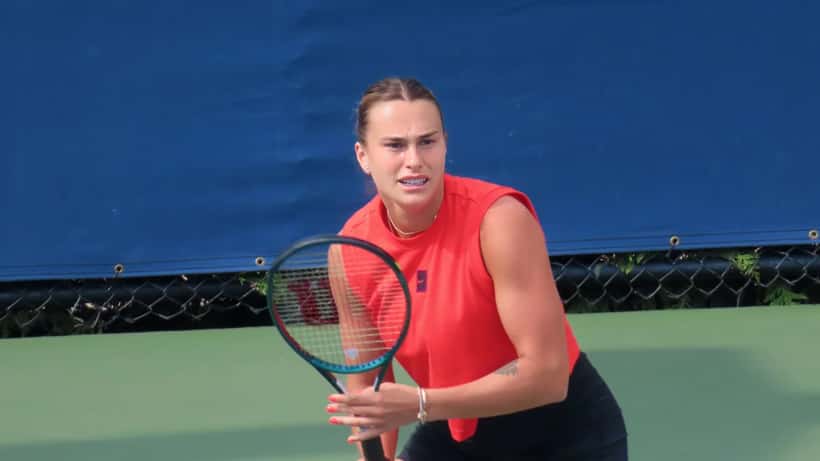
Aryna Sabalenka walks into the 2026 US Open as the defending champion — twice over. World No. 1, the highest-paid female tennis player outside the United States, and the only player with a realistic shot at three consecutive titles at Flushing Meadows since Serena Williams closed that chapter in 2014. Behind the dominance on court, however, lies a financial story that wealth managers are paying close attention to — and one that every professional athlete at peak earning age can learn from.
The $95 Million Stage
The 2026 US Open carries the largest prize pool in the tournament's 50-year Open Era history: $95 million total, up more than 20% from last year's $90 million purse. Each singles champion pockets $5 million. The runner-up receives $2.5 million. Even a first-round exit yields a guaranteed payout in the low six figures.
For Sabalenka, the tournament adds to an already extraordinary 12-month earnings run. From July 2025 to July 2026, she earned $35.9 million — $13.9 million in prize money and $22 million in endorsements. That placed her fifth among all tennis players globally and third among women, according to Sportico's 2026 prize money tracker. Her sponsorship portfolio includes Nike, Wilson, luxury watchmaker Audemars Piguet, fitness tech brand WHOOP, and premium audio label Master & Dynamic.
She is 28 years old. She is at the peak of a career that — like all athletic careers — will eventually slow. The wealth management question is not "How much did she earn?" It is "How much of it is building something permanent?"
What Wealth Managers See When a Player Wins $5 Million
"A windfall isn't a plan." That is the phrase every financial advisor who works with professional athletes eventually says — and for good reason. A sudden spike in income creates a simultaneous spike in lifestyle costs, tax exposure, and pressure from agents, family, and investment salespeople. Without expert guidance in place before the check arrives, a $5 million prize can contract faster than a bagel-set scoreline.
The immediate challenge for a tennis player winning at the US Open is jurisdictional complexity. Prize money earned in the United States is subject to U.S. federal income tax — even for non-U.S. citizens. Foreign nationals face a flat 30% withholding at source unless a tax treaty applies. For American players, the federal marginal rate on income over $609,350 in 2026 hits 37%.
In New York, where the US Open takes place, prize money faces state income tax of up to 10.9%. Add New York City's local rate of up to 3.876%, and the combined burden compounds quickly. A $5 million check can realistically net $2.9 to $3.2 million after combined federal and state obligations — absent any planning. With a qualified wealth manager, strategies such as income timing, tax-deferred vehicles, and charitable giving instruments can shift that net figure meaningfully upward.
Endorsement income adds another dimension. Unlike prize money — which arrives in a single event-linked payment — endorsement deals can often be structured with scheduled payments or deferred income arrangements that align with long-term tax planning. Sabalenka's reported $22 million in endorsements over the past 12 months, without structural planning, would face ordinary income rates across multiple jurisdictions. With a professional advisor coordinating with her legal and accounting teams, portions of that income can be legitimately repositioned.
A Track Record Worth Noting
The U.S. Securities and Exchange Commission's investor education program specifically flags sudden income events — prize windfalls, signing bonuses, legal settlements — as moments requiring independent financial guidance before any investment decisions are made. The documented pattern: large sums generate large decisions, often made under time pressure and without a durable framework.
Research cited repeatedly in sports finance literature suggests 60 to 80 percent of former professional athletes face significant financial difficulty within five years of retirement. The cause is rarely a single bad investment. It is the absence of a system: no liquidity management, no diversified portfolio, no tax planning, no estate structure in place during the earning years.
For an athlete generating $35.9 million in a single 12-month window, income velocity is not the same as financial security. A torn rotator cuff, a ranking drop, or an expiring endorsement deal can interrupt the flow rapidly. The wealth management question is always: what infrastructure converts peak-year earnings into decades of stability?
Sabalenka's situation is mirrored in parallel by Wimbledon's record £64.2 million prize pool this season, as covered in detail alongside Wimbledon's 2026 winner payout breakdown and wealth planning context — a broader trend showing Grand Slam prize money rising faster than most traditional asset classes.
The Concrete Scenario: What Happens the Day After the Trophy
Take this hypothetical: a 27-year-old professional tennis player — call her Elena — has been a consistent top-20 WTA competitor for four years. In 2026, she wins her first Grand Slam singles title and collects the $5 million US Open champion's check alongside $2.1 million in other prize money for the year.
Without prior wealth management planning, Elena's 2026 income totals $7.1 million. At the top U.S. federal marginal rate of 37%, New York State rate of 10.9%, and New York City rate of 3.876%, her effective combined rate on the U.S.-sourced prize money reaches approximately 51.7%. That leaves her roughly $3.43 million after taxes on the prize earnings — before agent fees (typically 10 to 15 percent of prize income), annual training and travel costs ($300,000 to $600,000 for a top professional), and coaching staff.
If Elena had engaged a wealth advisor before the tournament — not after — the picture changes. The advisor structures a Donor-Advised Fund for the $500,000 in charitable pledges Elena was already planning to make. That single move immediately reduces her taxable income by $500,000, saving approximately $185,000 in federal and state taxes. The advisor also coordinates with Elena's agent to defer $600,000 of the endorsement income negotiated around the tournament win into the next tax year, saving an additional $155,000 to $220,000.
Total tax savings from two planning moves: $340,000 to $405,000. That is more than a decade's worth of fees for a professional wealth management team — generated in the week the trophy was lifted.
If Elena invests $1.5 million of the net proceeds into a diversified global equity index fund at a historical annualized return of approximately 7%, that single allocation compounds to roughly $11.4 million by age 57. Without the investment — carrying cash at a 3% average annual inflation rate — the real purchasing power of that $1.5 million shrinks to approximately $830,000 over the same 30 years.
The if/then is blunt: if Elena sees a wealth manager before the prize arrives, then she can reasonably preserve an additional $2 million or more in long-term wealth from a single Grand Slam win. If she acts only after the season ends, most of that optionality is gone.
What to Do Now
Whether or not you are competing at a Grand Slam, the lessons from elite athlete finance apply broadly to anyone experiencing a significant income event — a bonus, a business exit, a legal settlement, or an inheritance.
Three immediate steps wealth advisors consistently recommend:
Pause before committing. The 90 days following a large income event are statistically the highest-risk period for irreversible financial decisions. Avoid major purchases or new business ventures until you have a full picture of your tax exposure for the year.
Get your quarterly tax estimate right. In the United States, self-employed individuals — including professional athletes — must make estimated quarterly tax payments if they expect to owe more than $1,000 annually. Missing the September Q3 installment triggers an IRS underpayment penalty that compounds. An advisor working with your accountant can model this precisely.
Build the legal structure before you build the portfolio. Investment returns are secondary to tax and legal architecture. A proper professional services entity, an estate plan, and clear beneficiary designations should be in place before any conversation about equities, real estate, or alternatives.
Sabalenka may or may not win her third consecutive US Open title in 2026. What is certain is that the athletes who leave Flushing Meadows in the best long-term financial position are the ones who arrived with a plan already running — not the ones scrambling to build one after the final handshake.
Disclaimer: This article provides general financial education and does not constitute professional financial, tax, or legal advice. Consult a qualified wealth management professional before making any financial decisions.
