 William Reed
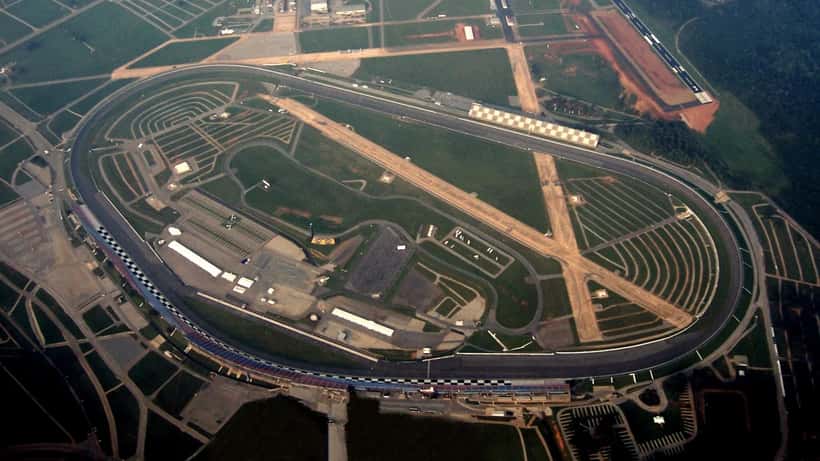
The ARCA Menards Series arrives at Talladega Superspeedway on April 25, 2026 for the Alabama Manufactured Housing 200, with a stacked 41-car field and pole-sitter Gio Ruggiero entering off a win at Kansas Speedway one week ago. Talladega is the fastest oval in American motorsport — 2.66 miles, pack racing at over 200 miles per hour — and the demands it places on vehicle systems expose maintenance weaknesses that no routine road test ever would.
Why Talladega Is the Ultimate Vehicle Safety Test
Superspeedway racing at Talladega is not like driving fast on the highway. It is sustained maximum-load operation across multiple systems simultaneously. Tires run near their thermal limits. Brakes cycle from extreme heat to ambient temperature between laps. Engine cooling systems work continuously at capacity. Aerodynamic forces generate downforce that stresses suspension components in ways that never occur in normal driving.
Gio Ruggiero, the No. 18 Toyota for Joe Gibbs Racing, knows this environment well. At Kansas Speedway on April 18, 2026, he won the Tide 150 after leading a race-high 50 laps — a result that required precise tire management across two overtime restarts. In the final laps, contact with a lapped car driven by Spurlock triggered a caution and brought controversy, but Ruggiero's ability to manage tire degradation over a long green-flag run was what put him in position to win.
At Talladega, that same tire discipline determines who finishes and who does not.
What Tire Maintenance Means at 200 mph
Professional racing teams perform complete pre-race technical inspections at every round. At Talladega specifically, tire preparation is the central discipline:
Pressure management: At superspeedway speeds, a one-pound variation in tire pressure affects handling, wear rate, and aerodynamic balance. Teams measure pressure before each stint and adjust based on ambient temperature, track surface temperature, and expected run length.
Compound selection: Talladega's long, banked corners generate sustained lateral load that shorter tracks do not produce. Teams select tire compounds specifically rated for superspeedway duty — compounds that standard road vehicles do not use and that wear differently under high-speed, high-load conditions.
Tire age: ARCA teams run fresh tires for any stint of significant length. Aged rubber at racing speeds is not a calculated risk — it is a mechanical failure waiting for the right moment.
For everyday drivers, the gap between racing tire discipline and standard practice is significant. The Centers for Disease Control and Prevention reports that motor vehicle crashes remain a leading cause of injury and death in the United States, with preventable mechanical failures — including tire and brake issues — contributing to thousands of incidents annually. The most common tire failure cause is not blowout from road debris — it is underinflation leading to heat buildup, sidewall fatigue, and sudden failure. Underinflated tires typically cannot be identified by visual inspection alone; proper detection requires a pressure gauge.
The Pre-Race Inspection Checklist and What It Reveals
Before every ARCA race, each car passes through mandatory technical inspection. At Talladega, that inspection verifies:
- Brakes: Pad thickness, rotor condition, brake line integrity, and caliper function. Brakes at superspeedway speed experience thermal cycling that accelerates wear relative to normal driving.
- Suspension: Alignment, shock absorber condition, tie rod and control arm integrity. Sustained high-speed cornering loads expose wear in components that may feel fine at normal road speeds.
- Engine cooling: Coolant level, hose condition, thermostat function. At sustained high output, cooling systems operate continuously at or near capacity.
- Fuel system: Connection integrity, cap seal, and line routing.
- Aerodynamics: Restrictor plate compliance and bodywork integrity. Restrictor plates limit engine output at Talladega specifically to control top speeds.
For everyday vehicles, many of these items are only inspected at annual state inspections or scheduled service intervals — which may be 12 months apart. A vehicle driven 15,000 miles between inspections in varied conditions accumulates wear that is invisible until it causes a problem.
Reactive vs. Preventive Maintenance: The Difference That Matters
The mechanical preparation that allows 41 cars to take the green flag safely at Talladega is the product of preventive, not reactive, maintenance. Race teams do not wait for warning signs. They inspect, replace, and adjust on predetermined schedules regardless of whether anything appears to be wrong.
Most street vehicle drivers operate on a reactive model: they schedule service when warning lights appear or symptoms emerge. The problem is that some failures do not announce themselves in advance. Brake pads worn below the safety threshold, tires with internal structural damage from road hazard impact, or a coolant hose near failure can all perform normally until a critical moment.
A well-maintained vehicle is not only cheaper to operate over time — it is statistically safer. NHTSA data consistently shows correlation between deferred maintenance in braking and tire systems and crash involvement. The inspection disciplines that professional mechanics apply before a superspeedway race are the same disciplines that keep street vehicles reliable under emergency conditions.
The Qualifying Problem: When One Car Doesn't Make It
Talladega's 41-car ARCA field includes one entry that will fail to qualify on speed. That margin — between preparation that makes the race and preparation that does not — reflects something real about mechanical readiness. The difference between the cars that qualify and the one that does not is, in large part, the quality of the mechanical work done before the car ever left the shop.
For drivers of street vehicles, the equivalent failure mode is not a public qualifying session. It is a breakdown on the highway, a brake failure approaching an intersection, or a tire that fails on a rain-slick road. The consequences may be less dramatic than missing a race, but they are significantly more consequential.
If your last full vehicle inspection was more than a year ago, or more than 12,000 miles ago, this weekend's racing at Talladega is a reasonable prompt to schedule one. ExpertZoom connects drivers with qualified mechanics and automotive repair specialists who can assess tires, brakes, suspension, and fluid systems. What California drivers learned from the 2026 EV market shift applies equally here: vehicle reliability is not guaranteed — it is maintained.
An inspection is not a commitment to repair everything at once. It is information. A professional mechanic can tell you what needs attention now, what can wait, and what is genuinely fine. That knowledge is worth more than the alternative.
