 Cora Nelson
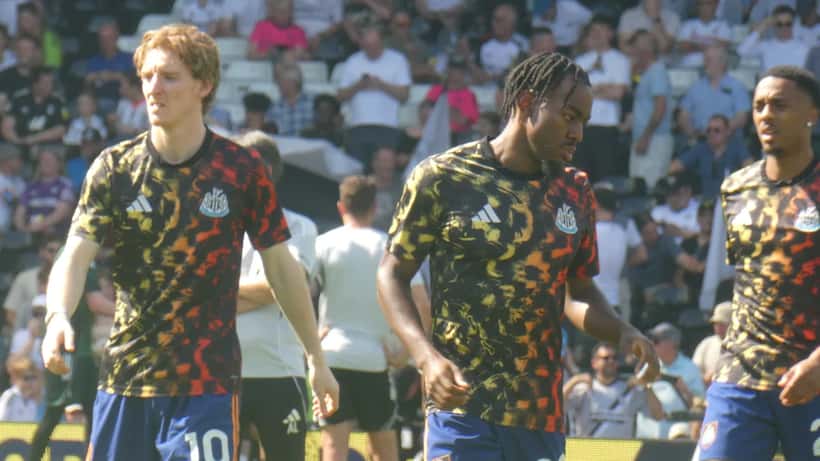
Anthony Elanga has emerged as one of the breakout stars of the 2026 FIFA World Cup, lighting up the tournament with two crucial goals for Sweden in the group stage — including a stunning curled finish against Japan on June 26 that secured his country's place in the Round of 16 as a third-placed team. Now, on June 30, the 24-year-old Newcastle United winger steps onto the biggest stage yet: a Round of 32 clash against France in MetLife Stadium, New Jersey.
A Young Body Carrying an Entire Nation
Elanga's rise at this World Cup has been nothing short of electric. Playing under head coach Graham Potter, the Swedish attacker has used his explosive pace and technical skill to devastating effect — first putting Sweden on the board against the Netherlands, then producing the moment of the tournament so far with his late equalizer against Japan to send his team through. These are not coincidences. They are the result of years of physical preparation, and sports health professionals say the demands Elanga's body is enduring right now are extraordinary.
"When a 24-year-old is competing at a World Cup, they are operating at the absolute ceiling of human physical output," explains the kind of sports medicine consultant athletes increasingly turn to for personalized guidance. "High-intensity sprint efforts, repeated change of direction, emotional pressure — these are compounding stressors on the musculoskeletal and cardiovascular systems simultaneously."
Top World Cup forwards routinely cover up to 13 kilometers per game, including multiple high-speed sprints exceeding 30 km/h, according to sports science tracking data gathered across elite tournaments. For a winger like Elanga — whose game is built on explosive bursts and directional change — the cumulative load across a tournament can push soft tissue and joint recovery to the limit.
What Elanga's Transfer to Newcastle Tells Us About Elite Athlete Health Investment
When Newcastle United signed Anthony Elanga from Nottingham Forest for a reported £55 million in July 2025 on a five-year contract worth approximately £80,000 per week, the club wasn't just buying a footballer. Clubs at that level invest heavily in their players' physical longevity — dedicated sports physiologists, nutritional coaches, sleep optimization programs, and real-time biometric monitoring are all standard features at Premier League clubs of Newcastle's ambition.
That ecosystem of professional health support is precisely what allows an athlete like Elanga to perform in back-to-back matches at the World Cup, often with only 72 hours of recovery between games.
"Elite clubs invest in preventive health, not reactive medicine," says the type of sports health expert ExpertZoom connects clients with. "Sleep architecture, hydration protocols, inflammation management, psychological resilience — all of it is monitored. The average person doesn't have access to that, but the principles are learnable and applicable to anyone's active lifestyle."
What Young Amateur Athletes Can Learn From Elanga's Approach
Elanga's World Cup performances have caught the eye of millions of fans, and inevitably, many amateur athletes — weekend warriors, youth coaches, gym enthusiasts — find themselves wondering what separates a professional's body from their own. The answer is largely systemic and supported by expert guidance.
Recovery is performance. Professionals track recovery as rigorously as training output. Tools like heart rate variability (HRV) monitoring — now available on consumer wearables — give a real-time signal of whether the body is ready to perform or needs rest. Sports health consultants can interpret this data and build a personalized recovery protocol.
Nutrition timing matters. The window after high-intensity exercise is critical for muscle repair. Sports dietitians — a category of expert available on platforms like ExpertZoom — can build protocols around carbohydrate replenishment and protein synthesis that are backed by peer-reviewed science, not influencer speculation.
Soft tissue maintenance is undervalued. Hamstring tears, quad strains, and ankle sprains disproportionately affect players in the second half of long tournaments. Regular physiotherapy assessments — not just post-injury visits — can identify tightness and imbalance before they become sidelining problems. In the US, sports physical therapists and licensed athletic trainers offer exactly this kind of preventive consultation.
Mental load is physical load. Sweden's path to the Round of 32 required Elanga to deliver in a must-not-lose scenario against Japan. That psychological pressure registers in the body as cortisol elevation, affecting sleep quality, immune function, and reaction time. Sports psychologists are now a core part of most professional squads — and increasingly, recreational athletes are seeking similar guidance to manage performance anxiety.
Sweden vs. France: The Health Stakes of the Knockout Round
As Sweden prepare to face France on June 30, the pressure on Elanga and his teammates will intensify. France boast one of the tournament's most physically imposing squads, with Kylian Mbappé and Marcus Thuram posing relentless defensive challenges. For Elanga specifically, matching pace with French fullbacks over 90-plus minutes — potentially into extra time — will demand everything his body's preparation has built.
What matters for any athlete watching this match: the preparation that allows a 24-year-old to sprint at full intensity in the 85th minute of a World Cup knockout game does not happen overnight. It is the product of consistent, expert-guided physical investment over years.
If you are an active American — a runner training for a race, a tennis player managing a recurring shoulder issue, a youth soccer parent trying to keep your child healthy through a competitive season — the principles governing Elanga's performance are directly relevant to your situation. A sports health consultation with a licensed professional can help you apply the same evidence-based framework to your own activity level and goals.
When Should You See a Sports Health Professional?
Many Americans delay seeking professional health guidance until an injury forces the issue. Sports medicine experts recommend a different approach:
- Pre-season or pre-event assessments to establish a baseline and identify risk factors
- After a significant increase in training load — overuse injuries account for a substantial share of all sports injuries in the US, according to MedlinePlus, NIH's consumer health resource
- When performance plateaus despite consistent training — often a sign of recovery deficits or nutritional gaps
- After any significant impact or pain event, even if you feel you can "push through"
Anthony Elanga's World Cup journey is a reminder that athletic excellence is built on expert support. Whether you're chasing a personal best or simply staying healthy through an active life, the same principle applies: professional guidance makes a measurable difference.
