 Elizabeth Chen
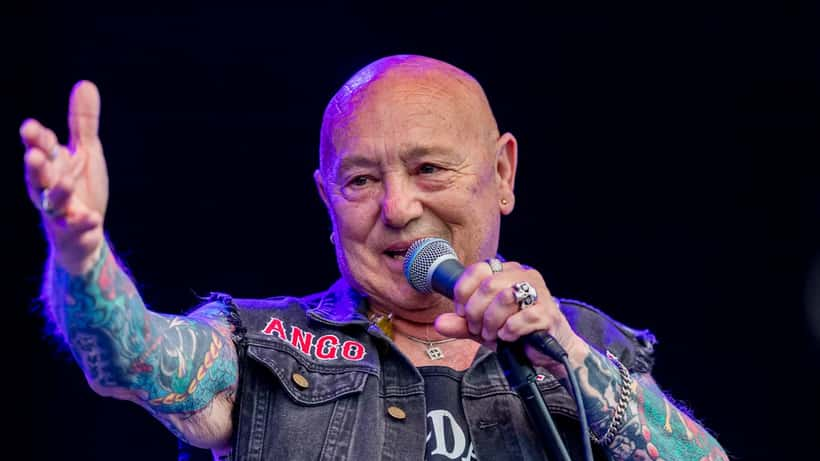
Gary "Angry" Anderson, the 5-foot-nothing powerhouse who fronted Rose Tattoo through five decades of hard rock history, died on September 21, 2026, surrounded by his family in Australia. He was 79. The band's "One Last Ride" European farewell tour had barely reached its midpoint when Anderson collapsed following a concert in Cologne, Germany, on August 7. Three days later, the tour was canceled and the world learned he had suffered a heart attack. He never returned to the stage.
His death — coming 44 days after that cardiac event — has reignited a conversation that doctors say is long overdue: surviving a heart attack is only the first chapter.
The Tour That Became a Farewell
Rose Tattoo launched "One Last Ride" in the summer of 2026, billed as the band's final goodbye to European fans. For Anderson, the timing felt right. He'd spent the previous year speaking publicly about slowing down, savoring life with his family, and accepting the limits of a body he'd pushed hard across nearly 50 years of touring.
The Cologne show on August 7 appeared to go off without incident. What audiences didn't know was that Anderson had reportedly been experiencing fatigue and discomfort before taking the stage. He performed anyway. Within hours, he was hospitalized. The band's statement, posted on August 10, confirmed a cardiac event and announced the cancellation of the remaining tour dates.
It was a sequence many cardiologists recognize immediately. According to the American Heart Association, nearly 20% of heart attack survivors will experience a second cardiac event within five years — and the weeks immediately following a first attack represent the highest-risk window of all.
When Surviving a Heart Attack Isn't the Whole Story
A heart attack — technically a myocardial infarction — occurs when blood flow to a section of the heart muscle is blocked long enough that tissue begins to die. Treatment has advanced enormously over the past two decades: stents, clot-dissolving drugs, and angioplasty mean that patients who reach a hospital quickly have a strong chance of survival.
But "survival" and "recovery" are not the same thing.
The heart tissue that dies during an infarction does not regenerate. Depending on severity, the attack leaves behind scar tissue that permanently impairs the heart's pumping efficiency — measurable as a reduced ejection fraction. For a 79-year-old man with decades of physically demanding touring, potential cumulative nutritional stress, and the cardiovascular load of constant performance, that baseline matters enormously.
In the weeks following a cardiac event, cardiologists track several indicators: heart rate stability, blood pressure control, arrhythmia patterns, and whether the remaining healthy myocardium is compensating adequately. When any of these fall outside safe ranges — especially under the physical and emotional demands of travel, altitude changes, and stage performance — the risk of a fatal secondary event rises sharply.
"The 30-day window after a heart attack is when clinical monitoring is most intensive," one cardiological guideline puts it. A patient managing the physiological load of international travel, late nights, and sustained adrenaline output from live performance presents a risk profile that most post-cardiac care specialists would flag immediately. Anderson's story makes clear that the decisions made after a cardiac event are as consequential as the emergency care itself — and that those decisions benefit enormously from professional guidance.
What This Means If You're Over 70
If you're a man or woman over 70, and especially if you carry any cardiac history, Anderson's story holds a direct lesson — not as a cautionary tale about rock and roll, but as a mirror for the often-underestimated recovery phase after a heart scare.
Heart disease remains the leading cause of death among Americans over 65, accounting for more than 35% of all deaths in that age group, according to the Centers for Disease Control and Prevention. Among men over 70 specifically, the annual incidence of myocardial infarction runs approximately 12 per 1,000 individuals — and rates of incomplete recovery are significantly higher than in younger populations because aging hearts have less elasticity in vessel walls, reduced reserve capacity, and diminished ability to form compensatory collateral blood vessels after an occlusion.
Warning signs that warrant urgent cardiology consultation following any cardiac event include:
- Persistent fatigue at rest or with minimal exertion lasting more than two weeks post-discharge
- Shortness of breath while lying flat (orthopnea), which often signals fluid accumulation around the heart
- New irregular heartbeats — skips, flutter sensations, or racing episodes, especially at night
- Ankle or lower-leg swelling, which can indicate insufficient cardiac output
- Any recurring chest discomfort — even mild, even brief — which should never be dismissed after an infarction
Each of these is a signal the heart's compensatory mechanisms are being stretched. Each is also a conversation a cardiologist needs to have with you before the window for intervention closes.
You can also read about what heart valve disease looks like in aging rock performers — a related profile of how cardiac risk manifests differently across the spectrum of heart conditions common in older adults.
Your Post-Heart Attack Recovery Scenario: What the Numbers Actually Mean
Consider a 72-year-old man — call him Michael — who suffered a moderate myocardial infarction in July 2026. He was discharged after five days, prescribed four medications including a beta-blocker and an ACE inhibitor, and given a six-week follow-up appointment with a cardiologist. After three weeks, he felt "pretty good." He started short walks. His wife noticed he grew winded climbing one flight of stairs — something he'd done easily before.
At discharge, Michael's ejection fraction was measured at 43%. Normal range for a healthy heart is 55–70%. A value of 43% means his heart is pumping less than half the blood it holds with each beat — a clinically meaningful impairment that, without active monitoring, can deteriorate further and progress toward heart failure.
Here is the critical threshold: if Michael's ejection fraction drops below 35% in the weeks following his discharge, his risk of sudden cardiac death increases by approximately 3-fold compared to a patient who maintains a reading above 50%, according to established cardiology risk stratification models. The difference between 43% and 34% can be invisible to the patient — no dramatic new symptoms, just a slight increase in fatigue, maybe slightly more breathlessness at night.
If Michael skips his six-week follow-up because he "feels okay," he loses the monitoring window when medication adjustment, cardiac rehabilitation enrollment, or evaluation for an implantable cardioverter-defibrillator could change his five-year trajectory entirely. The appointment isn't a formality. It is, for some patients, the appointment that determines whether there is a year 73, 74, and beyond.
Anderson's trajectory took 44 days. Michael's may be longer or shorter. But the logic is identical: post-cardiac recovery is active management, not passive rest.
What to Do Right Now
If you or someone close to you has recently experienced a cardiac event — or if you're over 65 with established risk factors (hypertension, type 2 diabetes, high LDL cholesterol, or a history of smoking) — the right move is proactive consultation, not watchful waiting.
A cardiologist or cardiovascular health specialist on Expert Zoom can review your discharge summary, your current symptom pattern, and any recent ECG or echocardiogram results, and advise you on whether your recovery trajectory matches your risk profile. These consultations don't require an emergency room visit. They require honesty about what you're experiencing and access to someone qualified to interpret those signals correctly.
For those who haven't had a cardiac event but are 70 or older: the conversation about heart health is worth having before the crisis, not in the 44 days after. Questions like "What is my current cardiovascular risk score?", "Is my resting heart rate appropriate for my age and fitness level?", and "Should I be enrolled in a cardiac monitoring program?" are answerable in a single 30-minute consultation — and they're the kind of questions that change outcomes.
Angry Anderson lived loudly and without apology for 79 years. What his story offers those of us still counting years isn't a warning about rock and roll. It's a reminder that the month after a heart attack is its own kind of performance — one where the right support behind the scenes can determine whether there is an encore.
Medical disclaimer: This article is for informational purposes only and does not constitute medical advice. If you are experiencing chest pain, difficulty breathing, or other cardiac symptoms, seek emergency medical care immediately. Consult a qualified healthcare professional for advice tailored to your specific health situation.
