 Daniel Sterling
The American Athletic Conference's 2026 football season is delivering one of its most competitive races in years — and with rising stars like Memphis climbing national polls, the money is following. After Week 5, Memphis ascended to No. 49 in The Athletic's 138-team national rankings, making them the top-ranked Group of Five program in the country. Conference schools are fielding bigger rosters, drawing larger TV audiences, and signing more Name, Image, and Likeness (NIL) deals than at any point since the NCAA lifted its ban on athlete compensation in 2021.
But behind the highlight reels and the scoreboard, attorneys who specialize in collegiate athletic law are raising a quiet alarm: thousands of student-athletes across AAC schools — from ECU to UTSA to Tulane — are signing NIL contracts without legal review. Many are unaware of clauses that could cost them scholarships, future earnings, or the ability to sign a better deal six months down the road.
The AAC's Big 2026 Moment
The American Athletic Conference enters October 2026 as arguably the most competitive non-Power Four conference in college football. Memphis leads the Group of Five conversation nationally, with UTSA (No. 59), North Texas (No. 60), and FAU (No. 65) also drawing attention in The Athletic's latest rankings following Week 5, according to reporting from October 8, 2026. The conference championship game is scheduled for December 5, 2026 — and for the first time in several seasons, multiple programs have a genuine shot at the top spot.
That competitive intensity translates directly into NIL market activity. When a team goes on a run like Memphis is having right now, sponsors want to get in early. They reach out to starting players, special teams contributors, even backup quarterbacks. They send DocuSign links with 48-hour windows and five-figure numbers on page one — and far more consequential language buried on pages three and four.
The NIL era began in July 2021 when the NCAA first permitted athletes to profit from their name, image, and likeness. Five years in, the landscape has matured: collective organizations pool booster money, brands run structured campaigns, and mid-major athletes are generating meaningful income. Yet the legal infrastructure around these deals has not kept pace with their complexity. According to a 2025 survey by the National Collegiate Players Association, only 38% of NIL-earning athletes had their contracts reviewed by an attorney before signing. Among athletes at Group of Five schools like those in the AAC, that figure dropped to 26%.
Three Contract Clauses Athletes Keep Missing
Sports attorneys consistently flag three provisions that athletes — and the family members often helping them negotiate — routinely overlook.
Exclusivity windows are perhaps the most damaging. Many NIL agreements prohibit athletes from endorsing competing products or even accepting other deals in the same product category — sometimes for 12 to 24 months. A wide receiver who signs with a regional auto dealership may be barred from accepting deals with any other car brand, even if the dealership deal pays only $2,000. The athlete takes the initial payment and then discovers two months later they can't sign a $15,000 deal with a national manufacturer because of a clause on page three.
Transfer portability clauses have become increasingly problematic as transfer portal activity has surged. When a student-athlete enters the portal — which set a participation record in 2025-26 — many NIL contracts include change-of-institution provisions that terminate the deal immediately, in some cases requiring repayment of a portion of the signing payment. Athletes who did not negotiate transfer-friendly language can find themselves owing money to a sponsor after they've already moved to a new school and a new conference.
Social media compliance obligations represent a third area of risk. Federal Trade Commission guidelines require that paid social media posts be clearly disclosed as advertising. Many NIL contracts pass the legal compliance burden entirely to the athlete — meaning that if an athlete posts on Instagram without the proper #ad disclosure, the athlete faces FTC liability, not the brand. According to the FTC's guidelines for social media disclosures, failure to properly disclose a paid partnership can result in fines starting at $51,744 per violation.
The Data: NIL Activity Surges at Mid-Major Programs
NIL deal activity has grown sharply across Group of Five conferences. According to Opendorse, a platform that tracks NIL transaction volume, athletes from non-Power Four programs account for roughly 30% of all NIL transactions by volume in 2026, up from 18% in 2022. The average deal value for mid-major athletes has risen as well — from approximately $1,100 per deal in 2022 to nearly $3,400 in 2026.
The legal complexity has grown in proportion. NIL contracts are now longer, often 8 to 14 pages, and increasingly include arbitration clauses, liquidated damages provisions, and social compliance riders that did not appear in early-era agreements. "We're seeing deals that would have been unusual in the NFL three years ago now being handed to 20-year-olds who have never signed a contract before," one sports attorney noted in a March 2026 American Bar Association Sports Law Forum report.
When You Don't Read Page Four: A Concrete Case
Consider this scenario: a starting linebacker at an AAC school receives a $4,500 NIL offer in September 2026 from a regional fitness supplement brand. The contract is 11 pages, sent via DocuSign, with a 48-hour signing window. He signs quickly, excited to earn money from football for the first time.
Three months later, a national sports nutrition company offers him $22,000 for a full season campaign — a deal that would give him national exposure and a substantial income boost. He calls the representative, ready to sign.
Then he reads page four of his original contract. The exclusivity clause covers "all nutritional supplements, vitamins, protein products, and sports performance goods" for a period of 18 months from the signing date. The national brand's deal would directly violate this clause.
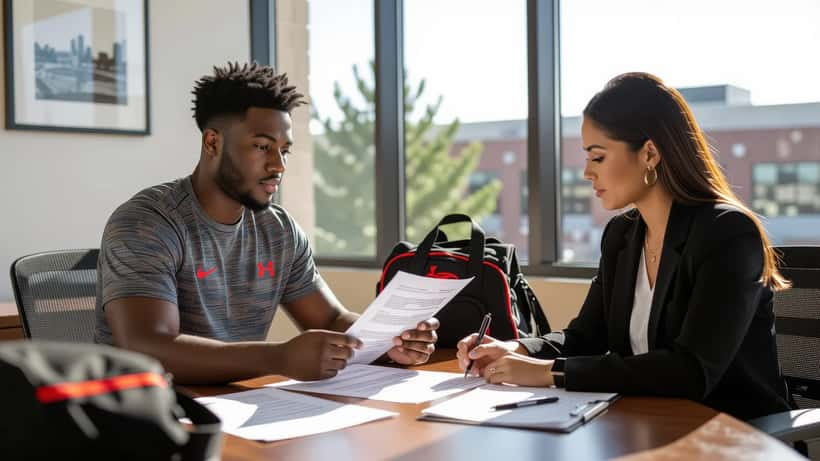
If he had retained an attorney before signing the first contract — typically $200–$400 for a flat-fee NIL review — the attorney would have caught the broad exclusivity language and negotiated a narrower scope, limited to the specific supplement subcategory. He could sign the $22,000 national deal in December 2026 without restriction.
Without that review, he faces two choices: breach the first contract (risking the $4,500 being clawed back, plus potential legal costs of $3,000–$8,000 to resolve the dispute), or pass on the $22,000 national deal entirely. The cost of skipping a one-hour legal review is, in practical terms, $22,000.
This is not a hypothetical structure invented for this article. Sports attorneys across AAC markets report variations of this scenario occurring regularly as NIL deal volumes have increased in 2026.
What Schools Can — and Cannot — Do
The NCAA updated its NIL guidelines in 2023 and again in 2025 to require that schools provide "education resources" around NIL to enrolled athletes. However, the rules explicitly prohibit schools from acting as agents or directly facilitating NIL deals — which means the institution itself cannot review contracts on behalf of athletes.
Some universities have partnered with law school clinics to offer free contract review services. Memphis, Tulane, and UTSA — all active NIL programs — have varying levels of support available through their athletic departments. But demand consistently outpaces availability. According to the March 2026 ABA Sports Law Forum report, law school NIL clinics are typically backlogged three to five weeks during football season, far beyond the 48-to-72-hour windows that most NIL offers operate on.
The practical reality is that athletes who wait for institutional support during peak season are likely to miss the window entirely.
NIL Income Is Taxable
One additional risk that legal and financial advisors flag consistently: NIL income is taxable as self-employment income. An athlete earning $10,000 in NIL deals in 2026 who does not set aside 25–30% for taxes — and does not file quarterly estimated payments — can face IRS penalties for underpayment come April 2027. The self-employment tax rate for income over $400 is 15.3%, covering Social Security and Medicare, on top of applicable federal income tax.
A tax professional or certified financial planner can help athletes track income, set up simple record-keeping, and avoid surprises at tax time. For athletes earning more than $5,000 in a calendar year from NIL, a one-time consultation is almost always cost-effective.
This article provides general information only and does not constitute legal or financial advice. Readers should consult a licensed attorney and/or qualified financial professional before entering into any NIL agreement or making decisions about NIL income.
Steps to Take Before Signing Any NIL Deal
The AAC season continues, and the NIL market will only grow more active as teams compete for the December 5 conference championship. Sports attorneys recommend four steps before signing any NIL deal:
- Request time to review. Any legitimate sponsor will grant 72–96 hours. A deal with a 24-hour hard deadline should raise a red flag.
- Flag four specific clauses: exclusivity scope and duration, transfer portability, FTC compliance allocation, and early termination provisions.
- Understand the tax obligation. Set aside roughly 25–30% of any NIL payment from day one.
- Consult a qualified attorney. Flat-fee NIL contract reviews typically run $150–$400 — a fraction of what a bad clause can cost. Platforms like ExpertZoom connect athletes and their families with licensed sports law attorneys who specialize in collegiate NIL agreements and can turn reviews around within 24 hours.
The American Athletic Conference is having a breakout year. Memphis is rising. Deals are being signed across every AAC campus right now. Whether you're an athlete, a parent, or someone advising a college player — knowing what you're agreeing to before you sign is the single most important move you can make this season.
