 Carl Graham
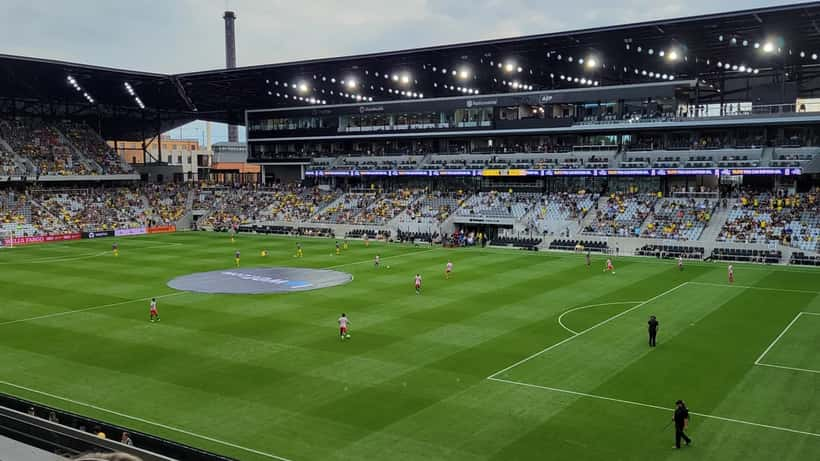
When Club América and the Columbus Crew squared off in the 2026 Leagues Cup quarterfinals at Dignity Health Sports Park in Carson, California on August 26, the stakes extended far beyond the scoreboard. Behind every cross-border matchup between Liga MX giants and MLS clubs lies a tangle of international labor law, player contract clauses, and immigration paperwork that most fans never see — but that every player and club attorney knows intimately.
What Legal Framework Governs Leagues Cup Player Eligibility?
The Leagues Cup operates under a joint governance structure between Major League Soccer and Liga MX, but each player's legal right to compete is still governed by their individual employment contract, their national federation's transfer window rules, and — critically for Mexican players competing on U.S. soil — federal immigration law. As Tigres vs. Minnesota United earlier in the 2026 Leagues Cup showed, visa complications can sideline even top-flight players at the worst possible moment.
Mexican players on Club América's roster travel to the United States under P-1A athlete visas, a nonimmigrant classification that allows internationally recognized athletes to compete for a specific employer. According to U.S. Citizenship and Immigration Services, a P-1A petition must demonstrate that the athlete has achieved a high level of achievement and will participate in a specific event, competition, or performance. The Liga MX club — not the individual player — bears responsibility for filing the petition.
This creates a legal exposure most fans never consider: if a player's P-1A status is questioned, delayed, or denied, they simply cannot play on U.S. soil, regardless of what their contract says. In 2025, at least two Liga MX players were held out of preseason matches in the U.S. due to visa processing delays at the U.S. Consulate in Mexico City, according to reporting from sports labor attorneys who advise both leagues.
Does a Player's Club Contract Protect Them if They Can't Play?
The short answer: not automatically. This is one of the most misunderstood areas of sports employment law in the context of cross-border tournaments like the Leagues Cup.
A standard Liga MX player contract grants remuneration for services rendered — it does not guarantee that all barriers to rendering those services will be removed by the club. Force majeure clauses, which excuse performance under extraordinary circumstances, are often written broadly enough that a club could argue a visa denial falls outside their contractual obligation to "facilitate participation."
The reality, though, is more nuanced. If a Liga MX club fails to file a P-1A petition with sufficient lead time — USCIS recommends filing at least 45 days before the event — and a player misses a high-profile match as a direct result, the player may have grounds for a breach of administrative duty claim under Mexican labor law (Ley Federal del Trabajo, Art. 132), which requires employers to provide the means necessary for an employee to perform their work.
In the U.S., the analysis flips. Columbus Crew's roster — composed largely of domestic players and legally resident foreign nationals — faces a different but parallel issue: their Collective Bargaining Agreement with MLS Players Association (MLSPA) governs how loan players, discovery signings, and trialists may appear in Leagues Cup fixtures. A player appearing outside the boundaries of their registered slot could trigger a grievance, and at $1,500 to $8,000 per grievance filing fee plus legal costs, those disputes add up fast.
What Happens to Bonuses and Prize Money in a Cross-Border Tournament?
The Leagues Cup distributes prize money to both Liga MX and MLS clubs based on round advancement — a dynamic also explored in the context of Austin FC's quarterfinal run against Toluca and its bonus implications, with quarterfinal participants receiving a shared allocation structured through both leagues' governing documents. For players, the critical question is whether Leagues Cup prize money is considered "supplementary compensation" triggering bonus provisions in their contracts.
For MLS players, the MLSPA CBA (current version, running through 2028) specifies that tournament bonuses above a threshold of $5,000 per player per event are reportable as W-2 income and subject to state income tax in the state where the game is played — in this case, California, which taxes non-resident athletes' income at 13.3% (the highest marginal rate in the nation) on the prorated share of games played in-state.
Mexican players receiving Leagues Cup prize money paid through their Liga MX club face a different tax reality: Mexico taxes worldwide income for residents, and prize money earned abroad may trigger a withholding obligation in both countries. Without a properly structured tax equalization agreement in the player's contract, a Club América midfielder who earns $30,000 in Leagues Cup prize money could face double taxation — paying both Mexican ISR and California state tax on the same income.
Concrete Case: What Happens to a Player Caught Between Two Systems?
Consider a composite scenario based on common patterns sports lawyers encounter: a 24-year-old Club América midfielder — call him "R.M." — is named to the Leagues Cup quarterfinal squad. His P-1A petition was filed 30 days before the match rather than the recommended 45. USCIS issues a Request for Evidence (RFE) citing insufficient documentation of the player's "internationally recognized" status. The club's U.S. immigration counsel scrambles to respond, but the RFE response window is 87 days — the tournament is over in 14.
If R.M. cannot travel, his contract says nothing about this specific scenario. His $180,000 annual salary continues uninterrupted. But his $12,000 Leagues Cup appearance bonus — written into a side letter addendum — contains a performance condition: he must appear in at least one Leagues Cup match. He earns $0 on the bonus.
Under Mexican labor law, R.M. would have a plausible argument that the club's failure to file his petition on time (30 days instead of the recommended 45) constitutes a negligent breach of its duty to provide the means of work. The damages calculation: $12,000 bonus lost, plus proportional loss of any advancement-based bonuses. A Mexican labor tribunal (Junta de Conciliación y Arbitraje) would likely award at least the $12,000 if R.M. could document that the late filing directly caused the RFE.
If the petition had been filed on time → RFE risk drops significantly, bonus likely earned. If filed late → club is exposed to labor claim; player loses up to $12,000 in a single contract cycle.
This is exactly the scenario that makes sports employment attorneys essential on both sides of the border during cross-tournament competition.
What Should Players and Clubs Do Before the Next Leagues Cup?
The Leagues Cup has accelerated the convergence of U.S. and Mexican sports labor law in ways that neither league's original CBA architects fully anticipated. For the 2027 cycle, both clubs and players — whether wearing the gold eagle of Club América or the Columbus Crew's black and gold — should take concrete steps:
For Liga MX clubs: File P-1A petitions no later than 60 days before first U.S. match date. Budget for premium processing ($2,805 per petition as of 2026) to obtain a decision within 15 business days. Include explicit P-1A facilitation language in player contracts to clarify the club's administrative obligations and the consequences of non-compliance.
For MLS clubs: Review CBA roster rules for Leagues Cup eligibility and confirm player registration windows with the league before the tournament draw. Ensure that any foreign national player on an H-1B or O-1 visa — sometimes used for youth academy transfers — has the correct classification for competitive play.
For players on both sides: Don't assume your club's legal team has covered everything. Request written confirmation that your visa or work authorization is in order at least 30 days before any cross-border match. If you're receiving Leagues Cup prize money, ask your agent or a qualified tax attorney whether a tax equalization clause is needed in your contract. At California's 13.3% top marginal rate on non-resident income, that conversation could save you thousands.
The Leagues Cup has made Liga MX vs. MLS matchups a summer institution. But for the players and clubs involved, the legal infrastructure behind every cross-border match is every bit as complex as the tactics on the field. An expert sports attorney who understands both U.S. immigration law and Mexican labor law isn't a luxury in this environment — it's a competitive necessity.
This article is for informational purposes only and does not constitute legal or tax advice. Consult a qualified attorney for guidance specific to your situation.
