 Carl Graham
BYU forward AJ Dybantsa officially declared for the 2026 NBA Draft on April 23, 2026, at a ceremony in his hometown of Brockton, Massachusetts — one day before the early-entry deadline. The announcement was expected. His arrival, however, sets in motion a sequence of legal and contractual decisions that will shape the rest of his career. For Dybantsa, and for every young athlete navigating a professional contract for the first time, the most consequential choice is not what the team offers. It is who sits across the table negotiating on your behalf.
The Numbers Behind the Declaration
Dybantsa is widely regarded as the likely No. 1 overall pick in the 2026 Draft, scheduled for June 23-24 in New York. In his lone season at BYU, he averaged 25.5 points, 6.8 rebounds, and 3.7 assists per game — becoming the first player since Larry Bird (Indiana State, 1978-79) to record those averages while earning consensus All-American recognition.
The financial stakes are concrete. The No. 1 pick in the 2026 NBA Draft is projected to earn approximately $12.3 million in year one under the league's rookie salary scale, with a fully guaranteed four-year total exceeding $63 million. The scale is set by the Collective Bargaining Agreement between the NBA and the National Basketball Players Association — there is no negotiating those numbers up. What an agent negotiates is everything around and beyond them.
Why Agent Selection Is a Legal Decision, Not Just a Relationship
In most industries, choosing a representative is a business decision. In the NBA, it is a regulated legal process.
Every player agent who represents an NBA draft prospect must be certified by the National Basketball Players Association (NBPA). The NBPA maintains a registry of certified agents, sets eligibility requirements, and imposes strict rules on agent conduct, including prohibitions on improper inducements to student-athletes. Representation by an uncertified agent — or an agreement that violates NCAA rules before a player has formally declared and entered the draft process — can have consequences for the player, not just the agent.
Beyond certification, agent selection determines several things that the rookie scale never addresses:
Endorsement deal structuring. A No. 1 pick at 18 or 19 years old will attract significant endorsement interest from footwear, apparel, and equipment brands. These contracts are not standard forms — they are individually negotiated, and their terms (exclusivity clauses, image rights, royalty structures) vary enormously. An agent's track record and relationships in this market are often worth more than any difference in negotiating style.
Post-rookie extension timing. NBA teams can begin offering rookie scale extensions in the third year of a rookie contract. The timing and terms of that conversation depend on how an agent positions the player throughout the first contract. Choosing an agent with a demonstrated record of structuring these transitions matters before the first paycheck clears.
Conflict of interest evaluation. Some agents and agencies represent both players and team front office personnel, or have financial relationships with sports medicine providers, financial advisors, and marketers who serve clients at the same time. Players and their families are entitled to full disclosure of any such relationships — and entitled to choose representatives free of them.
What Independent Legal Counsel Provides
While the NBPA requires certified agents, those agents are not the player's attorneys. The two functions are legally distinct, and conflating them has created problems for athletes throughout professional sports history.
An independent sports attorney — separate from the agent — reviews contract language for terms that agents may overlook or underweight: morality clauses, injury guarantee provisions, trade protection mechanisms, and the interaction between rookie scale terms and applicable state tax law. For a player who may earn more than $60 million in guaranteed money before age 23, those details are not footnotes.
The NFL Draft class of 2026 learned the same lesson, with rookie contracts and legal rights emerging as a significant topic as more players sought independent legal review before signing. The WNBA's 2026 draft class saw the same pattern — Flau'jae Johnson's draft-day experience highlighted how athlete contracts require legal expertise beyond agent representation. The same logic applies to any professional athlete entering a first contract, regardless of sport.
The Pattern Repeats — and So Do the Mistakes
Every draft cycle, stories emerge about athletes who made decisions about agent selection, financial management, and representation under time pressure, with incomplete information, and without independent legal counsel. The NBA's pre-draft window — between declaration and draft night — is measured in weeks.
For families and athletes navigating this for the first time, the urgency feels appropriate. It is. But urgency should not mean skipping due diligence. The NBPA's agent certification registry is publicly searchable. An independent sports attorney can review representation agreements before they are signed. Both steps are possible within the timeline.
AJ Dybantsa is extraordinarily talented. The system around him — agents, attorneys, marketers, financial advisors — will be as consequential to his long-term security as anything he does on the floor. Getting the legal foundation right before June 23 is the most important work he and his family have ahead of them.
Where to Start: Consulting a Sports Law Attorney
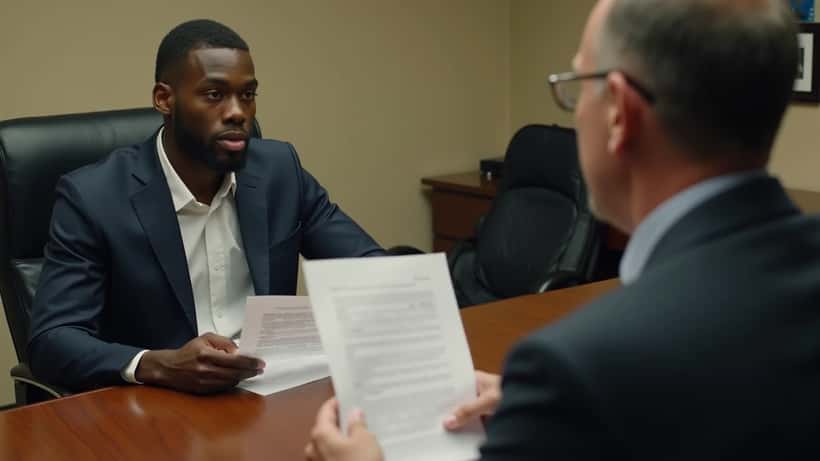
Whether you are an athlete entering a professional draft, a musician negotiating a record deal, or a business owner signing a long-term representation agreement, the principle is the same: independent legal advice before you sign protects you in ways no agent or employer is motivated to provide.
Sports law and contract attorneys on ExpertZoom advise clients on representation agreements, contract reviews, and the rights of individuals entering professional relationships. A consultation before signing is not overcaution — it is the foundation every professional career deserves.
Legal disclaimer: This article is for general informational purposes only and does not constitute legal advice. Individuals navigating professional athletic contracts should consult a qualified sports law attorney.
