 Daniel Sterling
New York mandates meal breaks for employees working shifts longer than six hours — but the exact requirements depend on whether you work in a factory, what time your shift runs, and whether your employer requires you to stay on-site during the break. Most workers don't know all five rules. Here they are.
New York's meal and break law is found in New York Labor Law Section 162 (NYLL §162), enforced by the NYSDOL. There is no federal law requiring meal or rest breaks — the Fair Labor Standards Act (FLSA) does not mandate them. New York's protections are entirely state-created, and they are meaningfully stronger than what federal law provides.
Rule 1: The Midday Meal Break — 30 Minutes for Non-Factory Workers
Under NYLL §162(2), employers must provide non-factory workers with a 30-minute unpaid meal break between the hours of 11 a.m. and 2 p.m. for any shift that extends through that midday window.
This rule applies when:
- The employee's shift spans the midday period (i.e., the shift starts at or before 11 a.m. and ends at or after 2 p.m.)
- The employee is not a factory worker
The break must be a genuine break — the employee must be relieved of all duties. If the employer requires the worker to remain available to answer phones, monitor equipment, or otherwise stay on duty during the break, the break becomes paid time even if the employee is not actively working.
Who this covers: The vast majority of New York workers outside of industrial manufacturing — retail, food service (non-factory), healthcare, office environments, hospitality, transportation, and similar industries.
Common violation: Employers scheduling half-hour lunches but automatically deducting 30 minutes from timecards for workers who regularly work through their break. If you regularly work through your lunch, that time is compensable and recoverable.
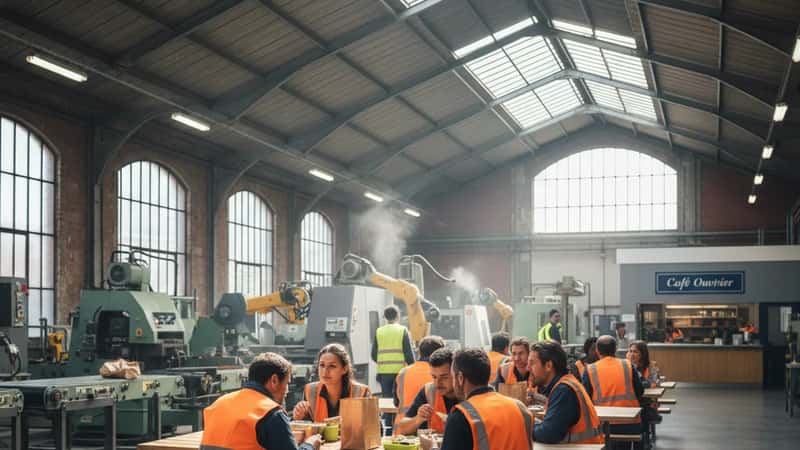
Rule 2: Factory Workers Get 60 Minutes, Not 30
Factory workers are entitled to a longer midday meal break: 60 minutes (one full hour) during the period between 11 a.m. and 2 p.m., under NYLL §162(1).
Who is a "factory worker" under New York law? NYLL §2(9) defines a factory as any premises where "manufacture, packing, processing, or alteration" of goods is carried out. Factory workers include employees engaged in:
- Food and beverage manufacturing
- Garment and textile production
- Printing and publishing production facilities
- Chemical, pharmaceutical, or consumer goods manufacturing
- Assembly operations and packaging plants
The broader point for employers: misclassifying a factory environment as a non-factory setting to reduce the required meal break from 60 to 30 minutes is a violation of §162. The NYSDOL can assess penalties per employee per violation.
Why the longer break? The legislature recognized that factory workers often face more demanding physical conditions and greater health-and-safety rationale for a longer rest period. The 60-minute standard has been in New York law for decades.
Rule 3: The Evening 20-Minute Break for Long or Late Shifts
If a non-factory employee works a shift that:
- Begins at or before 11 a.m., AND
- Ends at or after 7 p.m.
...they are entitled to an additional 20-minute meal break between 5 p.m. and 7 p.m., under NYLL §162(4).
This rule is in addition to the midday meal break under Rule 1 — it does not replace it. A worker on a 9 a.m. to 10 p.m. shift is entitled to both a 30-minute break at midday AND a 20-minute break between 5 and 7 p.m.
Who this affects in practice:
- Retail workers in stores open late
- Restaurant and bar staff who work through dinner service into evening
- Healthcare workers on long shifts spanning both midday and evening
- Event staff and hospitality workers at hotels and venues
This rule is frequently overlooked by employers who provide the midday break but fail to schedule the evening extension. Missing the 20-minute evening break is a standalone violation of §162, recoverable as a wage claim.
Rule 4: Night-Shift and Overnight Workers — 45-Minute Break
Under NYLL §162(3), non-factory workers whose shift begins between 1 p.m. and 6 a.m. are entitled to a 45-minute meal break at a time midway through the shift.
This provision covers:
- Night-shift workers in healthcare, security, transportation, and hospitality
- Early morning workers whose shift begins before 6 a.m.
- Workers in 24-hour operations who do not fall under the midday meal break window
The timing requirement — "midway through the shift" — is flexible but must be genuinely in the middle of the work period, not immediately upon arrival or at the end of the shift.
Example: A home health aide working 11 p.m. to 7 a.m. (an 8-hour overnight shift starting between 1 p.m. and 6 a.m.) is entitled to a 45-minute meal break around 3 a.m. — the midpoint of the shift.
For factory workers whose shift falls between 1 a.m. and 6 a.m., the standard 60-minute meal period applies but is scheduled in the middle of the work period rather than the midday window.
Rule 5: Paid vs. Unpaid Breaks — When Your Break Isn't Really a Break
This rule applies across all break types. Whether a break is paid or unpaid depends on one factor: whether you are required to remain on duty.
Under both NYLL and FLSA interpretations applicable in New York:
- Duty-free break: The employee is completely relieved from work duties, free to leave the premises if desired. This break is unpaid.
- On-duty break: The employer requires the employee to remain available, monitor something, or be ready to respond. This break is paid, regardless of whether the employee actually performs tasks.
Common scenarios where breaks become paid:
- A cashier asked to "stay nearby" during lunch in case the store gets busy
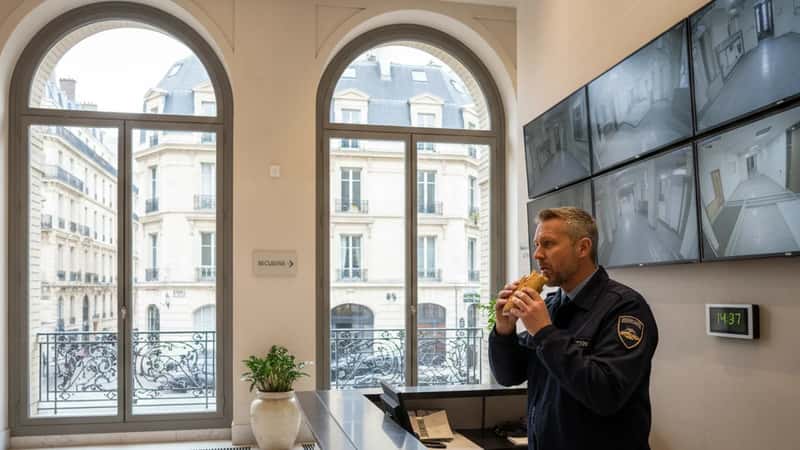
- A security guard whose break time is subject to interruption at any moment
- A home health aide required to remain in the client's home during their meal period
- An IT technician who must respond to alerts even during designated break time
The Department of Labor has consistently held that a break period where the employee's time is not fully their own is compensable as working time. An employer who structures "unpaid" breaks in a way that prevents the employee from truly stepping away is effectively requiring paid work.
Short breaks (under 20 minutes): New York law does not require short rest breaks (the 10-15 minute "coffee break" common in some states). However, if an employer voluntarily provides breaks of less than 20 minutes, federal law requires those breaks to be paid even if the employer calls them unpaid. This is one area where federal law creates a floor that New York employers must follow.
What About Minor Workers?
New York has additional break protections for employees under age 18. Minor workers are entitled to a 30-minute break for every period of work of more than 6 consecutive hours, which cannot be waived. In school settings, minors employed during school hours are subject to stricter hour restrictions under the Child Labor Law, and break rules apply within the more limited hours they are permitted to work.
Employers in industries that frequently employ minors — food service, retail, and event staffing — should maintain separate break schedules that account for both the adult §162 requirements and the additional minor-work restrictions.
Enforcement, Penalties, and How to File a Complaint
Violations of NYLL §162 are enforceable through the NYSDOL or through a private lawsuit. The NYSDOL can assess civil penalties per violation and recover unpaid wages for workers. Workers can also bring a civil claim directly.
What you can recover:
- Wages for break time worked through (paid at the applicable wage rate, including overtime if total hours trigger it)
- Liquidated damages (100% of unpaid wages under NYLL §198)
- Attorney's fees and court costs
How to report: File a complaint online at dol.ny.gov. The NYSDOL's Division of Labor Standards handles §162 complaints. Keep records of your scheduled and actual break times — a simple log with date, scheduled break, and what actually happened is helpful evidence.
Anti-retaliation protection: Employers cannot discipline, threaten, or terminate an employee for raising a §162 complaint or asserting their right to a break.
Practical scenario: Rosa works as a cashier at a large New York City retail chain, 9 a.m. to 6 p.m. The store automatically deducts 30 minutes from her timecard daily for a lunch break. Most days, a manager asks her to stay on the register during her break when another cashier is absent. Those days, Rosa's "unpaid" lunch is actually compensable paid time. Over six months, this adds up to roughly 50 hours of unpaid work — recoverable as wages plus liquidated damages.
Disclaimer: This article provides general legal information about New York meal and rest break law and does not constitute legal advice. For guidance specific to your employment situation, consult a licensed New York employment attorney or contact the NYSDOL at dol.ny.gov.