 Daniel Sterling
In March 2025, a food processing company outside Columbus, Nebraska, received a civil investigative demand from the U.S. Department of Labor Wage and Hour Division. The company — call it NebPack — had 67 employees, a straightforward operation, and an HR manager who was confident the company was in compliance with labor law. Fourteen months later, NebPack had paid $214,000 in back wages and liquidated damages, overhauled its meal-break tracking system, and adopted a formal sick-leave policy it had never bothered to write. This case illustrates every major mistake Nebraska employers make regarding sick leave, meal breaks, and FMLA — and what it costs when they go uncorrected.
The Business Context: NebPack Before the Audit
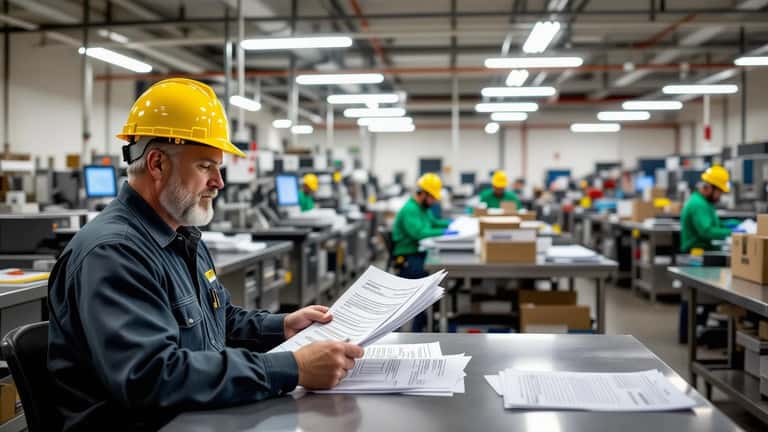
NebPack processed and packaged specialty meats at a 40,000-square-foot facility in central Nebraska. Most employees worked 10-hour shifts, four days per week. The company's approach to employee benefits was minimal: no formal sick leave policy, no written break schedule, and a payroll system that deducted 30 minutes per shift automatically for a "meal break" — regardless of whether the break was actually taken.
The company's 67 employees included 54 production workers, 8 supervisors, and 5 administrative staff. With 67 employees, NebPack was a covered employer under the federal Family and Medical Leave Act — the 50-employee threshold triggers FMLA obligations. It was also covered by the FLSA's meal-break compensation rules.
The Problem: Four Compliance Gaps Uncovered in 15 Minutes
The DOL investigator's initial review identified four problems within the first 15 minutes of examining NebPack's payroll records:
Gap 1: Automatic meal-break deductions without confirmed breaks. NebPack's payroll system deducted 30 minutes per shift for a meal break as a flat rule — even on days when production lines ran continuously and employees ate at their stations or did not leave their posts. Under FLSA, a meal break is only non-compensable if the employee is completely relieved of all duties for at least 30 minutes. An employee who answers a question, watches a machine, or responds to a supervisor's request during a "break" is working — and must be paid.
Gap 2: No FMLA notice or designation. Three NebPack employees had taken extended absences in the previous 18 months for personal or family health reasons. None had been given FMLA designation, none had signed FMLA eligibility notices, and none had been informed of their right to 12 weeks of job-protected leave. Two of the three had been informally disciplined for the absences. Under FMLA § 825.300, covered employers must provide FMLA notice to employees as soon as they learn of a qualifying leave reason — even if the employee didn't use the word "FMLA."
Gap 3: No written sick leave policy. Nebraska state law does not require employers to offer paid or unpaid sick leave. But NebPack had a de facto informal practice of allowing supervisors to approve sick days on a case-by-case basis — some supervisors were generous, others disciplined workers for any absence. This inconsistency exposed the company to discrimination claims: two female production workers had been disciplined more frequently than male counterparts with similar absence rates.
Gap 4: Minor employee break compliance. One 15-year-old part-time summer worker had worked three shifts of more than six hours without the 30-minute break required by Nebraska Rev. Stat. § 48-305. This was a separate violation from the adult break issue — Nebraska mandates this break for minors even though it requires nothing for adults.
The Regulatory Reality: What Nebraska and Federal Law Actually Require
NebPack's HR manager had assumed that because Nebraska law doesn't mandate adult meal breaks, there was "nothing to comply with" on breaks. This assumption — common among Nebraska employers — misses the FLSA overlay completely.
The FLSA break rule: An employer is not required to provide meal breaks, but if it does provide breaks that are under 20 minutes, those breaks are compensable work time. Breaks of 30 minutes or more are non-compensable only when the employee is fully relieved of duties.
Nebraska sick leave: Zero state mandates for private adult employees. But this does not mean employers have no obligations. FMLA still applies for covered employers (50+ employees within 75 miles), and the ADA may require leave as a reasonable accommodation for disabilities. Additionally, Nebraska courts have found that inconsistent application of informal leave practices — where similarly situated employees are treated differently — can support discrimination claims under the NFEPA.
FMLA obligations for NebPack: As a 67-employee company, NebPack was required to:
- Post FMLA notices in the workplace (available free from the DOL)
- Provide FMLA eligibility notice within five business days of learning of a qualifying leave
- Designate qualifying leave retroactively in some circumstances
- Maintain group health benefits during FMLA leave
Steps Taken: NebPack's Corrective Action Plan
The DOL negotiated a compliance resolution rather than pursuing litigation. NebPack's corrective action plan included:
Payroll audit: A third-party HR consultant audited 18 months of time records. Any shift where production records showed continuous line operation was flagged as a shift where the meal break was not genuinely taken — wages for those 30 minutes were repaid.
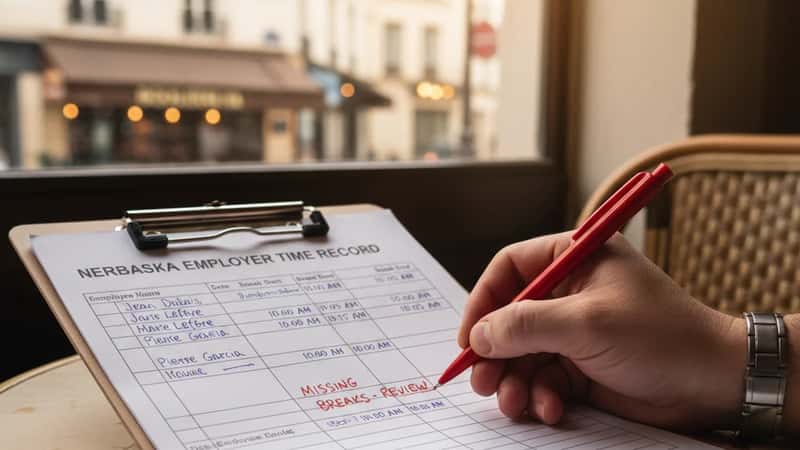
Timesheet redesign: NebPack replaced the automatic deduction system with a positive attestation: supervisors now log actual break start and end times for each employee. If no break was recorded for a shift, the employee is paid for the full shift.
FMLA retroactive designation: The three employees who had taken qualifying absences received retroactive FMLA designation, eliminating the informal disciplinary records associated with those absences.
Written sick leave policy: NebPack adopted a formal policy: employees earn one hour of paid sick leave per 30 hours worked, up to 40 hours per year. While not required by Nebraska law, the policy was implemented to create consistent, documented practices that reduce discrimination exposure.
NFEPA training: All eight supervisors attended a half-day training on the Nebraska Fair Employment Practice Act, FMLA designation obligations, and the company's new sick leave policy.
Compare this resolution approach with states that have broader mandatory sick leave requirements. For example, New Jersey Meal and Rest Break Laws shows how a state with explicit break mandates creates a very different compliance environment — one where ambiguity about break compensability rarely arises.
The Result: What NebPack Paid and What It Learned
Total cost of the DOL investigation:
- Back wages: $107,000 (covering 18 months of improperly deducted meal breaks for 54 production workers)
- Liquidated damages: $107,000 (equal to back wages under FLSA)
- Attorney's fees (NebPack's counsel): ~$30,000
- HR consultant fees: ~$15,000
- Total: ~$259,000
For a company with approximately $3.5 million in annual revenue, this was a significant hit — roughly 7.5% of annual revenue. The meal-break payroll error — which never involved more than 30 minutes per employee per shift — had compounded over 18 months because the payroll system was automated and no one had questioned the deduction.
À retenir: Nebraska's "no mandatory adult breaks" rule does not protect employers from FLSA liability when they do provide breaks but fail to compensate employees who work through them. The most expensive HR errors in Nebraska are not from ignoring the most visible rules — they're from misunderstanding the rules that do exist.
Key Takeaways for Nebraska Employers
1. Audit your break policy, not just your break practice. If your payroll system automatically deducts for meal breaks, verify that breaks are actually being taken and that employees are fully relieved of duties. A supervisor who allows any work during a "break" creates a compensable work-time liability.
2. Know your FMLA headcount. If your company employs 50 or more workers within a 75-mile radius, FMLA applies. Review your leave requests from the past three years — any leave for a serious health condition or family care event should have been FMLA-designated.
3. Write down your sick leave policy. Nebraska law doesn't require paid sick leave, but the absence of a written policy creates inconsistency that invites discrimination claims. Even a simple accrual policy applied uniformly eliminates this risk.
4. Remember the minor employee exception. Nebraska Rev. Stat. § 48-305 requires a 30-minute break for workers under 16 on shifts over six hours. This applies even though no such requirement exists for adults.
Disclaimer: The case study in this article is illustrative and based on common compliance patterns documented in publicly available DOL enforcement actions. Specific company details are fictional. The information is provided for general educational purposes only and does not constitute legal advice. Consult a licensed Nebraska employment attorney for advice specific to your situation.
Nebraska Employer Break and Leave Compliance Checklist
Use this checklist during your next HR audit:
- Meal break attestation: Your timekeeping system requires a positive record of breaks taken, not an automatic deduction
- FMLA headcount confirmed: You know whether you are at or above 50 employees within 75 miles
- FMLA notices posted: DOL required FMLA poster is visible in each work location
- FMLA designation process documented: HR has a written process for identifying and designating FMLA leave
- Written sick leave or leave policy in place: Even if informal, the policy is written and applied consistently
- Minor employee break schedule: If you employ workers under 16, break schedules comply with § 48-305
- Short break compensation: All breaks under 20 minutes are treated as paid work time
Nebraska's "no mandatory adult break" rule is a floor, not a ceiling. The FLSA, FMLA, ADA, and NFEPA all impose obligations that NebPack — like many Nebraska businesses — discovered through enforcement rather than preparation.