 James Harrison
Wood rot, woodworm and structural timber: why UK homeowners are calling in the experts in 2026
Timber is trending. Across the UK in spring 2026, searches relating to wood — from rotting window frames to woodworm in floorboards, and from wood-burning stove regulations to structural beam assessments — have surged as homeowners begin their seasonal property checks and renovation projects. With the UK's housing stock one of the oldest in Europe, millions of homes contain original timber elements that require specialist knowledge to assess, treat, or replace correctly. Getting it wrong can be costly.
According to the Property Care Association, timber-related decay affects approximately 1 in 7 UK homes with original pre-1980 construction elements. And with dampness levels in UK housing increasing following consecutive wet winters in 2024 and 2025, the conditions for timber deterioration are more common than ever. A trained tradesperson or surveyor can assess the full picture and recommend the right treatment — often saving homeowners thousands compared to emergency repair after the damage has spread.
The five most common wood problems in UK homes
1. Wet rot: The most common form of timber decay in the UK. Caused by prolonged moisture exposure, wet rot makes wood soft, discoloured, and ultimately structurally weak. It typically appears around window frames, door sills, soffits, and fascias. Wet rot is contained (it does not spread to dry areas) but must be treated early before replacing affected sections.
2. Dry rot: Despite its name, dry rot requires moisture to start — but once established, it can spread across masonry into dry timber. Dry rot produces a distinctive musty smell and brown, cube-like cracking of the wood surface. It is far more serious than wet rot and requires professional treatment: simply drying out the area is not sufficient.
3. Woodworm: The larvae of several species of wood-boring beetle, woodworm is identified by small round exit holes (1–2mm diameter) and a fine powder called frass. Common in roof timbers, floorboards, and antique furniture, active infestations require treatment with insecticidal fluid — a job best done by a qualified pest control or timber treatment specialist.
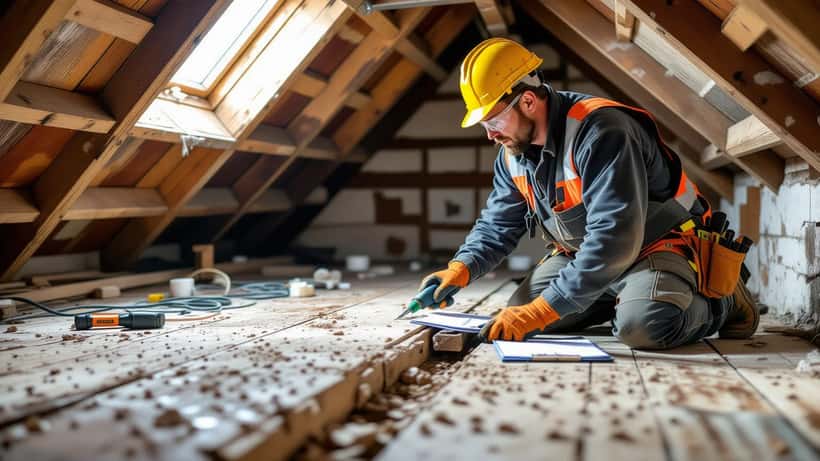
4. Structural timber movement: In older UK homes, loft conversions, extensions, and subfloor spaces often contain timber that has moved, cracked, or been compromised over decades. A structural engineer or experienced tradesperson can assess whether this movement is historic (and stable) or progressive (and dangerous).
5. Wood-burning stove compliance: HETAS-certified installers are legally required for wood-burning stove installation under Building Regulations Part J. In 2022, stricter rules on stove emissions came into force in England, and enforcement has intensified in 2026. Using a non-certified installer can invalidate home insurance and create legal liability when selling.
When DIY is not enough
Home improvement enthusiasts often underestimate timber problems. The challenge is that the visible damage represents only a fraction of what may be hidden:
- Wet rot that appears on one window frame may indicate a broader damp ingress problem requiring a damp survey
- Visible woodworm holes may be historic (inactive) or active — a specialist can confirm which with an inspection
- Dry rot discovered during renovation may have already spread behind plasterboard or into structural elements
- Timber that looks cosmetically fine may be significantly weakened if the correct species for the structural application was not used originally
Building surveyors and qualified tradespeople use moisture meters, borescopes, and structural analysis tools that go beyond visual inspection. A professional survey of timber in an older UK property typically costs between £250–£600, but can prevent repair costs of £5,000–£30,000 or more if serious problems are left to progress.
For more on renovation costs in the UK, see Record UK Construction Cost Inflation: What Every Homeowner Must Plan For in 2026.
Timber treatment: what professional contractors offer
Not all timber treatments are equal, and the right approach depends on the type of decay, the affected timber, and the location:
| Problem | Professional treatment | DIY approach? |
|---|---|---|
| Wet rot | Replace affected sections, treat adjoining timber, address damp source | Limited — source of damp must be identified |
| Dry rot | Full removal of affected material, antifungal treatment of masonry, barrier injection | Not recommended — high recurrence risk |
| Woodworm | Permethrin or boron-based insecticidal treatment | Possible for minor infestations if correctly applied |
| Structural timber movement | Structural engineer assessment, possible joist sister or replacement | No — structural elements require professional sign-off |
The Property Care Association provides a directory of member contractors with qualifications in timber and damp treatment across the UK, and offers guidance on what to expect from a professional inspection.
Legal and insurance considerations
Timber defects are a major source of disputes in UK property transactions. Under the Property Information Form (TA6), sellers must disclose known defects — including timber decay. Failure to disclose can result in legal claims for misrepresentation after completion.
For buyers, a Level 2 or Level 3 RICS survey specifically flags timber issues. However, if you are already in residence and discover a significant timber defect post-purchase, a solicitor can advise on whether you have a claim against the previous owner or the surveyor who may have missed it.
Equally, if timber damage is caused by a third party — a leaking neighbour's drain, a shared roof, or a contractor's error — a solicitor experienced in property law can help you recover costs.
What to do if you suspect a timber problem
- Do not ignore early signs: Small staining, slight bounce in floorboards, or a musty smell are all early indicators worth investigating.
- Book a timber and damp survey: Many companies offer free initial assessments. For significant spend, get at least two quotes from PCA-member contractors.
- Check your home insurance: Timber damage caused by burst pipes or storm damage is often covered. Gradual deterioration is typically excluded.
- Find a qualified tradesperson: On ExpertZoom, you can connect with vetted home improvement professionals including timber treatment specialists, structural surveyors, and HETAS-certified stove installers across the UK.
This article provides general guidance and does not substitute for a professional property survey or structural assessment.
