 John Green
Santander UK completed its £2.65 billion acquisition of TSB on 1 May 2026, ending a 215-year banking brand and raising urgent questions for five million TSB customers. Here is what you need to know — and what actions could protect your savings and mortgage before anything changes.
What the TSB Takeover Actually Means
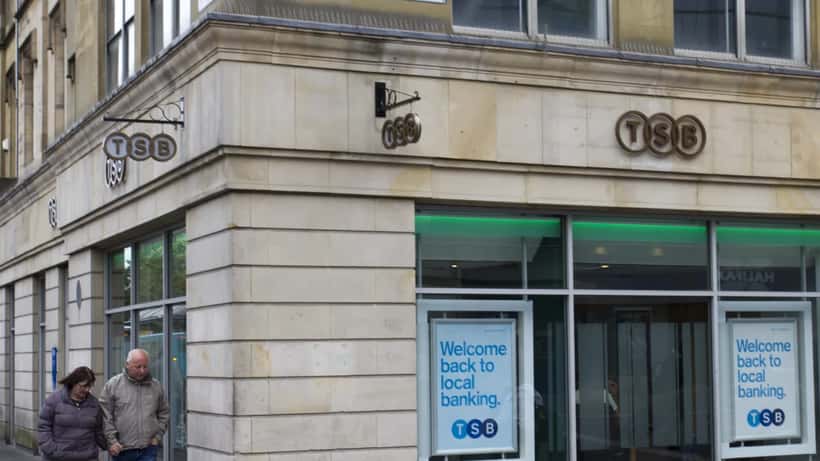
The deal transforms Santander UK into the third-largest bank by personal current account balances in the country. TSB's approximately £35.2 billion in customer deposits and £36.3 billion in lending have transferred to Santander's books overnight. Santander has already confirmed the TSB brand will disappear from high streets within twelve months.
For customers, the immediate reality is simpler: nothing changes today. Accounts, cards, online banking, and direct debits continue to function exactly as before. But "no immediate change" is not the same as "no change" — and the window to act in your financial interest may be shorter than most assume. Five million people will need to navigate this transition, and those who prepare now will be significantly better positioned than those who wait.
Your FSCS Protection: The Number That Matters
One of the most consequential questions for TSB customers is whether their savings remain fully protected. Under UK law, the Financial Services Compensation Scheme (FSCS) protects up to £85,000 per person per authorised banking group.
Here is the critical detail: once TSB is fully integrated into Santander's banking licence, customers who hold savings at both banks will have their FSCS coverage pooled. If you currently have £60,000 in a TSB savings account and £50,000 in a Santander ISA, that combined £110,000 will eventually sit under a single £85,000 protection ceiling — leaving £25,000 unprotected.
According to the Financial Services Compensation Scheme, customers typically receive six months' advance notice before any banking licence merger, along with the right to withdraw funds or restructure savings without penalty. The key is not to wait for that notice before acting.
A wealth management expert can review your complete savings picture across both banks and advise on whether redistributing funds to a third institution — before the licences merge — makes financial sense for your situation.
The Right to Switch: What UK Law Guarantees You
A change of bank ownership does not remove your consumer rights, and it does not obligate you to stay. UK banking law is clear on this point: you can switch current accounts, savings products, or mortgages regardless of who owns your bank.
The Current Account Switch Service (CASS) guarantees a complete current account transfer within seven working days, including automatic redirection of all direct debits, standing orders, and incoming payments. There is no fee and no risk of payments being lost during the switch window.
For TSB mortgage holders, the picture requires closer attention. If you are on a fixed-rate deal, your terms are contractually protected — Santander cannot change your rate mid-term. However, when your fixed period ends, your mortgage will roll onto Santander's Standard Variable Rate (SVR) rather than TSB's SVR, and these rates may differ significantly. If your fixed term expires within the next eighteen months, it is worth modelling the potential difference now.
TSB's fixed-term savings bonds and ISAs are likewise protected until their natural maturity date. The question is what happens at renewal, and that is precisely when independent financial advice becomes most valuable.
See how similar issues affected customers during the NatWest and Sainsbury's Bank partnership
Will TSB Branches Close?
Santander has publicly targeted at least £400 million in annual cost synergies from the acquisition. In banking mergers, branch closures are the most predictable source of those savings — and the overlap between TSB's 218 branches and Santander's 444 UK locations is significant.
TSB's existing branch closure commitments are legally binding until the end of their stated period. After that, the combined Santander-TSB entity faces no legal requirement to maintain any minimum branch count. Communities served by both a TSB and a Santander branch should realistically expect to lose one.
If you rely on in-person banking — for business cash handling, complex mortgage queries, accessibility reasons, or simply preference — now is the time to identify alternatives. Government-backed banking hubs, post office banking, and digital-only challengers have all expanded their coverage in response to broader closures across the sector.
What a Financial Adviser Would Tell You Right Now
Wealth management professionals are advising TSB customers to take three specific steps before any integration timeline is formally announced:
Review your FSCS exposure across both banks. Add up all savings, ISAs, cash bonds, and current account balances held at TSB and Santander. If the total approaches or exceeds £85,000, discuss restructuring options with a financial adviser before the banking licences are merged into one.
Check your mortgage fixed-rate expiry date. Ask TSB for a Key Facts Illustration and note the exact date your current rate expires. If it falls within the next eighteen months, compare available deals from other lenders now — switching before integration avoids any uncertainty about which SVR you will be rolled onto.
Use this transition as a market check. A bank merger is a natural prompt to evaluate whether your current account, savings rate, and lending arrangements are still competitive. Many customers remain with the same provider for years through inertia, and a takeover is one of the few moments when reviewing becomes genuinely urgent.
Understand how the Nationwide Virgin Money merger affected savings protection for customers
The Pattern Behind UK Banking Consolidation
The TSB acquisition is the third significant UK banking merger in twenty-four months, following Nationwide's takeover of Virgin Money and NatWest's restructuring of Sainsbury's Bank. Each consolidation has produced winners and losers among customers — and the pattern is consistent: customers who review their position at each transition, understand their legal rights, and seek timely advice protect themselves. Those who assume continuity often discover, months later, that their rates, coverage, or branch access has quietly worsened.
With five million TSB customers now entering a period of managed transition, the next twelve months will define how this deal plays out for ordinary savers and borrowers. Acting early is not alarmist — it is simply what informed customers do.
This article provides general financial information only. Individual circumstances vary considerably. Please consult a regulated financial adviser before making decisions about your savings, mortgage, or banking arrangements. ExpertZoom connects you with qualified independent financial advisers across the UK.
