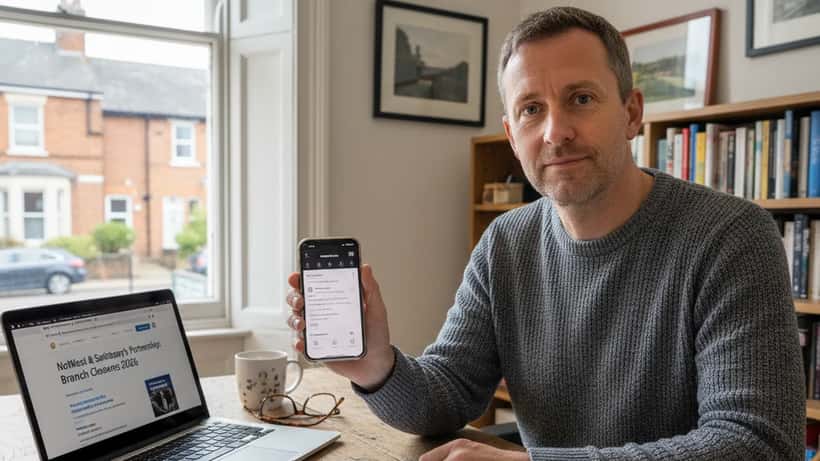
 Isobel Fraser
NatWest and Sainsbury's Team Up While Closing 39 Branches: What It Means for Your Money
NatWest announced two major developments in the same week of April 2026 that affect millions of UK customers: a new partnership with Sainsbury's to launch co-branded financial products, and the confirmation that 39 bank branches will close across the UK in 2026 and early 2027. Together, these changes signal a significant shift in how one of Britain's largest banks plans to serve its customers — and raise important questions about personal finance management.
The NatWest-Sainsbury's Deal Explained
The new partnership will deliver a range of NatWest Nectar credit cards, savings products, and personal loans. Customers who hold a Nectar loyalty card — Sainsbury's flagship rewards scheme with over 18 million members — will benefit from preferential interest rates and bonus points opportunities when using co-branded products.
The launch is planned for the second half of 2026. For millions of households that already shop regularly at Sainsbury's, the integration of loyalty rewards with everyday banking could offer genuine savings. However, financial advisers urge caution: a reward-linked credit card is only financially beneficial if the balance is paid in full each month. Carrying a balance at standard credit card interest rates — which can exceed 20% APR — quickly erodes any loyalty point value.
39 Branches Closing: Are You Affected?
NatWest confirmed 39 branch closures in 2026 and into early 2027, including 32 announced in January 2026. This follows a national trend: according to UK Finance, the UK banking industry has been closing an average of several hundred branches per year as digital banking adoption accelerates.
Branch closures disproportionately affect older customers, those in rural areas, and small business owners who rely on in-person cash services. If your local NatWest is among those closing, you have options:
- Banking hub: NatWest is contributing to the national network of shared banking hubs, where multiple banks' customers can access counter services.
- Post Office: NatWest customers can conduct basic banking transactions at Post Office branches nationwide.
- Digital migration support: NatWest offers dedicated support lines for customers transitioning to online or mobile banking.
What Should You Do With Your Savings?
The NatWest changes are an opportunity to review whether your current financial setup is still working for you. With interest rates still elevated compared to pre-2022 levels, savers who hold large balances in low-interest current accounts are potentially losing hundreds of pounds per year in foregone returns.
A qualified wealth manager or independent financial adviser can help you:
- Compare the best savings rates across fixed-term and easy-access accounts from the full market
- Assess whether an ISA (Individual Savings Account) would be more tax-efficient for your situation
- Review whether a co-branded credit card genuinely benefits your spending pattern, or whether a simpler, lower-rate card would serve you better
Important: This article provides general financial information only and does not constitute regulated financial advice. For advice tailored to your specific circumstances, consult a qualified independent financial adviser.
The Bigger Picture: Banking Is Changing Fast
The NatWest announcements are part of a wider transformation of UK high street banking. HSBC, Barclays, and Lloyds have all made similar moves — cutting physical presence while offering more digital and partnership-based services. For consumers, this means greater convenience in some areas but a more complex landscape to navigate.
Loyalty credit cards, digital savings accounts, and packaged current accounts each come with different terms, fee structures, and eligibility requirements. Understanding these details — especially when switching providers — is where professional financial guidance adds real value.
Should You Switch Banks in 2026?
Many UK consumers have never switched their current account — but the combination of branch closures, new partnership products, and competitive savings rates from challenger banks makes 2026 a sensible year to review your options.
The Current Account Switch Service (CASS) makes changing banks in the UK faster and simpler than in most countries: the process takes seven working days and includes automatic transfer of all incoming and outgoing payments. If NatWest closing your local branch leaves you without convenient access to face-to-face banking, switching to a bank with a stronger local presence is a legitimate option.
Before switching, however, consider the full picture:
- What services do you actually use? If you only ever use mobile banking and ATMs, branch proximity matters less.
- What rates are being offered? Compare easy-access savings rates, overdraft fees, and credit card APRs — not just headline offers.
- What protections apply? All FSCS-protected accounts cover up to £85,000 per institution. If you hold more than this, spreading across two or more banks is advisable regardless of which provider you choose.
Whether you are managing a savings pot of a few thousand pounds or a more complex portfolio, getting periodic professional advice is increasingly worthwhile. The wealth managers and financial advisers available through Expert Zoom can provide a clear, independent view of your options — helping you navigate the changing UK banking landscape with confidence.
