 Grace Davies
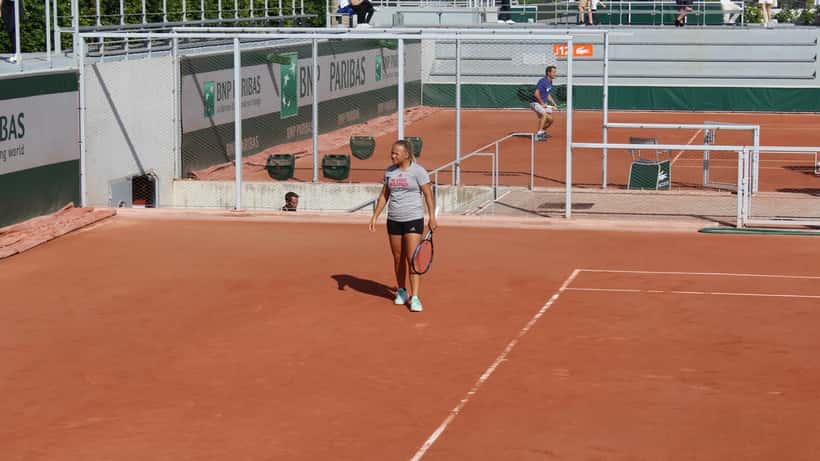
Temperatures at Roland Garros soared to 33 degrees Celsius during the opening rounds of the 2026 French Open — the highest recorded at the Paris tournament since the 2024 Paris Olympics, held in July and August. Diana Shnaider, the 22-year-old Russian seeded 25th in the women's draw, progressed to the third round on 30 May 2026, defeating Renata Zarazua 6-4 6-1 and McCartney Kessler 7-6(3) 6-1 before facing Oleksandra Oliynykova in conditions that have already forced multiple players off the court.
The French Open's clay surface is already the most physically demanding of the four Grand Slams. In temperatures that would qualify as a heatwave by any clinical definition, the physical demands on players like Shnaider escalate into territory that sports medicine professionals treat as a genuine health emergency.
Why Clay Courts in Extreme Heat Create Unique Health Risks
Clay surfaces absorb and retain heat differently from grass or hard courts. On a 33°C day, the actual surface temperature of a clay court can exceed 40°C — a distinction that matters when athletes are spending three to five hours in direct contact with it, sliding across it, and breathing air immediately above it.
At Roland Garros 2026, the consequences have been visible. Canadian player Gabriel Diallo retired mid-match, stating the heat was the primary reason. Jakub Mensik completed a five-set match lasting four hours and 41 minutes but was unable to leave the court under his own power afterward. Reports from the tournament describe widespread dehydration, muscular fatigue, dizziness and physical collapse in players who are, by any measure, among the most conditioned athletes in the world.
The rallies on clay are also significantly longer than on other surfaces — more shots per point, more lateral movement, higher cardiovascular demand. A five-set match on clay at 33°C represents a level of physiological stress that sports doctors take seriously, regardless of how fit the competitor is.
What Heat Exhaustion Actually Looks Like in Elite Athletes
The NHS defines heat exhaustion as the body's response to an excessive loss of water and salt, typically through heavy sweating. Symptoms include heavy sweating, extreme fatigue, dizziness or fainting, muscle cramps, nausea, and a fast, weak pulse. Left untreated, heat exhaustion can progress to heatstroke — a medical emergency in which the body's core temperature rises above 40°C and the brain, kidneys and other organs are at risk of serious damage.
According to NHS guidance on heat exhaustion and heatstroke, the immediate response for someone showing these symptoms is to move them to a cool place, remove excess clothing, and rehydrate with water or a sports drink. If symptoms persist or worsen — or if the person loses consciousness — emergency medical care is required without delay.
In elite sport, the challenge is recognising when these thresholds are being approached before they are crossed. An athlete's competitive drive — and the pressure not to concede a walkover — can override the signals their body is sending. Sports medicine professionals working at major tournaments are trained to make that call from the sidelines, but they can only intervene when the situation is visible and reported.
The Specific Risks for Elite Women Tennis Players
Women's singles matches at Roland Garros are best-of-three sets — shorter than men's — but the absence of a longer format does not eliminate the physical risk. Women players tend to have longer clay-court rallies on average than men, with higher shot counts per point driven by top-spin baseline exchanges. At 33°C, a three-set match of 2.5 to 3 hours can still generate the core temperature rise and fluid loss associated with heat exhaustion.
For a player like Shnaider, who has a career-high singles ranking of world No. 11 and a strong clay-court record (96-37 in the last eight years), the physical conditioning base is exceptional. But conditioning does not make an athlete immune to heat-related illness — it makes them more capable of pushing past the warning signs, which can sometimes delay recognition of the problem.
Sports doctors recommend monitoring core temperature, sweat rate and urine colour as baseline indicators during high-heat events. For amateur athletes playing tennis or other outdoor sports in summer heatwaves, the same signals apply. Darker urine, cessation of sweating, confusion or sudden clumsiness are red flags that should prompt an immediate stop and medical assessment, not a continuation of activity.
When to Seek Medical Help — and When Not to Wait
One of the most important lessons from heatwave sports events is that mild symptoms can escalate very quickly in hot and humid conditions. The progression from heat exhaustion to heatstroke can occur in minutes once the body has lost the ability to regulate its own temperature effectively.
For anyone experiencing dizziness, nausea, or extreme fatigue during physical activity in warm weather, the correct response is to stop, move to shade or a cool indoor environment, and rehydrate immediately. If symptoms do not improve within 30 minutes of rest and rehydration, or if a person loses consciousness, vomits, or becomes confused or unresponsive, call 999 without delay.
Heatstroke carries a mortality risk even in otherwise healthy individuals. Early medical attention dramatically improves outcomes.
If You Are Watching Sport This Summer
The Roland Garros heatwave is a reminder that heat-related illness does not only affect professional athletes. For spectators spending hours in direct sun at outdoor events, and for anyone playing recreational sport in the UK's summer months, the risks are the same in principle — just at different intensity levels.
If you or someone around you develops symptoms during a match, a sports day, or any outdoor activity in warm weather, do not assume they will pass. A qualified sports medicine professional or GP can assess whether the symptoms point to a more serious condition — and act before the situation becomes life-threatening.
Expert Zoom connects you with health professionals, including sports medicine doctors, who can advise on heat illness, recovery protocols, and safe physical activity in warm conditions. If you have concerns about your own health or that of a player in your care, get the right advice before it becomes an emergency.
Disclaimer: This article is for informational purposes only and does not constitute medical advice. If you or someone around you experiences symptoms of heat exhaustion or heatstroke, seek medical attention promptly. In an emergency, call 999.
