 Phoebe Wilson
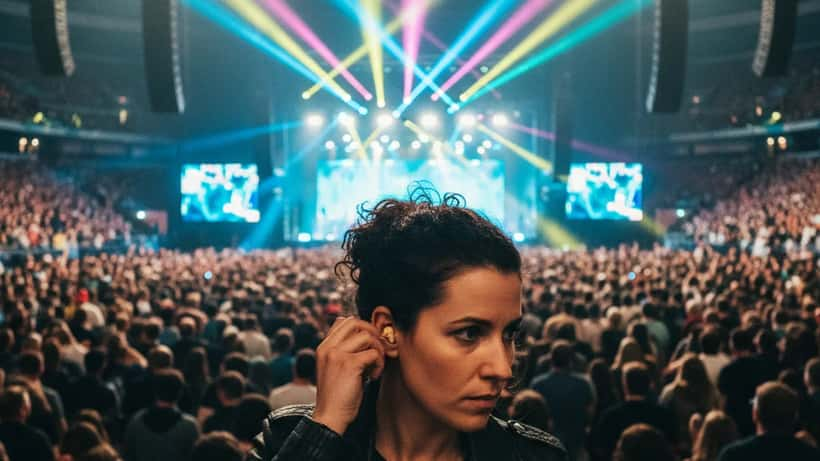
Robyn, the Swedish pop icon behind "Dancing On My Own" and one of the most anticipated UK tours of 2026, is bringing her Sexistential arena shows to Glasgow's OVO Hydro, Manchester's Co-op Live, and London's The O2 this summer. Tickets have been selling fast since the tour was announced in early 2026, following the release of her ninth studio album on 27 March. But before you pack your bag for the show, there is something audiologists want you to know: arena concerts are among the loudest environments most people will ever voluntarily enter, and the damage they can cause is permanent.
How Loud Is an Arena Concert, Really?
Sound is measured in decibels (dB). According to the World Health Organization's Make Listening Safe guidelines, sustained exposure to sound above 85 dB over eight hours begins to cause measurable hearing damage. At 90 dB — about the noise level of heavy traffic — the safe exposure window drops to two hours. At 100 dB, it is fifteen minutes.
Arena concerts, including stadium pop performances with professional sound systems, routinely measure between 105 and 115 dB in the standing areas near the stage. At 105 dB — the level recorded at most arena pop performances — the WHO's formula, which halves the safe exposure window for every 3 dB increase, puts the safe listening threshold at around four minutes of continuous unprotected exposure.
A typical Robyn set runs for ninety minutes or more. Without protection, that is twenty-two times longer than the safe window at the decibel levels most concertgoers will experience.
The Ringing You Ignore Is a Warning Sign
Tinnitus — the persistent ringing, buzzing, whooshing or humming that follows a loud event — is your auditory system signalling that hair cells in the inner ear have been overloaded. Short bursts of tinnitus that resolve within a few hours after a concert are common and indicate temporary damage. Repeated exposure, without recovery time, leads to permanent hearing loss.
According to the NHS, tinnitus that is regular, constant, or worsening warrants a GP appointment. If tinnitus beats in time with your pulse, you should seek urgent care. If it follows a sudden drop in hearing — which can happen immediately after extreme noise exposure — treat it as an emergency.
The problem is that noise-induced hearing loss is entirely painless. There is no sharp sensation to warn you, no bleeding, no bruise. The damage accumulates silently, often over years of live events, earphone use, and everyday noise exposure, until one day conversations in noisy restaurants become difficult and television volume keeps creeping up.
Why Young People Are Especially at Risk
Hearing loss is typically associated with ageing, which leads many younger concertgoers to underestimate their risk. But noise-induced hearing loss has no age requirement. Audiologists consistently report seeing younger patients — in their twenties and thirties — presenting with patterns of hearing loss that were previously associated with people in their sixties.
The UK's music festival and live events industry is among the largest in Europe. Between arena tours, outdoor festivals, and club nights, many people in their twenties attend dozens of high-volume events each year without any ear protection. Cumulatively, that exposure adds up far faster than most people realise.
Robyn's Sexistential tour adds to a busy summer of UK arena events, including other high-profile stadium and arena shows running through June and July. If you are planning multiple events this season, the risks compound.
What Actually Works
The good news is that effective hearing protection is affordable, accessible, and — crucially — does not ruin the experience.
Specialist music earplugs are the key distinction here. Standard foam earplugs, the type you might use on a plane, muffle all frequencies roughly equally and leave music sounding dull and muffled. High-fidelity or musician earplugs are specifically designed to reduce volume across the spectrum while preserving the tonal quality of music. They are available from most pharmacies and audiologists for between £15 and £30, and some premium options are moulded to the individual ear for an exact fit.
Distance matters. The closer you stand to a speaker stack, the higher the decibel level you experience. Moving a few metres away from the nearest large speaker cluster can meaningfully reduce exposure without noticeably affecting your enjoyment of the show.
Give your ears recovery time. After a loud event, avoid further noise exposure for 24 hours where possible. Do not put earphones in on the journey home at high volume — this is when ears are most vulnerable to compounding damage.
Take breaks. Step into a quieter corridor or outside for ten minutes during the set if you feel your ears beginning to feel full or pressured. This is your body signalling overload.
When to See an Audiologist
If you have already noticed any of the following, it is worth booking an appointment with a hearing specialist rather than waiting:
- Ringing or buzzing that lasts more than a day after a loud event
- Difficulty following speech in noisy environments
- A feeling of fullness or pressure in one or both ears that doesn't resolve
- Turning up the volume on the TV or phone more than you used to
An audiologist can conduct a hearing assessment, establish a baseline, and give you personalised advice on how to protect what hearing you have. For people who attend several live events a year, a custom-moulded earplug fitting is also something a hearing specialist can arrange and is genuinely worth the investment over time.
The Bottom Line Before Robyn
Robyn's Sexistential tour is going to be loud, immersive, and very probably brilliant. It should also be safe — not just for the crowd, but for the hearing that will serve you for decades after the last song ends. Picking up a pair of high-fidelity earplugs before the show costs less than a round of drinks and protects something you cannot replace.
If you have concerns about your hearing or want advice specific to your situation, a qualified audiologist can help. Protecting your ears now is always easier than treating hearing loss later.
