 Rebecca Taylor
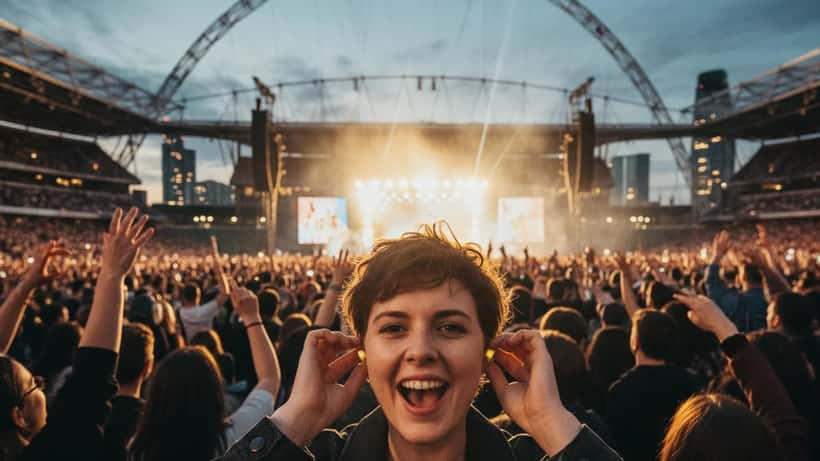
Green Day's 2026 world tour is heading to the UK, with Wembley Stadium in London confirmed for June 2026 — and thousands of fans are already reaching for their tickets. But before you go, there's something your doctor wants you to know: a single rock concert can permanently damage your hearing in less than two minutes.
The Numbers Are Louder Than You Think
A typical rock concert produces sound levels between 110 and 120 decibels (dB). Green Day, known for their high-energy punk rock sound, regularly hit the upper range. According to the World Health Organisation (WHO), exposure to sounds above 85 dB over time causes irreversible hearing damage. At 115 dB — a realistic figure for a stadium show — the safe exposure limit is less than one minute.
To put that in perspective: the average Green Day set runs around two hours. That's 120 minutes at a volume level the WHO classifies as dangerous within 60 seconds. The WHO estimates that 1.1 billion young people worldwide are at risk from recreational sound exposure, including concerts and music festivals.
Why the UK Has a Problem With Concert Hearing Loss
Noise-induced hearing loss (NIHL) is the UK's fastest growing disability — yet it remains almost entirely preventable. According to NHS data, approximately one in six people in the UK lives with some degree of hearing loss. Crucially, NIHL is cumulative: each loud concert, each commute with earbuds turned up too high, each festival adds to the total damage.
The NHS warns that the first sign of NIHL is often a ringing or buzzing sound (tinnitus) after exposure to loud noise. Tinnitus is not just temporary discomfort — for millions of people, it becomes a permanent condition. There is currently no cure for NIHL or chronic tinnitus. Once your hearing is damaged, it does not come back.
What Happens Inside Your Ears at a Concert
The inner ear contains around 15,000 tiny hair cells responsible for converting sound vibrations into electrical signals that your brain interprets as sound. These hair cells do not regenerate. When exposed to excessive noise, they are bent, stretched and eventually destroyed — and with them, your ability to hear certain frequencies.
Concerts are particularly damaging because they combine three risk factors: extreme volume, sustained duration, and confined acoustic environments. At Wembley, where crowds of 90,000 pack the stands, sound bounces off concrete structures and amplifies further. NHS audiologists report seeing increasing numbers of patients in their 20s and 30s with hearing profiles more typical of people in their 60s — many trace the decline to years of unprotected concert attendance.
Green Day's Tour: What Fans Should Know Before They Go
Green Day confirmed a world tour for 2026 following the success of their 2024 season. UK dates include a headline show at Wembley Stadium in London in June 2026. For fans eager to attend, the good news is that proper hearing protection does not have to mean missing the music.
High-fidelity earplugs — available from pharmacies and audiologists for between £10 and £80 — are designed specifically for concerts. Unlike standard foam earplugs, they reduce overall volume without distorting sound quality or cutting off high-frequency music detail. Musicians, sound engineers, and regular festival-goers have used them for decades.
"Many patients who come to us with tinnitus wish they had known about concert earplugs sooner," notes the NHS Make Listening Safe guidance. "The technology has improved enormously — modern hearing protection at concerts is virtually invisible and does not compromise the musical experience."
When Should You See a Doctor After a Concert?
There are clear warning signs that your hearing may have been affected after a live event. You should book a GP appointment if you notice any of the following after attending a concert:
- A persistent ringing, buzzing or hissing in your ears lasting more than 24 hours
- Muffled hearing or difficulty distinguishing speech in background noise
- A feeling of fullness or pressure in your ears that does not resolve
- Sudden hearing loss in one or both ears
Symptoms that persist beyond 24 hours may indicate that temporary noise-induced threshold shift (NITS) has progressed to more serious damage. A GP can carry out initial hearing checks and refer you to an NHS audiologist for a full evaluation. Early intervention matters: the sooner a hearing specialist assesses the extent of damage, the more treatment options are available.
Protecting Your Hearing This Concert Season
With the UK's summer concert calendar packed for 2026 — Glastonbury, Radio 1's Big Weekend, and a string of arena tours — now is the right time to take hearing protection seriously. Expert Zoom connects you with qualified NHS and private doctors who can conduct hearing assessments, discuss personalised hearing protection options, and provide referrals to audiology specialists.
You only get one set of ears. The music will still sound brilliant through a pair of high-fidelity earplugs — and you'll still be able to hear it in forty years. For more on how live concerts affect your hearing health, see our earlier guide on concerts and hearing protection.
Please note: This article provides general health information only. If you are experiencing hearing loss or persistent tinnitus, consult a qualified GP or audiologist.
