 Phoebe Wilson
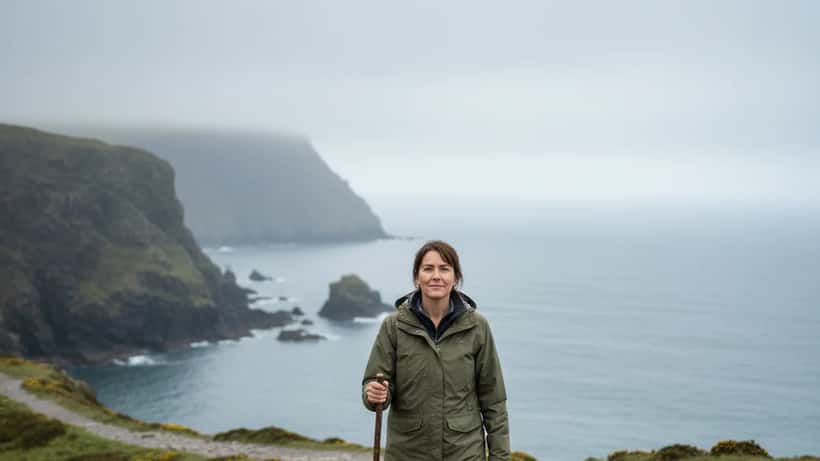
Actress Hermione Norris embarked on a 12-day pilgrimage through North East England for the BBC's spiritual reality series Pilgrimage, which airs on 5 April 2026 on BBC Two. Her reason for joining was deeply personal: her mother had died around 18 months before filming, while both of her children were simultaneously leaving home. In an exclusive interview with HELLO! Magazine, she described the walk as a necessary step in processing loss and finding direction. Her openness raises an important question that millions of bereaved people rarely ask: when does walking through grief become something you shouldn't do alone?
The BBC Pilgrimage and why grief drove Norris to walk
The format of Pilgrimage — bringing celebrities together for a multi-day spiritual walk — has become one of the BBC's most quietly impactful programmes. This year's North East England journey, crossing Lindisfarne and the Northumberland coast, features Norris alongside actors Patsy Kensit and others.
What makes Norris's participation notable is the honesty with which she has spoken about her timing. Losing a parent, followed almost immediately by the departure of both children (one travelling abroad, one moving to France) represents a convergence of losses that grief researchers often call a "loss cluster" — multiple significant attachments diminished within a short window. According to the National Council for Palliative Care, approximately 600,000 people in the UK are bereaved each year, and a significant proportion experience what clinicians call "complicated grief" — a prolonged or disrupted mourning process that goes beyond expected sadness.
What pilgrimage does for mental health — the evidence
Walking as therapy is not simply anecdotal. Research published in the Journal of Mental Health (2024) found that long-distance walking in natural environments significantly reduces cortisol levels and activates rumination-dampening neural pathways. The combination of physical exertion, rhythmic movement, exposure to nature, and reduced digital stimulation creates conditions that support emotional processing.
Pilgrimage adds additional layers: community (travelling with others), ritual (following a known route), and meaning (a destination that carries historical or spiritual weight). For people in grief, these elements can help re-establish a sense of direction when life feels fragmented.
A 2025 study from the University of Exeter, published in Frontiers in Psychology, examined pilgrims on the Camino de Santiago and found measurable improvements in well-being, self-compassion, and emotional regulation after completion — including among participants who had recently experienced bereavement. The researchers noted that the structured nature of a pilgrimage reduces decision fatigue, which is particularly valuable in grief when everyday choices feel overwhelming.
When grief becomes something that needs professional support
Walking helps. Community helps. Time helps. But for a substantial minority of bereaved people, grief does not follow a natural resolution. The NHS recognises Prolonged Grief Disorder (PGD) as a clinical condition in which intense grief symptoms persist beyond 12 months (6 months in children) and significantly impair daily functioning.
Signs that grief may benefit from professional support include:
- Persistent inability to accept the reality of the loss, even months later
- Feeling that life is meaningless without the person who has died
- Intense longing that does not diminish over time
- Avoiding people, places, or activities associated with the deceased out of fear or pain
- Feeling emotionally numb or detached from others for extended periods
- Difficulty engaging with normal activities, work, or relationships
- Suicidal thoughts or a wish to die in order to be with the deceased
These symptoms do not indicate weakness or a failure to "move on" — they reflect a grief process that has become stuck and that responds well to specialised intervention. Therapies including Complicated Grief Treatment (CGT) and Grief-Focused Cognitive Behavioural Therapy (CBT) have strong evidence bases for restoring functioning and reducing distress.
The particular challenge of overlapping losses
What Norris describes — a parent's death coinciding with children leaving home — illustrates a widely underacknowledged aspect of grief: it is rarely a single event. Bereavement counsellors recognise the concept of "ambiguous loss", in which what is lost is not a person but a role, a relationship structure, or a stage of life.
When children leave home, parents frequently experience a form of identity shift that, while expected, can amplify existing grief. The house is quieter. Routines disappear. Purpose can feel unclear. If this transition coincides with the death of a parent — who represented the generation above you and whose presence reinforced your own place in the family structure — the combined effect can be disorienting.
The NHS Every Mind Matters platform offers evidence-based self-help resources for grief and loss, including guided techniques for managing intrusive thoughts and emotional regulation.
How to ask for help when grief won't pass
Many bereaved people delay seeking support because they believe they "should" be coping better by now, or because they don't want to burden others. The average person in the UK waits over a year before accessing bereavement support, according to Cruse Bereavement Support.
Practical pathways to support include:
GP referral: Your GP can refer you to an NHS therapist or to a local bereavement service. Be explicit that your grief is affecting your daily life — this helps them prioritise the referral.
Bereavement charities: Cruse Bereavement Support (cruse.org.uk) offers free counselling. Marie Curie and St Christopher's Hospice also offer bereavement support, even to those who did not use their end-of-life services.
Structured walking groups: Programmes like Walk and Talk Therapy — combining movement with therapeutic conversation — are available through some NHS trusts and private providers.
Private therapy: A counsellor specialising in grief and bereavement can provide targeted support. Look for practitioners registered with the British Association for Counselling and Psychotherapy (BACP) with a listed specialisation in loss.
For some who have experienced recent bereavements similar to Hermione Norris's journey, the question of when to return to work and how to negotiate reduced capacity with employers is also pressing. A health professional can provide medical documentation to support workplace adjustments during bereavement.
Hermione Norris's courage — and what it models
Choosing to walk through grief publicly, on a spiritual programme watched by millions, takes a particular kind of courage. It models something important: that seeking meaning, support, and community in the aftermath of loss is not self-indulgent — it is necessary. Whether that takes the form of a BBC pilgrimage or a quiet conversation with a GP, the first step is acknowledging that grief is not something to be managed silently and alone.
If you are navigating loss and feel that your grief has become overwhelming, speaking to a health professional is always the right call.
