 Grace Davies
Craig Charles Returns to Face His Grief: What I'm A Celebrity Teaches Us About Bereavement Recovery
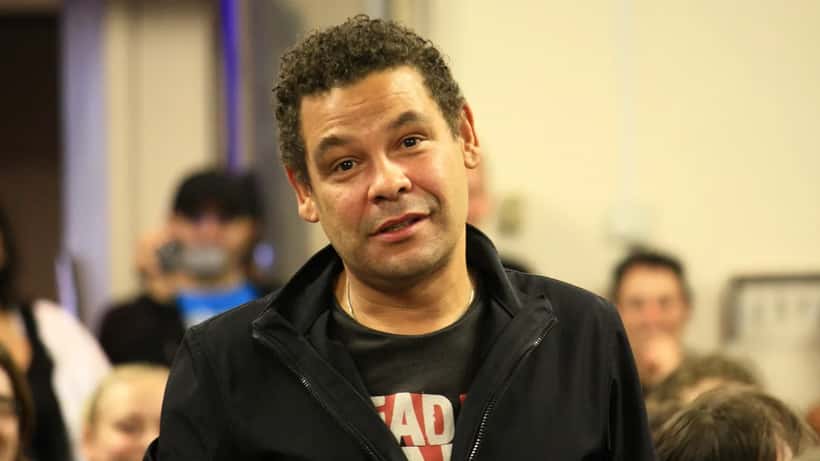
Craig Charles returned to I'm A Celebrity South Africa on 6 April 2026 — more than a decade after he dramatically quit the original Australian series in 2014, when his brother Dean died suddenly at age 52. For years, Charles could not watch the show. His return this Easter, he says, came "at the right time." He is one of 12 all-stars competing at Kruger National Park until 24 April 2026.
His story is not simply a television comeback. It is a public demonstration of something grief counsellors see every day: the moment when someone decides they are ready to reclaim a part of their life that grief had taken away.
Why Grief Doesn't Follow a Timeline
The five stages of grief — denial, anger, bargaining, depression, acceptance — were never meant to be a fixed sequence. Psychiatrist Elisabeth Kübler-Ross, who proposed the model in 1969, herself clarified that grief is not linear. Yet many people feel pressure to "move on" within months, as if mourning had an expiry date.
Craig Charles took more than 11 years before returning to the place associated with his worst moment. That is not pathological — for many people, it is healthy. Grief for a sibling, a parent, or a child can be particularly complex because it disrupts the assumed order of life. Brothers are supposed to grow old together. When they don't, the loss is compounded by a sense of the world becoming fundamentally unsafe.
According to NHS guidance, grief that significantly interferes with daily functioning for more than a year may indicate what clinicians now call prolonged grief disorder (PGD), a diagnosis formally recognised in both the DSM-5-TR (2022) and ICD-11 (2022). It affects an estimated 10% of bereaved people.
The Signs That Grief Has Become Something More
Most people navigate grief without professional help. But certain patterns suggest that speaking to a doctor, counsellor, or psychotherapist would be beneficial:
Persistent avoidance: Unable to talk about the person who died, see photos, or revisit places connected to them after 12-18 months. Craig Charles could not even watch the programme. If avoidance is organising your entire life years after the loss, that is a signal worth discussing with a professional.
Yearning that doesn't diminish: Intense longing for the deceased that feels no different at two years than it did at two months is a key diagnostic marker of PGD.
Difficulty accepting the reality of the loss: Some people intellectually know their loved one has died but emotionally cannot integrate this. It shows up as expecting them to call, setting a place at dinner, or speaking about them only in the present tense years later.
Bitterness or inability to trust others: Grief can fracture our sense of safety. Some bereaved people become permanently guarded, isolating themselves from new relationships and experiences.
Physical symptoms: Chest pain, fatigue, disturbed sleep, and immune suppression are all documented physical manifestations of unprocessed grief, according to research published in the BMJ.
What Effective Grief Support Looks Like
The GP is the right first port of call. A GP can assess whether what you are experiencing meets criteria for prolonged grief disorder, clinical depression, or complicated bereavement, and make the appropriate referral.
Talking therapies available on the NHS include:
- Cognitive Behavioural Therapy (CBT): Addresses unhelpful thought patterns around loss
- Complicated Grief Treatment (CGT): A specialised 16-session therapy developed specifically for prolonged grief, shown to be more effective than standard depression treatment for PGD
- Integrative counselling: Particularly effective when grief involves sudden or traumatic loss
Specialist grief organisations such as Cruse Bereavement Support, Winston's Wish (for childhood bereavement), and the Loss Foundation offer community and telephone support alongside formal therapy.
Private grief counsellors offer faster access, often within days rather than the NHS waiting time of several months. A registered counsellor (accredited with BACP or UKCP) can work with you on a session-by-session basis.
Craig Charles and the Value of Symbolic Returns
Returning to I'm A Celebrity is, in therapeutic terms, what clinicians call exposure work — voluntarily re-engaging with something connected to a painful memory, in a controlled way. It is the opposite of avoidance, and it is one of the most evidence-based routes through grief.
"I thought it would be too painful," Craig Charles has said of returning to the show. The fact that he now feels ready is itself a sign of integration: the loss is still part of him, but it no longer controls what he can and cannot do.
This is the destination grief work aims for. Not forgetting, and not "getting over it" — but reaching a place where the loss is carried rather than avoided, and life can expand again around it.
This article is for general information purposes. If you or someone you know is struggling with bereavement, please speak to your GP in the first instance. In a mental health crisis, contact the Samaritans on 116 123 (free, 24/7).
If you are looking for professional support with bereavement or mental health, ExpertZoom connects you with qualified health professionals across the UK. Qualified health professionals are available through Expert Zoom to help you find the right support for bereavement and mental health.
