 Sophia Hamilton
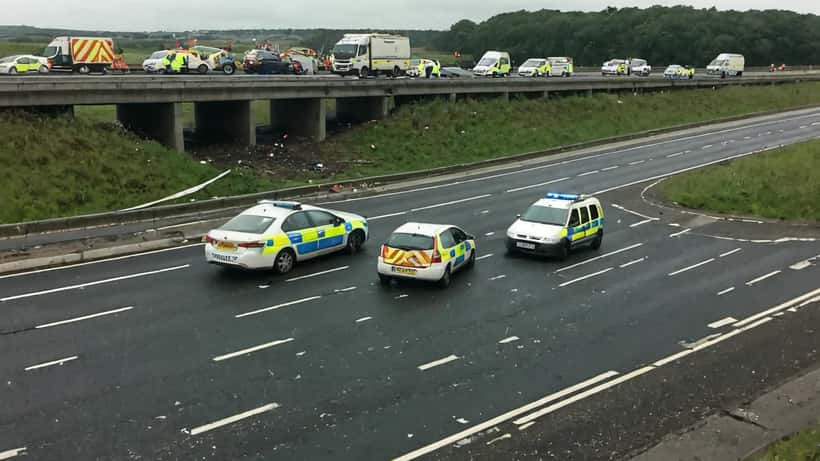
A multi-vehicle collision on the M1 northbound near Meadowhall, Sheffield on 7 April 2026 closed all lanes at Junction 34 and brought traffic to a standstill during the afternoon rush. Emergency services attended the scene while queues stretched back several miles. The incident is one of dozens of serious motorway crashes recorded on the M1 each year — and for those caught up in such events, the legal and financial consequences can be significant and long-lasting.
If you were involved in a motorway crash this week — as a driver, passenger, or even a witness whose vehicle was damaged — here is what UK law says about your rights and what steps you should take immediately.
What to Do in the Immediate Aftermath
The first priority after any road traffic collision is safety and medical attention. Call 999 if anyone is injured. Once it is safe to do so, you are legally required under the Road Traffic Act 1988 to stop at the scene and provide your details to anyone who reasonably requires them.
Within 24 hours of the accident, you must report it to a police station if you did not exchange details at the scene — for example, if you were incapacitated or if the other party fled. Failing to report can itself become a criminal matter.
Gather as much evidence as possible before you leave the scene: photographs of all vehicles, the road layout, skid marks, and any visible injuries. Note the weather and lighting conditions. Exchange insurance details, names, and contact information with every other driver involved.
If you have a dashcam, do not overwrite the footage. Save it immediately.
Your Right to Compensation
The UK operates a fault-based compensation system for road traffic accidents. If another driver caused the collision through negligence — speeding, tailgating, distraction, or driving under the influence — you have the right to make a claim against their insurance policy.
The types of compensation available include:
- General damages for pain and suffering, including whiplash and psychological trauma
- Special damages for financial losses — vehicle repairs, medical expenses, lost earnings, travel costs
- Future losses if your injury affects your long-term capacity to work
Whiplash is the most common injury in rear-end motorway shunts. Since the Whiplash Reform Programme came into force in May 2021, claims valued up to £5,000 must be submitted through the government's Official Injury Claim portal. Claims above that threshold, or involving more complex injuries, require legal representation and proceed through the courts.
Uninsured and Untraceable Drivers
If the driver at fault was uninsured, or fled the scene and cannot be identified, you are not without recourse. The Motor Insurers' Bureau (MIB) exists precisely for this situation. The MIB compensates victims of uninsured and untraced drivers under two separate schemes — the Uninsured Drivers Agreement and the Untraced Drivers Agreement. Time limits apply: you typically have two years to submit a claim to the MIB, but the sooner you act, the stronger your evidence base.
What Passengers Should Know
Passengers injured in any vehicle — including the car driven by a friend or family member who caused the accident — have the right to claim compensation. Many people mistakenly believe that claiming against a friend's or relative's policy is somehow improper. It is not. The claim goes to the insurer, not the individual. Insurers also cannot cancel a policy simply because a passenger makes an injury claim.
The Limitation Period
UK law gives you three years from the date of a road traffic accident to bring a personal injury claim. This is set by the Limitation Act 1980. After three years, the right to claim is lost in almost all circumstances. However, three years can pass quickly when injuries evolve, insurance investigations drag on, and everyday life intervenes. A solicitor can protect your position by issuing a protective claim even while negotiations continue.
When to Involve a Solicitor
Minor accidents with no injuries and clear liability are often resolved directly between insurers without legal involvement. But if you have been injured, if liability is disputed, if you are self-employed and face lost income, or if a loved one has suffered a serious or fatal injury, you should speak to a road traffic accident solicitor as early as possible.
A solicitor will:
- Preserve your evidence and witness statements
- Negotiate with insurers on your behalf
- Advise on interim payments if you face financial hardship while waiting for a settlement
- Represent you at court if the insurer refuses to settle fairly
YMYL disclaimer: This article provides general legal information for UK residents only. It is not legal advice. For advice specific to your circumstances, consult a qualified solicitor.
According to the gov.uk official guidance on road traffic accidents and insurance, drivers must have at minimum third-party insurance and must report accidents involving injury to the police.
If you were caught up in a motorway accident and need guidance on your legal options, Expert Zoom connects you with qualified road traffic accident solicitors across the UK. You can also read our related coverage on the A27 fatal crash near Chichester and what road accident victims are legally entitled to for further context on how UK courts approach compensation claims.
