 Eleanor Stone
Tailgating is trending across UK search engines this week — and for good reason. Driving too close to the vehicle in front is one of the most dangerous and widely practised habits on British roads, and enforcement has intensified. A fixed penalty of £100 and three licence points awaits drivers caught tailgating. In serious cases, a conviction for careless or dangerous driving can lead to a disqualification, an unlimited fine, or even prison. Here is what the law says, when you need a lawyer, and how to protect yourself.
What is tailgating under UK law?
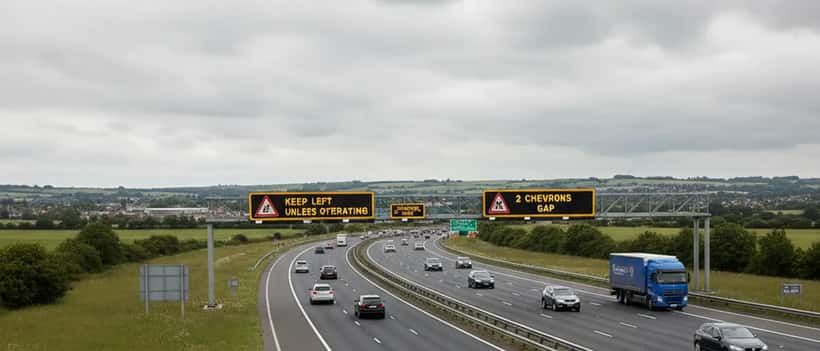
Tailgating — following another vehicle too closely — falls under the offence of careless driving in the UK, governed by Section 3 of the Road Traffic Act 1988. The Highway Code (Rule 126) requires drivers to maintain at least a two-second gap between themselves and the vehicle ahead on roads carrying fast-moving traffic, and a four-second gap in wet conditions.
Police can issue a Fixed Penalty Notice (FPN) for careless driving on the spot, without the need for a court process. The current fixed penalty is £100 and three penalty points on your licence. However, where an officer considers the behaviour more serious, the case can be referred to court — where fines are unlimited and disqualifications possible.
Since 2017, National Highways has been trialling dedicated tailgating cameras on motorways including the M3, M6, M20 and M1. These cameras detect following distances and can flag evidence for enforcement.
Why tailgating is trending: the enforcement context in 2026
Searches for "tailgating" have surged in the UK in March 2026, driven by renewed public debate about motorway safety and reports of camera enforcement on smart motorways. National Highways has described tailgating as a significant cause of rear-end collisions — which account for approximately one-third of all motorway accidents.
The government's published statistics show that in 2024, there were over 24,000 casualties from rear-end collisions on British roads. Campaigners and road safety organisations have called for stronger enforcement, and some police forces have begun high-visibility operations specifically targeting close-following behaviour.
Three levels of offence — and the legal consequences
Understanding how tailgating is classified legally is critical if you receive a penalty or are involved in a collision:
Level 1 — Fixed Penalty Notice (careless driving): The mildest outcome. A £100 fine and three points. This does not require a court appearance but the points accumulate on your licence. Totting up to 12 or more points within three years leads to automatic disqualification.
Level 2 — Magistrates' Court (careless driving prosecuted): If police refer your case to court, the maximum fine is £5,000 and the court can impose a discretionary disqualification. This can happen when tailgating leads to a minor collision or when there are aggravating factors (speed, weather conditions, distraction).
Level 3 — Dangerous driving: If your following distance was so extreme that it posed an obvious, serious danger — particularly at high speed — prosecutors may charge dangerous driving under Section 2 of the Road Traffic Act. The Crown Court can impose up to two years' imprisonment, an unlimited fine, and mandatory disqualification.
When a collision happens: liability and civil claims
If tailgating leads to a crash, the legal implications multiply. The driver following too closely is almost always considered at fault in rear-end collisions. This means:
- Insurance liability: Your insurer will likely treat you as the at-fault driver, affecting your no-claims bonus and future premiums.
- Civil claims: If the driver ahead, or any passenger, suffers injury or property damage, they may bring a civil claim against you for compensation. UK personal injury claims can run into tens of thousands of pounds for whiplash, back injuries, or psychological trauma.
- Criminal charges: In fatal cases, tailgating can form part of a causing death by careless or dangerous driving charge — with sentences of up to 14 years under current sentencing guidelines.
When should you consult a lawyer?
A £100 FPN may feel like it warrants no further action, but there are several situations where legal advice is essential:
If you want to contest the penalty: You have the right to challenge a Fixed Penalty Notice in court. A specialist road traffic solicitor can assess whether the evidence — camera footage, police observations — is strong enough to sustain the charge, and advise whether contesting is worthwhile given the risks.
If you are facing prosecution: If your case has been referred to the Magistrates' Court or Crown Court, you should seek immediate legal advice. An experienced road traffic lawyer can negotiate with the Crown Prosecution Service, challenge evidence admissibility, and present mitigating circumstances.
If you have been injured by a tailgater: As the victim of a rear-end collision, you may be entitled to compensation for personal injury, vehicle damage, and loss of earnings. A solicitor specialising in road traffic claims can assess your case and handle the claim on a no-win, no-fee basis.
If your licence is at risk: Drivers approaching 12 points on their licence can apply for exceptional hardship arguments to avoid a "totting up" ban. This requires court advocacy — and a convincing case.
Practical steps to protect yourself now
Whether you are worried about your own driving habits or have recently received a penalty notice, here is what you should do:
- Check your penalty notice carefully: Ensure the date, location, and vehicle registration are correct. Any errors may give grounds for challenge.
- Gather evidence early: If you were involved in a collision, dashcam footage, witness contact details, and photographs of the scene are critical. Do not rely on police evidence alone.
- Do not accept points without advice if your licence is at risk: Accumulating points has long-term financial consequences. A traffic lawyer can sometimes negotiate a speed awareness-style course instead of points, depending on the circumstances.
- Review your insurance obligations: Failing to disclose penalty points to your insurer can invalidate your policy — a far more serious consequence than the fine itself.
Road safety enforcement in the UK is tightening in 2026. If you face any legal consequences from a tailgating incident — whether as the driver penalised or as the victim of a collision — consulting a qualified road traffic solicitor is the most effective way to protect your rights and your licence.
Disclaimer: This article is for general informational purposes only and does not constitute legal advice. For advice specific to your situation, consult a qualified solicitor.
