 Sophia Hamilton
Kim Min-jae's World Cup Call-Up: Why FIFA's Mandatory Release Rules Matter for Employment Rights Beyond Football
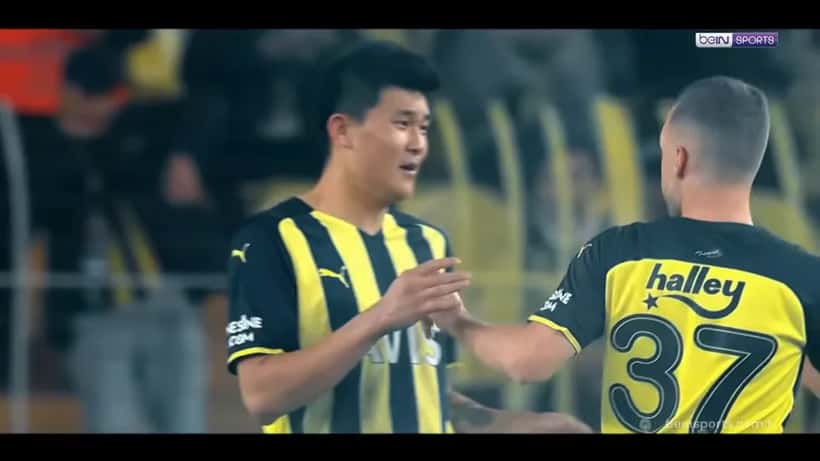
Bayern Munich centre-back Kim Min-jae anchored South Korea's defence in their 1-1 draw against Czech Republic at the 2026 World Cup on 11 June — a result that came only after one of international football's most contested institutional debates: the mandatory player release obligation. Understanding why Bayern had no choice but to let him go reveals a set of employment law principles that extend far beyond the football pitch.
The FIFA Release Rule: What It Is and Why It Exists
FIFA's Regulations on the Status and Transfer of Players (RSTP) include a specific provision requiring clubs to release contracted players for FIFA-designated international windows, including the World Cup. The obligation is near-unconditional: clubs cannot refuse release citing contractual or commercial grounds during these periods.
For Kim Min-jae, this meant Bayern Munich — one of the highest-spending clubs in world football, mid-preparation for their own 2025-26 pre-season — was legally obligated under FIFA statutes to release him for the 2026 World Cup. His inclusion in South Korea's final 26-man squad, announced on 16 May 2026 by coach Hong Myung-bo, triggered the mandatory release window automatically.
Clubs that breach the player release obligation face a range of sanctions, including fines, and could face restrictions on registering new players. The commercial incentive to retain a key defensive asset during a financially critical summer period is simply overridden by the regulatory structure FIFA has imposed.
South Korea's Defensive Anchor at Estadio Akron
Against Czech Republic on 11 June at the Estadio Akron in Guadalajara, Kim Min-jae was the only certainty in a back three that included a surprising selection alongside him: Lee Ki-hyuk, a lesser-known inclusion that raised eyebrows among analysts before kick-off. His performance validated Hong Myung-bo's defensive faith — he successfully denied Patrik Schick, one of Europe's most physically imposing strikers, a clear goal-scoring opportunity in the first half.
The 1-1 result — Czech Republic scoring through Ladislav Krejci in the 59th minute before Hwang In-beom equalised via Lee Kang-in's assist in the 67th — means South Korea head into fixtures against Mexico (18 June) and South Africa (24 June) needing at least one win to progress from Group A. Kim Min-jae's continued fitness is central to that ambition.
When Employers Must Release Employees: The UK Legal Parallel
FIFA's mandatory release obligation might seem like a football quirk. In practice, it closely mirrors protections that exist in UK employment law for employees who carry obligations alongside their primary employment.
The Employment Rights Act 1996 and subsequent legislation protect employees' rights to time off work in a range of circumstances that employers cannot simply refuse — including jury duty, reserve forces training, public duties as a magistrate or local authority member, and antenatal appointments. These provisions operate on a similar logic to FIFA's release rules: the employee's obligation to a wider public or institutional duty takes precedence over the employer's operational preferences.
Where UK employment law differs from FIFA's framework is in the level of pay protection offered: some statutory rights to time off are unpaid, while others require full pay maintenance. Acas, the Advisory, Conciliation and Arbitration Service, provides clear guidance on which statutory time-off rights carry pay entitlements and under what conditions employers can request advance notice (acas.org.uk).
The Grey Areas Clubs — and Employers — Try to Exploit
Not every release situation is as clear-cut as Kim Min-jae's World Cup call-up. In the weeks around the 2026 World Cup squad announcements, several disputes emerged between clubs and national associations over players carrying late-season injuries, with clubs arguing that releasing a player who might not play posed unnecessary medical risk to their asset.
The MLS World Cup break and its player contract implications illustrate another dimension: when leagues, rather than individual clubs, pause operations around a tournament, the contractual implications for player wages, bonuses, and performance clauses during the break can become genuinely complex.
For UK employees, equivalent grey areas appear around reserve forces deployment, extended jury service, or career-break provisions. Employers may not directly refuse these obligations, but disputes can arise about pay continuity, contractual clause implications during absence, and the employee's rights when returning to their role after the period of absence.
The Transfer Window Opens 15 June: A Separate Complication
Kim Min-jae's World Cup involvement adds a further dimension to his club situation. The summer 2026 transfer window opens on 15 June — four days after South Korea's opening group match. The 2026 summer transfer window's legal complexities mean that clubs, players, and agents may be conducting transfer negotiations while the player in question is competing at a World Cup in Mexico.
For a centre-back of Kim Min-jae's calibre, any rumoured move — even if entirely speculative — becomes a distraction that both his national federation and Bayern Munich's legal teams must manage carefully.
For employees in the UK navigating a job change while in the middle of a statutory leave period or public duty absence, comparable complications can arise. Understanding which contractual provisions continue to apply during an absence, and what notice obligations exist for either party, is precisely the kind of question that an employment lawyer can clarify.
What Anyone Facing Workplace Obligation Conflicts Should Know
The FIFA release debate is a high-profile version of a conflict that plays out in ordinary UK workplaces thousands of times each year: an employee has an obligation outside their employment contract, and the employer is uncertain about — or resistant to — their rights.
Key principles UK employees should understand:
- Statutory time-off rights cannot be contractually overridden, regardless of what an employment contract states
- Constructive dismissal claims can arise where an employer makes continued employment untenable following a legitimate absence for a statutory purpose
- Not all rights to time off are the same: jury service, reserve duty, and trade union activities each carry different pay and notice frameworks
When the answer is unclear — as it often is in practice — consulting an employment lawyer is the most reliable way to understand your specific position before a conflict escalates.
If you are facing a workplace dispute over statutory time-off rights, employment contract terms, or other employment law questions, ExpertZoom connects you with qualified employment lawyers and legal professionals across the UK.
